

Maddy summaryThe Military Family Nutrition Act of 2023 amends the Food and Nutrition Act to exclude a military member's basic housing allowance (BAH) from income calculations when determining eligibility for nutrition assistance programs like SNAP. This change directly affects military families who receive BAH as part of their housing benefit but currently have that allowance counted as income, potentially disqualifying them from food assistance. The key provision adds a specific exclusion for BAH paid to or on behalf of uniformed service members under Title 37, U.S. Code. As a result, military families will have their housing costs subtracted from their income for program eligibility, making it easier for them to qualify for nutrition support.
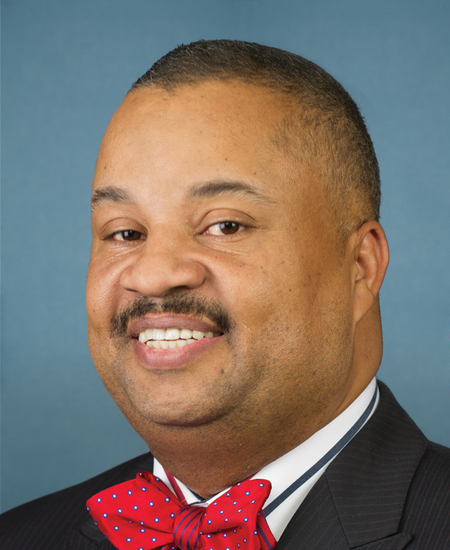
Rep. Donald M. Payne, Jr.
Sponsored bills
Maddy summaryThe Water Affordability, Transparency, Equity, and Reliability Act of 2023 establishes a new trust fund funded by increasing the corporate tax rate from 21% to 24.5% to support water infrastructure and affordability programs. It allocates funds to clean water programs (42%), safe drinking water funding (42.5%), household water wells (1%), colonias assistance (0.5%), Indian health services (3%), and water operator job training (0.5%). The bill requires the EPA to conduct a study and submit a report on water affordability, discrimination in water services, public participation in regionalization, and data collection related to service disconnections. It includes specific provisions for colonias, household water wells, and job training programs for water system operators to improve water access and equity.
This resolution recognizes the 70th anniversary of the signing of the Mutual Defense Treaty between the United States and South Korea. Affirming the importance of the U.S.-South Korean alliance as the linchpin to safeguarding peace, security, and prosperity on the Korean peninsula, the resolution welcomes President Yoon Suk Yeol to the United States. It also supports ongoing defense and security ties, calls for continued promotion of human rights, and encourages close cooperation between the United States, South Korea, and Japan.
Maddy summaryThe Armenian Genocide Education Act (HR 2803) establishes a Library of Congress program to support U.S. schools in teaching about the Armenian Genocide of 1915-1923. The program will develop educational resources, provide teacher training, and maintain an online resource center to help schools incorporate accurate historical information into curricula. It prioritizes schools without existing Armenian Genocide education programs, with $2 million authorized annually for five years. The Librarian of Congress will report yearly on the program’s activities to Congress.
This bill expresses the sense of Congress that (1) medication abortion is appropriately approved and regulated under federal law, and (2) federal law preempts any in-person dispensing requirements or telehealth restrictions with respect to medication abortion under state law.
This resolution condemns the deliberate gas attacks on schoolgirls in Iran (up to 7,000 schoolgirls were poisoned in at least 290 attacks, according to human rights groups) and Iran's suppression of individuals participating in demonstrations. The resolution also urges the United States to initiate a formal process for an independent investigation and to work with the United Nations in investigating the gas attacks on schoolgirls in Iran.
This resolution urges (1) the President to issue a proclamation recognizing Earth Day; and (2) governments and people to continue building upon the Paris Agreement and other efforts to ensure that future generations inherit a livable, sustainable, and ecologically rich planet.
Maddy summaryHR 2785, the REEF Act, amends a 2020 law to change when certain payments from the Railroad Unemployment Insurance Account take effect. It retroactively applies changes to these payments as if they had been in place before the national emergency related to the COVID-19 pandemic ended. This directly affects railroad workers who receive unemployment benefits through this account, ensuring they receive payments under the revised timing. The bill's key change is making the effective date of these payment rules apply retroactively from before the pandemic emergency period.
Maddy summaryThe Dignity for Detained Immigrants Act establishes new standards for Department of Homeland Security detention facilities, requiring them to meet or exceed the American Bar Association's Civil Immigration Detention Standards. The bill mandates annual, unannounced inspections by the DHS Inspector General, public reporting on facility compliance, and a phased-out timeline for private detention facilities (phasing out by 3 years after enactment). It prohibits solitary confinement for all detainees, requires community-based alternatives to detention for vulnerable individuals, and mandates detailed public reporting on facility conditions, staffing, and detainee demographics. The legislation directly affects all immigrants held in DHS custody, including children, vulnerable persons, and primary caregivers, with specific protections for these groups in detention procedures.
Homeland and Cyber Threat Act or the HACT Act This bill allows claims in federal or state court against foreign states that conduct or participate in cyberattacks against U.S. nationals.