

Woman on the Twenty Act of 2023 This bill bars the printing of any $20 note after December 31, 2026, which does not prominently feature a portrait of Harriet Tubman on the front face of the note. The Department of the Treasury shall release to the public the preliminary design of the $20 note prominently featuring a portrait of Harriet Tubman no later than December 31, 2024.
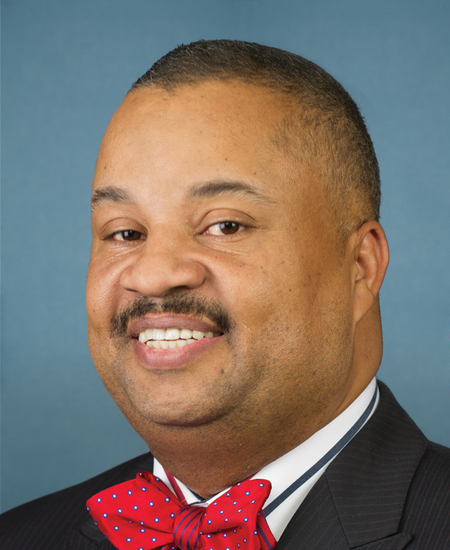
Rep. Donald M. Payne, Jr.
Sponsored bills
Maddy summaryThis bill prohibits children under 18 from having direct contact with tobacco plants or dried tobacco leaves on farms. It amends the Fair Labor Standards Act to explicitly add "tobacco-related agriculture" to the list of occupations where minors cannot work, alongside manufacturing and mining. The law directly affects young workers in tobacco farming by banning their hands-on involvement with crops and processed tobacco. This change updates existing labor protections to specifically cover tobacco farming operations. The policy would require farms to adjust employment practices to exclude minors from these tasks.
Maddy summaryHRES 485 is a non-binding resolution expressing the U.S. House of Representatives' support for designating June 9 as "Batten Disease Awareness Day." It does not create new laws or policies, but formally recognizes Batten disease - a rare, fatal neurological disorder affecting children - as a condition requiring public awareness. The resolution describes Batten disease as a genetic condition causing progressive vision loss, seizures, motor skill decline, and early death, with no known cure. It directly affects families and advocacy groups for this rare disease by promoting public recognition on a specific date. This is a symbolic gesture with no direct impact on healthcare, funding, or regulations.
Maddy summaryHRES 490 is a non-binding resolution supporting the designation of June 12-18, 2023, as "National Men’s Health Week." It acknowledges persistent health disparities affecting men (such as higher rates of heart disease, cancer, and lower healthcare engagement) and urges the public to focus on preventive care. The resolution requests the President issue a proclamation encouraging nationwide observance through awareness events and health screenings. It does not create new laws or funding but formally recognizes an existing annual observance established since 1994.
Maddy summaryHR 3953, the Debt Ceiling Reform Act, changes how Congress can block the Treasury from borrowing more money. It requires the Treasury to notify Congress when debt approaches a $1 trillion increment, giving Congress 30 days to pass a resolution disapproving further borrowing. The bill mandates strict timelines: the House must act within 6 days of introduction (with committees required to report bills within 5 days), and the Senate must consider the resolution within 6 days with limited debate. This process directly affects the Treasury’s ability to issue debt and Congress’s procedural control over debt ceiling decisions. The bill does not eliminate the debt ceiling but streamlines the disapproval process.
Maddy summaryHRES 480 is a symbolic House resolution recognizing National Caribbean American Heritage Month. It does not create new laws or affect specific groups; instead, it formally supports the goals of observing June as Caribbean American Heritage Month. The resolution encourages the public to celebrate through ceremonies and activities, while affirming that Caribbean Americans' contributions are integral to U.S. history and diversity. This is a commemorative resolution with no policy changes or funding impacts, aligning with annual proclamations since 2006.
Deposit Insurance Reform Act of 2023 This bill requires the Federal Deposit Insurance Corporation (FDIC) and the National Credit Union Administration (NCUA) to establish additional levels of deposit insurance. Currently, the FDIC and NCUA insures individual accounts up to $250,000. Under the bill, FDIC and NCUA must establish insurance amounts above existing levels that are applicable to commercial deposits. An institution may elect to apply a higher insurance amount to commercial deposits.
Maddy summaryThe American Family Act establishes a monthly child tax credit of $250 per month for each child under age 6 and $300 per month for each child aged 6-18, with income limits of $150,000 for joint filers and $112,500 for other filers. The credit is refundable, meaning it can be paid even if the taxpayer owes no income tax, and will be adjusted annually for inflation. The bill includes detailed rules for determining eligibility, including requirements that the child resides with the taxpayer for more than half the month and provisions to prevent fraud through recapture of improperly received payments. The credit will be paid monthly in advance rather than as a single annual payment, with specific mechanisms for calculating and distributing the payments.
Maddy summaryHR 698, the Assault Weapons Ban of 2023, prohibits the sale, manufacture, transfer, and possession of specific firearms and ammunition devices commonly referred to as "assault weapons" and "large capacity magazines" in interstate commerce. The bill defines "semiautomatic assault weapons" to include rifles like AR-15s and AK-47s, as well as firearms with specific features such as folding stocks, pistol grips, threaded barrels, and detachable magazines holding more than 15 rounds. It exempts law enforcement, military, antique firearms, and weapons already lawfully owned before the law's enactment (known as "grandfathered" weapons). The bill also requires new identification markings on these weapons and large capacity magazines, and adds background check requirements for transfers of grandfathered weapons.
Maddy summaryH.Res. 460 is a non-binding resolution expressing the House of Representatives' support for Congress to enact the Older Americans Bill of Rights. This resolution does not create new laws but calls for a proposed bill that would establish specific rights for older Americans, including access to affordable health care, financial security, and community participation. It highlights challenges like high prescription drug costs, retirement insecurity, and barriers to care, urging Congress to address these through legislative action. The resolution directly affects older Americans (ages 65+) and their families by advocating for policy changes to ensure dignity and independence.