

This concurrent resolution opposes actions that undermine Israel's future as a Jewish, democratic state. The resolution expresses that democracy is at the core of the special relationship between the United States and Israel, and that Congress stands with all Israelis seeking to defend liberal democracy, judicial review, and independent political institutions.
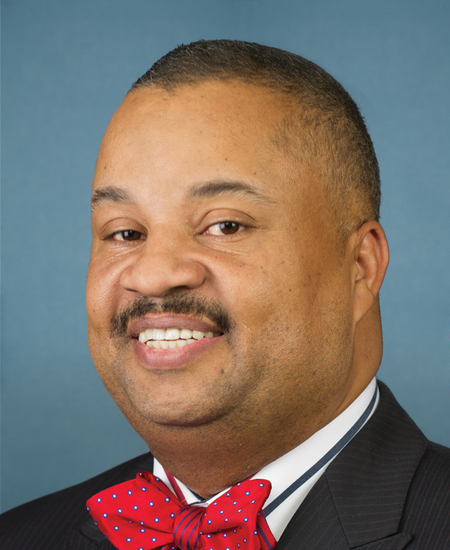
Rep. Donald M. Payne, Jr.
Sponsored bills
Maddy summaryHR 5064, the Public Housing Fire Safety Act, requires the Department of Housing and Urban Development (HUD) to inspect public housing for automatic sprinkler systems and report findings to Congress within three years. It establishes a competitive grant program using $25 million annually (2024-2033) from the Capital Fund to retrofit older public housing projects without sprinklers, excluding newly rebuilt properties. The bill directly affects public housing agencies managing buildings that lack sprinklers, providing funding to install them while clarifying that inspections and grants do not mandate retrofits for all properties. Key provisions include mandatory reporting on fire safety gaps and targeted funding to improve safety in older housing units.
Maddy summaryHR 4963, the Tax Fairness for Workers Act, would restore tax deductions for certain employee expenses. It creates an above-the-line deduction for union dues and expenses paid by wage-earning employees, and allows miscellaneous itemized deductions for other work-related expenses (like uniforms or supplies) that were previously disallowed after 2017 tax law changes. These provisions directly affect employees who pay union dues or incur qualifying job-related costs. The bill amends specific sections of the Internal Revenue Code to make these deductions available for taxable years beginning after December 31, 2022. It does not change tax rates or provide new benefits, only reinstating previously eliminated deductions for eligible workers.
Maddy summaryHR 4965, the Kimberly Vaughan Firearm Safe Storage Act, requires the Attorney General to create voluntary best practices for safe firearm storage in homes, businesses, vehicles, and other locations within 180 days of enactment, with public input. Starting January 1, 2025, firearm manufacturers must include a "SAFE STORAGE SAVES LIVES" notice with each new handgun, rifle, or shotgun, directing buyers to the public website with these guidelines. The bill also establishes a $10 million annual grant program for states and tribes to fund public programs distributing safe firearm storage devices (like locked containers) and requires grantees to use at least 75% of funds for these programs. It does not mandate storage for individuals but provides resources and information to promote safer practices.
Maddy summaryThis bill establishes the New York-New Jersey Watershed Restoration Program to coordinate habitat restoration and water quality improvements across the shared watershed region. It creates a grant program providing competitive federal funding (up to 90% for disadvantaged communities) to state/local governments, nonprofits, and tribes for projects like river restoration, green infrastructure, and community engagement. The program prioritizes environmental justice communities, advances climate-resilient solutions, and requires annual congressional reporting. The bill authorizes $20 million annually from 2024-2029, with a sunset provision ending in 2030.
Maddy summaryThis resolution (HRES 618) is a ceremonial recognition of hip-hop's 50th anniversary, marking August 11, 1973, as the date when DJ Kool Herc's Back to School Jam in the Bronx is credited with originating the culture. It acknowledges hip-hop's foundational role in American art, music, fashion, and its $1 billion+ annual economic impact, while highlighting its roots in Black creativity and evolution across regions. The resolution encourages House members to organize commemorative activities and urges local governments to partner with hip-hop entities to celebrate its cultural significance. As a symbolic gesture, it has no legal effect or direct impact on individuals or policy.
Maddy summaryHR 1776, the End Tuberculosis Now Act of 2023, would amend U.S. foreign assistance law to strengthen global tuberculosis (TB) programs. The bill requires U.S. assistance to align with the World Health Organization's End TB Strategy, aiming to reduce TB deaths by 95% and incidence by 90% by 2035. It mandates annual reporting on TB diagnosis and treatment progress, prioritizes research for new diagnostics and treatments, and emphasizes integrating TB services into primary health care. The legislation affects U.S. government agencies, global health partners, and countries with high TB burdens, particularly focusing on low- and middle-income nations.
Maddy summaryThis bill directs the U.S. Treasury to mint commemorative coins marking the Marine Corps' 250th anniversary in 2025. It authorizes three coin types: $5 gold coins (max 50,000), $1 silver coins (max 400,000), and half-dollar coins (max 750,000), with surcharges of $35, $10, and $5 respectively. The surcharge proceeds will fund the Marine Corps Heritage Center's educational programs, with no net cost to taxpayers as the Treasury must recover all minting costs through the surcharges. The coins can only be issued during 2025, and the Treasury must ensure all costs are covered before distributing funds to the Heritage Foundation.
Maddy summaryHR 4889, the Raise the Wage Act of 2023, would gradually increase the federal minimum wage for most workers to $15.50 per hour by 2027, with specific annual targets: $9.50 starting in 2023, rising to $11.00 after one year, $12.50 after two years, and $15.50 after four years. It would also phase out the separate lower minimum wage for tipped employees (starting at $6.00/hour) by aligning their pay with the regular minimum wage by 2028, while requiring employers to let workers keep all tips. The bill includes similar phased increases for workers under 20 and transitions toward fairer wages for workers with disabilities under special certificates, which would sunset after 2028. Future annual increases after 2028 would tie the minimum wage to the median hourly wage of all workers.
Maddy summaryHRES 608 is a non-binding House resolution recognizing the value of diversity, equity, and inclusion (DEI) efforts at colleges and universities. It affirms that DEI initiatives help create supportive learning environments where all students, faculty, and staff thrive, and specifically supports programs like implicit bias training and cultural competence resources. The resolution emphasizes that DEI efforts strengthen institutions’ ability to recruit diverse talent and align with academic freedom principles. It also notes concerns about state-level efforts to restrict DEI programs and states that such restrictions threaten campus inclusivity. As a symbolic resolution, it does not create new laws or funding but expresses congressional support for DEI work in higher education.