

Maddy summaryThe Feed Our Families Act of 2023 ensures SNAP (Supplemental Nutrition Assistance Program) benefits continue for 90 days during the first government shutdown in any fiscal year after 2023. It appropriates emergency funds from the Treasury to cover SNAP operations without requiring new congressional approval during this period. The funds are held in reserve and used solely for SNAP program needs, such as food assistance payments. This directly affects low-income households relying on SNAP for food security during funding gaps.
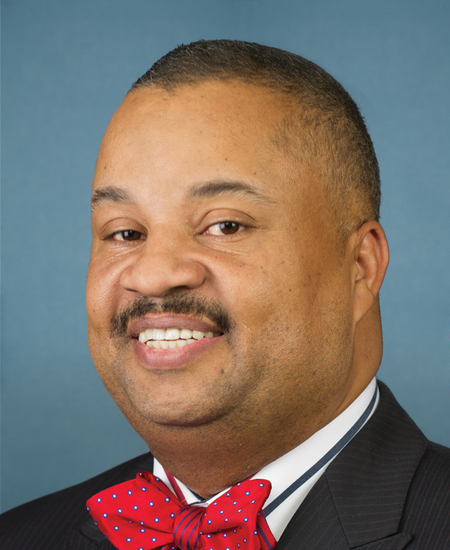
Rep. Donald M. Payne, Jr.
Sponsored bills
Maddy summaryHR 5784 would provide federal grants to public schools (including Bureau of Indian Education schools) to make them more environmentally sustainable and equitable. It prioritizes schools in the most vulnerable communities (based on CDC Social Vulnerability Index) for full funding to become "healthy zero-carbon schools" through energy-efficient retrofits and new construction, while offering reduced funding for less vulnerable schools. The grants require community engagement in planning, mandate hiring from local communities with specific diversity goals, fund social services and mental health support, and include strict energy efficiency standards for all projects. The bill also includes funding for educational equity planning and climate resiliency programs to help schools serve as community centers during disasters.
Maddy summaryThis bill requires the Federal Emergency Management Agency (FEMA) to implement concrete measures to ensure equitable disaster response and assistance. It mandates FEMA to modify data collection systems, develop equity criteria for all programs, appoint an equity advisor, and establish a steering group with diverse representation - all to address barriers faced by underserved communities (including racial minorities, rural areas, low-income populations, and those with disabilities). FEMA must also submit annual reports to Congress on progress and metrics measuring equity impacts, while the GAO will review FEMA’s decision-making factors for disaster declarations. These changes directly affect how FEMA delivers federal disaster aid, aiming to reduce disparities in access and outcomes for communities historically underserved in emergency management.
Guaranteed Income Pilot Program Act of 2023 This bill directs the Department of Health and Human Services (HHS) to establish and implement a three-year pilot program to provide a guaranteed monthly income to individual taxpayers between the ages of 18-65. HHS must consult with the Internal Revenue Service and certain nonpartisan and nonprofit agencies or academic institutions with expertise in social science experimentation to develop and award income subsidies to eligible taxpayers and to conduct a study on the outcomes of the program.
Maddy summaryThe WIC for Kids Act expands eligibility for the Special Supplemental Nutrition Program for Women, Infants, and Children (WIC) by adding new qualifying pathways. It allows children to qualify if they live in households where someone receives Head Start, Indian reservation food assistance, or Puerto Rico/Northern Mariana Islands nutrition block grants, and streamlines documentation by permitting states to use existing records. The bill extends certification periods for children from one to two years and automatically enrolls infants born to current WIC participants. This directly affects low-income families with children who qualify for related assistance programs but previously faced barriers to WIC access.
Maddy summaryThis resolution (HRES 728) expresses the U.S. House of Representatives' support for designating September 2023 as "Peripheral Artery Disease Awareness Month." It does not create new laws or policies but encourages public awareness and educational activities about peripheral artery disease (PAD), a condition affecting an estimated 20 million Americans, including higher-risk minority communities. The resolution highlights PAD's health risks - such as increased amputation and mortality rates - without imposing any requirements on individuals or institutions. As a symbolic gesture, it directly affects no one but aims to promote education on PAD prevention and early screening.
Maddy summaryThe Protect America's Children from Toxic Pesticides Act would require the Environmental Protection Agency to complete pesticide registration reviews within 15 years, with automatic suspension of pesticides that miss deadlines. It mandates the EPA to review pesticides banned in the European Union or Canada, with automatic cancellation if the ban is not found to be clearly erroneous. The bill would ban organophosphate pesticides, neonicotinoids, and paraquat, prohibit continued sale of suspended or canceled pesticides, and require full disclosure of inert ingredients on product labels. It also establishes new protections for farmworkers by requiring bilingual labels, mandating incident reporting, and imposing penalties for non-compliance. These changes would directly affect pesticide manufacturers, farmers, farmworkers, and communities seeking to protect public health and the environment.
Maddy summaryThe EQIP Improvement Act of 2023 modifies payment rules for the Environmental Quality Incentives Program (EQIP), which helps farmers and ranchers adopt conservation practices. It establishes tiered payment limits: 75% of costs for most practices, 40% for specific infrastructure like irrigation systems or waste facilities, and 100% coverage for income lost by producers. The bill also reduces a payment cap from $450,000 to $150,000 per producer and requires annual reports to Congress detailing program spending by practice type, state, and farm size. These changes directly affect agricultural producers participating in EQIP by altering their financial support for conservation efforts.
Maddy summaryHR 4943, the Enabling Farmers to Benefit from Processing Nutrition Programs Act of 2023, simplifies how farmers and ranchers can join federal nutrition programs like SNAP, senior farmers' market programs, and WIC farmers' market initiatives. It requires the USDA to create either a single application for all programs or a system that automatically shares approved vendor information across programs, eliminating duplicate paperwork for farmers. The bill also mandates the use of standardized mobile technology, such as mobile apps or single-point equipment, to process benefits at farmers markets and direct-to-consumer sales. This directly benefits direct marketing farmers and ranchers by reducing administrative barriers to participating in these nutrition assistance programs.
Maddy summaryHRES 709 is a symbolic resolution designating September 2023 as "National Cholesterol Education Month" and September 30, 2023, as "LDL-C Awareness Day." It encourages all U.S. residents - particularly underserved communities disproportionately affected by cardiovascular disease (including people of color and rural populations) - to know their LDL cholesterol levels. The resolution highlights that high LDL-C is a key preventable risk factor for heart attacks and strokes, citing low testing rates (e.g., only 27% of heart attack patients get tested post-hospitalization). It does not create new laws or funding but aims to raise awareness about the importance of LDL-C screening and management.