

Goldie's Act This bill expands enforcement provisions under the Animal Welfare Act (AWA). Specifically, the bill directs the Department of Agriculture (USDA) to document and record detailed descriptions of violations of the act observed during inspections and investigations. USDA must provide a copy of all records documenting violations to state, local, and municipal animal control or law enforcement officials within 24 hours of such inspections or investigations. Inspections must be held at least once a year of each research facility, the premises of each animal dealer, and each exhibitor of animals. If violations are found during inspections, then USDA must conduct any necessary follow-up inspections until all the violations are corrected. Inspectors must confiscate or destroy in a humane manner animals found to be suffering physical or psychological harm as a result of failure to comply with the AWA. Violators are subject to civil penalties as outlined in the bill.
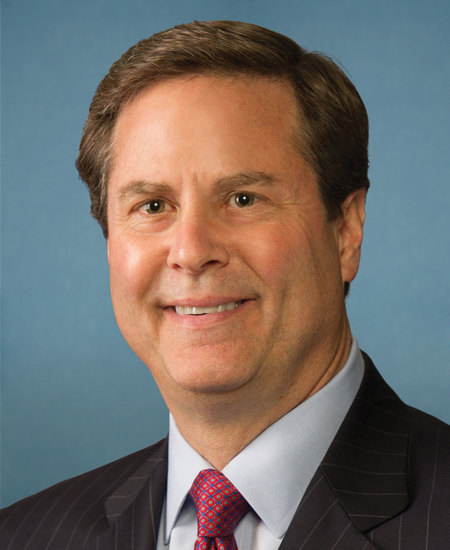
Rep. Donald Norcross
Sponsored bills
Maddy summaryThis bill (HR 1314, TIPS Act) requires employers to pay tipped workers the standard federal minimum wage instead of the current lower rate (currently $2.13/hour), directly affecting workers in hospitality, food service, and similar roles. It also creates a new tax deduction for cash tips received in qualifying jobs (e.g., restaurants, hotels), allowing workers to deduct these tips from taxable income up to $112,500 in adjusted gross income. The deduction applies only to tips from unrelated customers without business ownership stakes, excluding credit card tips. The tax provisions take effect for 2026 tax years.
Maddy summaryThis bill requires federal agencies administering water infrastructure funding (like the WIFIA program) to ensure projects have construction payment and performance security. It directly affects contractors working on federally assisted water projects and state/local governments with construction requirements. The key provision mandates that projects must have security covering at least 50% of the construction contract value - either through state/local rules or federal bonds meeting specific standards under 40 U.S.C. §3131(b). This aims to protect taxpayers by reducing the risk of unpaid subcontractors or project failures. The bill modifies existing federal requirements without creating new funding or altering project eligibility.
More Homes on the Market Act This bill increases the amount of gain from the sale of a principal residence that an individual may exclude from gross income (for federal tax purposes). Under the bill, an individual may exclude from gross income gain from the sale of a principal residence of up to $500,000 (currently $250,000), and taxpayers who are married and file a joint federal income tax return may exclude up to $1 million (currently $500.000). The bill also requires these amounts to be adjusted annually for inflation.
Maddy summaryHR 1321, the "Ending DOGE Conflicts Act," requires special government employees (like officials overseeing federal contracts) who own, control, or lead companies doing business with the government to file financial disclosure reports with the Office of Government Ethics. These employees must now comply with the same financial disclosure rules as other government officials under Title 5 of the U.S. Code. Until their initial report is certified as compliant by the Office of Government Ethics, these employees are prohibited from performing any official duties related to federal contracting. The bill directly affects high-level government officials with direct financial ties to federal contractors.
Maddy summaryThis bill reauthorizes the Delaware River Basin Restoration Program through 2032, extending funding for watershed restoration projects. It adds Maryland as a fifth Basin state (previously a 4-State program) and requires the program to prioritize projects benefiting small, rural, or disadvantaged communities. The bill also updates definitions and administrative provisions from the original 2016 program under the Water Infrastructure Improvements for the Nation Act. This affects restoration efforts across the Delaware River Basin states (Delaware, New Jersey, New York, Pennsylvania, and Maryland).
United States-Israel Defense Partnership Act of 2025 This bill requires or authorizes certain actions to increase defense-related cooperation between the United States and Israel. Specifically, the bill requires the Department of Defense (DOD) to establish a cooperative program, with the concurrence of Israel's Ministry of Defense (MOD), to develop and deploy advanced technologies for countering unmanned systems that threaten the United States and Israel; establish in Israel an office of the Defense Innovation Unit (an organization that focuses on rapidly fielding and scaling commercial technology across the U.S. military); and seek to engage Israel's MOD on the ascension of Israel into the national technology and industrial base (currently defined in law as the persons and organizations engaged in research, development, production, integration, services, or information technology activities conducted within the United States, the United Kingdom, Australia, New Zealand, and Canada). The bill authorizes DOD, upon request of Israel's MOD, to jointly conduct research, development, test, and evaluation (RDT&E) of emerging technologies such as artificial intelligence and robotics to meet defense challenges. Additionally, the bill extends the authority for DOD to (1) carry out RDT&E on a joint basis with Israel to establish anti-tunnel and counter unmanned aerial systems capabilities through 2028, and (2) transfer defense articles intended for use as reserve stocks for Israel through January 1, 2029.
Maddy summaryHR 1269, the Honoring Our Fallen Heroes Act of 2025, expands benefits for public safety officers (like police and firefighters) who develop certain cancers linked to their work. It adds 22 specific cancers - including lung, mesothelioma, and breast cancer - to the list of conditions presumed to be "exposure-related" and sustained in the line of duty. This presumption applies if the officer served at least 5 years, was diagnosed with the cancer within 15 years after last active duty, and the cancer directly caused death or permanent disability. The bill also establishes a process for adding new cancers every 3 years based on medical evidence from agencies like NIOSH, and allows claims to be filed within 3 years of the law's enactment.
Maddy summaryThis resolution (HRES 123) is a symbolic gesture by the U.S. House of Representatives congratulating the Philadelphia Eagles football team on their victory in Super Bowl LIX. It directly recognizes the team's achievement, citing specific game details like Jalen Hurts' performance and the team's journey. The resolution contains no new laws or policy changes - it merely expresses congressional appreciation through two formal statements of congratulations. As a ceremonial resolution, it does not affect any laws, regulations, or individuals beyond acknowledging the team's win.
Maddy summaryHR 1196 prohibits using federal funds to eliminate the U.S. Agency for International Development (USAID) as an independent agency, as defined by law. It requires the Secretary of State to certify annual compliance with this restriction to the House Foreign Affairs and Senate Foreign Relations committees. The bill directly affects USAID's operational status and U.S. foreign aid programs by preventing congressional or executive actions that would dismantle or merge the agency, maintaining its role in U.S. international development efforts.