

Maddy summaryThe Empowering Striking Workers Act of 2025 would expand unemployment insurance eligibility to workers unable to work due to labor disputes, including strikes or lockouts. It sets a 14-day waiting period (or earlier if replacements are hired, a lockout starts, or the dispute ends) before benefits begin, treating these workers as "unemployed" under federal law. The bill also removes the standard requirement for these workers to actively seek other employment to qualify for benefits. This directly affects workers involved in labor disputes, such as those on strike or unable to work due to employer lockouts.
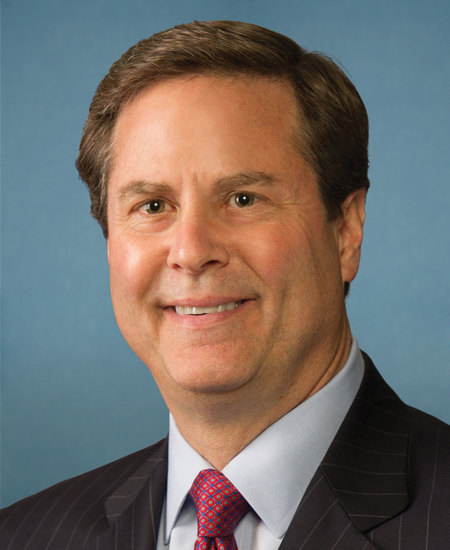
Rep. Donald Norcross
Sponsored bills
Maddy summaryThis bill names the Department of Veterans Affairs community-based outpatient clinic in Toms River, New Jersey, as the "Leonard G. 'Bud' Lomell VA Clinic." It directly affects the existing clinic facility by changing its official name to honor World War II veteran Leonard G. "Bud" Lomell. The key provision updates all federal references to the clinic - including laws, regulations, maps, and documents - to reflect this new designation after the bill's enactment. The change is purely administrative and does not alter the clinic's services or operations.
Maddy summaryThis bill requires the EPA to establish guidelines for indoor air contaminants like radon, formaldehyde, and carbon monoxide that affect schools and childcare facilities. It mandates a national assessment of indoor air quality in these buildings, with updates every five years, and provides technical assistance to schools and childcare providers to implement air quality improvements. The EPA must publish science-based guidelines with recommended concentration limits for key contaminants and support voluntary building certifications for healthier indoor environments. These provisions directly impact local schools, childcare centers, and state/local governments responsible for building maintenance and health standards.
Maddy summaryThis bill prohibits Members of Congress, their spouses, and dependent children from owning or trading certain investments, including stocks, commodities, and derivatives (referred to as "covered investments"). It requires affected individuals to divest these investments within 90-180 days, with specific exemptions for Treasury bonds, diversified mutual funds, small business interests, and family trusts meeting strict conditions. Violations incur penalties of 10% of the investment's value plus disgorgement of profits, paid directly to the U.S. Treasury. The law applies to all covered individuals during federal service, with exceptions for investments acquired through inheritance or occupational trading (e.g., a spouse’s finance job).
Maddy summaryHRES 670 is a symbolic resolution (not a law) expressing congressional support for designating September 22 as "National Military and Veterans Suicide Awareness Day." It aims to raise public awareness about mental health challenges and suicide prevention within military service members and veterans, acknowledging their sacrifices and the need to reduce stigma around seeking help. The resolution does not create new programs, allocate funding, or change existing policies - it simply encourages national attention during Suicide Prevention Awareness Month in September. This designation directly affects the military and veteran communities by promoting dialogue about their mental health needs.
Maddy summaryThis bill designates Peter J. McGuire's memorial and gravesite in Pennsauken, New Jersey, as the "Peter J. McGuire Memorial National Commemorative Site." It clarifies the site is not part of the National Park System and allows for cooperative agreements to provide public educational programs. The designation does not affect property owners' rights regarding the site. As a commemorative resolution, it focuses solely on recognizing McGuire's historical significance in labor history.
Maddy summaryHR 5048, the "Don’t STEAL Act," amends the Fair Labor Standards Act to ensure workers receive the highest wage promised in their contracts or collective bargaining agreements, whichever exceeds federal or state minimum wage requirements. It directly affects employees engaged in commerce or working for businesses involved in commerce, requiring employers to pay at least the higher of their agreed-upon wage or the legal minimum. The bill establishes criminal penalties for willful wage theft exceeding $1,000 (up to 5 years in prison) and civil penalties for all unpaid wages, with fines funding the Department of Labor’s Wage and Hour Division enforcement efforts. These changes apply to violations occurring 90 days after enactment.
Maddy summaryHR 4966 prohibits grocery stores from selling items at "grossly excessive prices," defined as 120% or more above the average market price over the previous six months (with exceptions for unavoidable cost increases like supply chain issues). It bans using facial recognition or personal data to set different prices for individual customers (e.g., adjusting prices based on shopping history) and requires clear signage if facial recognition is used. Stores over 10,000 square feet must replace electronic shelf labels with physical price tags. The Federal Trade Commission enforces these rules, allowing consumers to seek $3,000 per violation or actual damages, with penalties for willful violations.
Maddy summaryThe Warehouse Worker Protection Act establishes new requirements for employers in warehouse facilities to protect workers from harmful quotas and workplace surveillance practices. It requires employers to provide written descriptions of quotas and workplace monitoring to workers, prohibits quotas that interfere with breaks, safety compliance, or anti-discrimination rights, and gives workers the right to access their work speed data. The bill creates a Fairness and Transparency Office within the Department of Labor to enforce these requirements and investigate violations, with enforcement also involving the Federal Trade Commission. Employers with more than 200 employees at covered warehouse facilities (including distribution centers, couriers, and warehouses) are directly affected by these new requirements, which include new protections against retaliation for workers who exercise these rights.
Maddy summaryThis bill requires the U.S. Department of State to include specific, detailed reporting on reproductive rights in its Annual Country Reports on Human Rights Practices. It mandates descriptions of each country's policies regarding access to contraception, abortion services, and comprehensive reproductive health care, alongside data on pregnancy-related deaths, discrimination against women and LGBTQI+ individuals, and disparities based on race, disability, or other factors. The bill also directs the State Department to consult with civil society organizations and health experts to ensure thorough reporting on these issues. This change aims to align U.S. reporting with international human rights standards and address past omissions of reproductive rights from these reports.