

Maddy summaryThe American FIRST Act of 2023 requires U.S. banking regulators to provide Congress with detailed reports before implementing certain rules or recommendations. Regulators must submit notice, a justification report, and potential testimony 120 days before implementing rules that would cost $10 billion or more annually or align with international recommendations from organizations like the Financial Stability Board. The bill also mandates annual reporting on all interactions with international banking organizations, including details about their funding sources. It removes the "Vice Chairman for Supervision" position at the Federal Reserve. The bill directly affects five major banking regulators: the Federal Reserve, FDIC, OCC, NCUA, and FHFA.
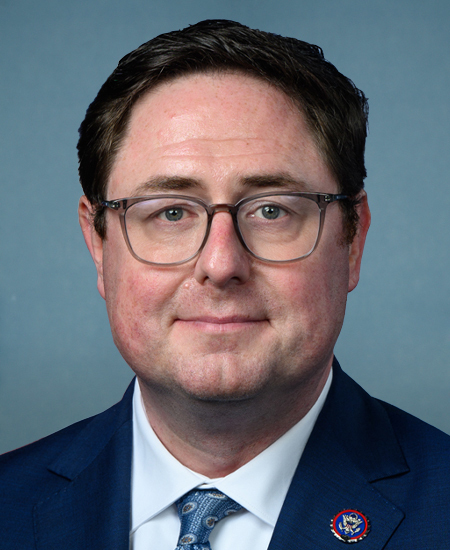
Rep. Mike Flood
Sponsored bills
Maddy summaryThis bill clarifies the Consumer Financial Protection Bureau's (CFPB) authority to enforce rules against "unfair, deceptive, or abusive acts or practices" (UDAAP) affecting consumers. It defines "abusive" acts as those intentionally interfering with consumer understanding or taking unreasonable advantage of consumer vulnerabilities, requiring the CFPB to provide a clear definition within 180 days. Financial institutions must now receive written notice and 180 days to correct potential violations before penalties are imposed, and the CFPB must conduct cost-benefit analyses for new rules. The bill also prohibits the CFPB from treating discrimination as part of UDAAP enforcement and limits penalties for past conduct to the most recent compliance rating period.
Maddy summaryHR 3063, the Retirement Fairness for Charities and Educational Institutions Act of 2023, modifies securities laws to clarify exemptions for certain retirement plans. It expands the definition of exempt retirement plans under the Investment Company Act, Securities Act of 1933, and Securities Exchange Act of 1934 to include 403(b) plans used by charities and educational institutions. These plans must meet specific conditions, such as being subject to ERISA or having employers act as fiduciaries for investment choices. The bill directly affects eligible organizations by reducing regulatory barriers for offering retirement benefits to their employees. This change simplifies compliance without altering the core structure of retirement plans.
Maddy summaryHJRES 88 is a resolution seeking to block a Department of Education rule that would have improved income-driven repayment options for federal student loan borrowers. The rule, published in the Federal Register on July 10, 2023, targeted the William D. Ford Direct Loan Program and the Federal Family Education Loan (FFEL) Program. This resolution uses the Congressional Review Act process to disapprove the rule, preventing it from taking effect and preserving the current repayment structure. If enacted, it would stop the proposed changes to repayment terms without altering existing loan policies.
This resolution disapproves of the United Nations' recommendations to reduce meat consumption in their global food systems' road map and opposes the use of federal resources to reduce meat consumption.
Maddy summaryHR 6684, the *Improving Efficiency to Increase Competition Act*, directs the Government Accountability Office (GAO) to study how the Bayh-Dole Act’s patent disclosure rules affect contractors (like universities and companies receiving federal research funds). The GAO must report within one year on issues including delays in patent disclosures, burdens on institutions of higher education, challenges with the iEdison patent reporting system, and inconsistencies across federal agencies. This study aims to identify inefficiencies in current reporting requirements that may hinder U.S. competitiveness. The bill itself does not change laws but mandates this review to inform potential improvements to federal reporting processes.
Maddy summaryThe Flex Fuel Fairness Act of 2023 requires the Environmental Protection Agency (EPA) to adjust emissions calculations for flexible fuel vehicles (FFVs) that run on E85 (a fuel blend containing 85% ethanol). It mandates that the EPA use a 31% lower CO2 emissions value for FFVs compared to standard gasoline vehicles, based on a study showing E85 reduces emissions by 31% per mile. This change directly helps vehicle manufacturers meet federal fleet emissions standards by making it easier to count FFVs as lower-emission vehicles. The EPA may further adjust this percentage higher if future studies support a larger reduction.
Maddy summaryThis bill creates tax incentives to support the production of renewable chemicals in the United States. It establishes two main credits: a 15% production credit on qualifying renewable chemicals (which must be at least 95% biobased, produced from renewable biomass in the U.S., and not used for food, feed, fuel, or pharmaceuticals) and a 30% investment credit for facilities producing these chemicals. The credits are subject to a $500 million national limit and $125 million per company cap, with allocations based on factors like job creation, reduced reliance on fossil fuels, and commercial viability. These credits are available for 5 years after enactment and can be used to offset the alternative minimum tax.
Maddy summaryH.J.Res. 66 disapproves a specific rule issued by the Consumer Financial Protection Bureau (CFPB) regarding small business lending under the Equal Credit Opportunity Act (Regulation B). The resolution, if passed, would prevent this CFPB rule from taking effect by declaring it "have no force or effect." The rule in question (88 Fed. Reg. 35150) aimed to clarify how lenders must evaluate small business loan applications under existing equal credit laws. This disapproval directly affects the CFPB's regulatory authority and would block the rule's implementation for small business lenders and financial institutions.
Maddy summaryThis bill appropriates $14.3 billion in supplemental security funding to Israel following the October 7, 2023 attacks. The funding includes $4 billion for Iron Dome and David's Sling defense systems, $1.35 billion for the Iron Beam defense system development, and $3.5 billion for foreign military financing. The bill requires regular reporting to Congress on security assistance provided to Israel and designates all funds as "emergency requirements" under federal budget law. It also modifies existing laws to facilitate the transfer of defense articles and services to Israel, aiming to strengthen Israel's defense capabilities against rocket threats.