

Maddy summaryHR 9374, the Stand with Israel Act, prohibits U.S. federal funds from being used to support the United Nations or its entities if they restrict Israel's full participation as a member state. The bill specifically blocks funding for any UN body that expels, downgrades, or suspends Israel's membership or limits its ability to participate equally with other nations. This affects U.S. government contributions to the UN, requiring the Department of State and other agencies to halt funding for such UN actions. The key mechanism is a new provision in the UN Participation Act that mandates this funding restriction whenever Israel's UN participation is impaired.
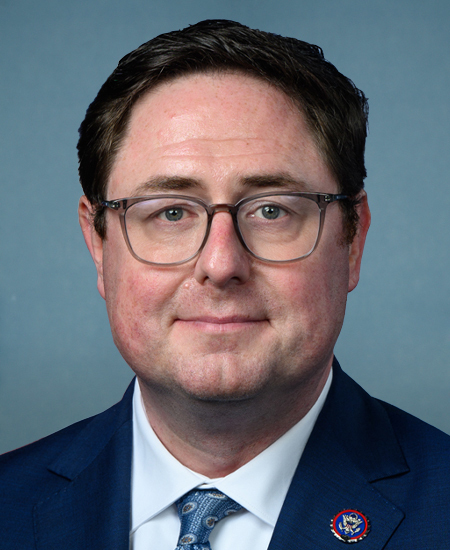
Rep. Mike Flood
Sponsored bills
Maddy summaryThis bill requires the Energy Information Administration (EIA) to include new data on sustainable aviation fuel (SAF) in its regular energy reports, such as the Petroleum Supply Monthly. The data must cover feedstock sources (by state, U.S. total, and foreign countries), production volumes, and imports, while defining SAF as fuel meeting environmental standards (at least 50% lower lifecycle emissions than jet fuel) and not derived from palm oil or petroleum. The EIA must collect this information using reliable statistical methods without double-counting. This provides transparency on the SAF industry but does not change production rules or regulations.
Freedom from Unfair Gun Taxes Act of 2024 This bill prohibits states or localities from imposing a levy or collecting an excise tax on the sale of a firearm, ammunition, or any part or component thereof, by a manufacture or retailer.
Maddy summaryHJRES 127 is a congressional disapproval resolution targeting a Securities and Exchange Commission (SEC) rule requiring public companies to standardize climate-related financial disclosures. It seeks to block the SEC’s March 2024 rule (89 Fed. Reg. 21668), which would mandate consistent reporting on climate risks for investors. If passed, this resolution would prevent the SEC rule from taking effect, directly affecting publicly traded companies required to comply with the proposed disclosure standards. The bill uses a specific congressional process under Title 5, U.S. Code, to nullify the rule without creating new regulations.
Maddy summaryThe Respect State Housing Laws Act amends the CARES Act by removing subsection (c) of Section 4024, which governed notice requirements for housing assistance programs. This change eliminates a specific federal notice provision that applied to tenants and landlords receiving CARES Act housing aid. The bill directly affects the administrative process for housing assistance under the CARES Act, streamlining or removing a requirement for notice delivery. It modifies an existing provision without creating new policy or altering broader housing protections.
Maddy summaryThis bill requires the HUD Inspector General to provide annual testimony before the House Financial Services Committee and Senate Banking Committee by October 1 each year. The testimony must cover specific areas: efforts to detect fraud/waste, audit and investigation capabilities, program improvement opportunities, and ongoing oversight activities. It directly affects HUD's Inspector General and the designated congressional committees by establishing a formal reporting requirement. The bill does not change HUD programs but mandates regular transparency about oversight work.
Maddy summaryThis resolution (HRES 1363) is a ceremonial tribute honoring Patrick Gottsch, founder of Rural Media Group, Inc. (which operates RFD-TV, The Cowboy Channel, and related media platforms). It recognizes his work founding the first 24-hour rural-focused television network in 2000, which reached over 40 million homes globally and promoted agricultural, equine, and rural lifestyle programming. The resolution commemorates his legacy following his passing on May 18, 2024, and his contributions to rural American media. As a commemorative resolution, it does not create policy changes or affect any individuals or groups.
Maddy summaryThis bill expands the U.S. Secret Service's authority to investigate cybercrime-related money laundering by adding Section 1960 (money laundering) to its jurisdiction and updating definitions for financial institutions. It requires financial institutions to report suspicious activity for 10 years (up from 5) under FinCEN rules and increases the number of international financial institutions targeted for cooperation from 5 to 10. The law directly affects financial institutions, law enforcement agencies, and international financial bodies by modifying reporting timelines, investigative powers, and cross-border collaboration requirements. These changes aim to strengthen efforts against cybercrime money laundering through updated legal frameworks and extended oversight periods.
Maddy summaryThis bill transfers specific federal lands in Iowa and Nebraska from the Army Corps of Engineers to the Bureau of Indian Affairs, then places those lands into trust for the Winnebago Tribe of Nebraska. The lands, described in detail as Tracts 119, 210, and 113, are declared part of the tribe's historic 1865 reservation under the same terms as the original treaty. The bill explicitly prohibits Class II and Class III gaming on these lands under the Indian Gaming Regulatory Act.
Maddy summaryHJRES 109 is a procedural resolution seeking congressional disapproval of a Securities and Exchange Commission (SEC) accounting rule. It targets the SEC's "Staff Accounting Bulletin No. 121" (SAB 121), which provides guidance on revenue recognition accounting for public companies. The resolution invokes federal law (Chapter 8 of Title 5) to block the rule, following a Government Accountability Office (GAO) determination that SAB 121 qualifies as a "rule" subject to congressional review. If enacted, this resolution would prevent SAB 121 from taking effect, directly affecting how public companies report revenue in financial statements.