This bill requires the Department of Agriculture (USDA) to submit a report on the potential costs and benefits of its proposed rule governing the importation of live sheep, goats, other ruminants, and products derived from sheep and goats. It also bars USDA from finalizing, implementing, administering, or enforcing the rule until one year after the date that USDA submits the report.
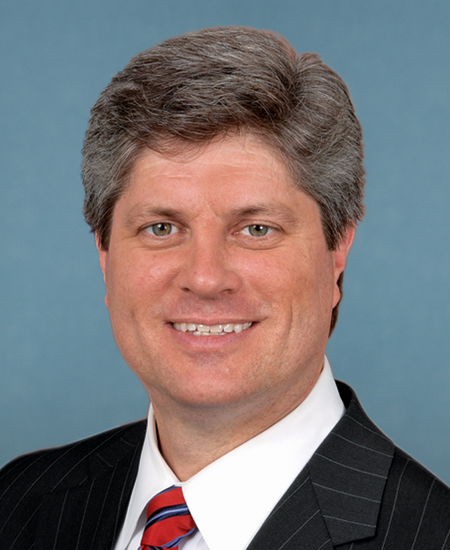
Rep. Jeff Fortenberry
Sponsored bills
Cures 2.0 Act This bill addresses pandemic preparedness and public health issues, caregiver and patient engagement, drug development, insurance coverage, and biomedical research. The Department of Health and Human Services (HHS) must undertake research and other activities concerning COVID-19 and develop a strategy for future pandemics and declared emergencies. Additionally, the bill specifies actions to combat antimicrobial resistance. HHS may award grants for caregiver training. The bill also addresses diversity in clinical trials, collecting patient experience data during clinical trials, and coverage for care related to participation in specified clinical trials. The bill modifies the timeframe and requires additional guidance relating to expedited approval of certain breakthrough drugs, devices, or products. It also establishes two intercenter institutes within the Food and Drug Administration (FDA) focused on particular diseases that meet specified criteria. The bill also addresses (1) coverage in Medicare, Medicaid, and the Children's Health Insurance Program for telehealth, genetic and genomic testing, and other services; (2) electronic prescribing standards for Medicare drug benefits; and (3) access to Medicare and Medicaid claims data by certain registries. Furthermore, the bill prohibits the use of geographic tracking or biometrics in Medicaid electronic visit verification systems. The bill establishes the Advanced Research Projects Agency for Health (ARPA-H) within the National Institutes of Health to accelerate biomedical research and innovation through grants, contracts, cash prizes, and other means. The FDA may work with ARPA-H to expedite the development of medical products through specified activities.

Accelerating Access to Critical Therapies for ALS Act This bill establishes grant programs to address neurodegenerative diseases, such as amyotrophic lateral sclerosis (also known as ALS or Lou Gehrig's disease), and contains other related provisions. The Department of Health and Human Services (HHS) shall award grants to eligible entities for scientific research utilizing data from expanded access to investigational ALS treatments for individuals who are not otherwise eligible for clinical trials. The Food and Drug Administration (FDA) shall award grants to public and private entities to cover the costs of research and development of drugs that diagnose or treat ALS and other rare neurodegenerative diseases. HHS shall also establish the Public-Private Partnership for Neurodegenerative Diseases between the National Institutes of Health, the FDA, and at least one eligible entity (generally, an institution of higher education or a nonprofit organization). The partnership shall support the development and regulatory review of drugs that address ALS and other rare neurodegenerative diseases. The FDA shall publish on its website a five-year action plan for fostering the development of drugs that improve or extend the lives of people living with rare neurodegenerative diseases. The Government Accountability Office must report to Congress about the grants provided under this bill, including an analysis of the impact of such grants on research and development of treatments for ALS.
This bill posthumously provides for the award of a Congressional Gold Medal in commemoration of the 13 service members who died on August 26, 2021, while stationed at Hamid Karzai International Airport in Afghanistan.
Indian Buffalo Management Act This bill establishes a permanent program within the Department of the Interior to develop and promote tribal ownership and management of buffalo and buffalo habitat on Indian lands. Specifically, the bill requires Interior to (1) enter into contracts, award grants, and provide technical assistance to Indian tribes and tribal organizations for activities related to buffalo restoration or management; (2) consult with tribes and tribal organizations on initiatives that affect buffalo or buffalo habitat, including efforts to contain or eradicate diseased buffalo; and (3) develop a policy relating to buffalo and buffalo habitat management activities on Indian land. Additionally, Interior may enter into agreements with tribes or tribal organizations to transport surplus buffalo from federal land onto Indian land.
This resolution expresses that the International Atomic Energy Agency (IAEA) plays an indispensable role in strengthening nuclear security and safety around the globe. The resolution also reaffirms that the United States has a vital interest in preventing the spread of nuclear weapons and securing nuclear materials.
Cattle Price Discovery and Transparency Act of 2021 This bill requires the Department of Agriculture (USDA) to take various actions to address transparency in pricing and contract terms in the cattle industry. Among these requirements, USDA must (1) establish regional minimum percentages of cattle that meat packers must procure through negotiated purchases or negotiated grid purchases (i.e., transactions where the price is known and negotiated at the time of the transaction), and (2) maintain a publicly available catalog of contracts offered by meat packers to livestock producers for the purchase of fed cattle.
Defend the Blend Act This bill prohibits the Environmental Protection Agency from reducing under the renewable fuel program any applicable volume, or any renewable fuel obligation or applicable percentage that has already been finalized for any calendar year.
Conscience Protection Act of 2021 This bill provides statutory authority for certain protections for health care providers that refuse to participate in abortions based on religious beliefs or other convictions. Health care providers include individual professionals, medical facilities, health insurance organizations, and social services providers that refer clients to health care services. The federal government and entities that receive federal funding for health-related activities, including state and local governments, may not discriminate against a health care provider that refuses to be involved in, or provide coverage for, abortions. Currently, similar requirements apply to various related activities, including certain employment or personnel decisions (the Church Amendments), abortion services training (the Coats-Snowe Amendment), qualified health plans offered through health insurance exchanges, and annual appropriations bills for the Department of Health and Human Services (HHS) and other federal agencies (the Weldon Amendment). The HHS Office for Civil Rights must investigate complaints of this kind of discrimination. Furthermore, HHS may terminate or reduce HHS funding for health-related activities if a person or entity fails to comply with nondiscrimination requirements. Additionally, the Department of Justice or any entity adversely affected by such discrimination may bring a civil action to obtain appropriate relief. A plaintiff does not need to seek or exhaust administrative remedies before bringing the action. A plaintiff may also bring an action, including one for money damages, against a governmental entity. In many cases, principles of sovereign immunity shield states and some localities from these kinds of actions.
Maddy summaryHR 6020, the Supporting Medicare Providers Act of 2021, extends temporary Medicare payment increases for physicians through 2022 instead of ending them on January 1, 2022. It updates specific dates in Medicare law (Section 1848(t) of the Social Security Act) to maintain current payment rates for doctors treating Medicare patients. This directly affects physicians and clinics participating in Medicare who rely on these temporary payment adjustments. The bill makes no new policy changes but ensures existing payment levels continue for providers during 2022.