

Resetting the Impact Act of 2021 or the TRIA Act of 2021 This bill requires certain data collection and recommendations relating to a Medicare post-acute care prospective payment system to incorporate the effects of COVID-19 on providers and patients. Current law requires the Centers for Medicare & Medicaid Services (CMS) and the Medicare Payment Advisory Commission to develop a prototype for a unified Medicare payment system for post-acute care that is based primarily on patient characteristics (e.g., cognitive ability, functional status, or impairments) rather than the provider setting (e.g., skilled nursing facility, home health agency, inpatient rehabilitation facility, or long-term care hospital). The bill requires the prototype to account for the role of post-acute care providers during public health emergencies, particularly in light of the COVID-19 emergency and the related effects on such providers and their patients. The bill also delays the development of the prototype until two years after the later of January 1, 2022, and the date by which the CMS has collected eight calendar quarters of data after the emergency ends and other changes have been implemented.
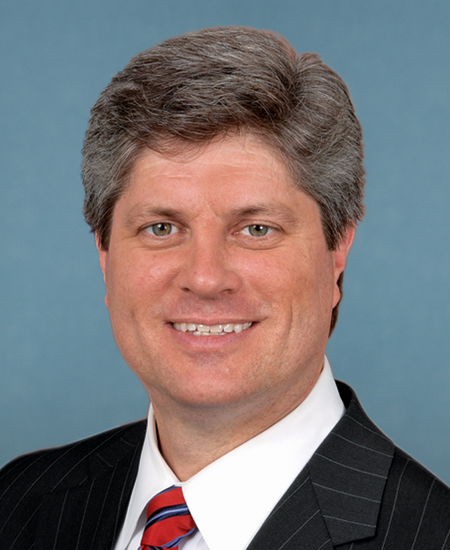
Rep. Jeff Fortenberry
Sponsored bills
Veterinary Medicine Loan Repayment Program Enhancement Act This bill modifies the requirements for calculating taxable income to exclude from gross income payments under the federal veterinary medicine loan repayment program or any state loan repayment or forgiveness program that is intended to provide for increased access to veterinary services in such state.
Historic Tax Credit Growth and Opportunity Act of 2021 This bill increases the rehabilitation tax credit and modifies certain requirements for the credit. The bill increases the rate of the credit for qualified rehabilitation expenditures in taxable years beginning after December 31, 2019, and before January 1, 2027, after which the rate reverts to 20%. The bill increases the rate of the credit to 30% for certain small projects whose qualified rehabilitation expenditures do not exceed $2.5 million. The bill also expands the types of buildings eligible for rehabilitation by decreasing the rehabilitation threshold from 100% to 50% of project expenses. It also eliminates the basis adjustment requirement for the credit and modifies rules relating to tax-exempt use property eligible for the credit.
Strengthening Local Processing Act of 2021 This bill revises provisions related to meat and poultry processing establishments, including smaller establishments (i.e., those with between 10 and 500 employees) and very small establishments (i.e., those with fewer than 10 employees or annual sales of less than $2.5 million). For example, the Department of Agriculture (USDA) must establish a searchable database of peer-reviewed validation studies for use in developing Hazard Analysis and Critical Control Points plans for smaller and very small establishments. The bill increases the maximum federal cost share from 50% to 65% that USDA may provide to assist states in creating meat and poultry inspection programs. Additionally, USDA must conduct outreach with states that have meat and poultry inspection programs, but that do not have Cooperative Interstate Shipment programs. The Cooperative Interstate Shipment program allows state-inspected facilities to operate as federally-inspected facilities and ship their products in interstate commerce and internationally. USDA must also award competitive grants for activities to adapt production, processing, distribution, and sales systems to respond to and recover from the effects of the COVID-19 pandemic, including activities that support (1) the health and safety of meat and poultry plant employees, suppliers, and customers; (2) increased processing capacity; and (3) the resilience of the small meat and poultry processing sector. Further, the bill establishes grant programs to (1) establish or expand career training programs at community colleges, vocational schools, and universities related to meat and poultry processing; and (2) support smaller and very small establishments by offsetting the cost of training new meat and poultry processors.
Willie O'Ree Congressional Gold Medal Act This bill provides for the award of a Congressional Gold Medal to Willie O'Ree or, if unavailable, to a member of his family, in recognition of his contributions and commitment to hockey, inclusion, and recreational opportunity.
Emmett Till and Mamie Till-Mobley Congressional Gold Medal Act of 2021 This bill provides for the posthumous presentation of a Congressional Gold Medal in commemoration of Emmett Till and Mamie Till-Mobley. After the award the medal shall be given to the National Museum of African American History and Culture.
Safe Step Act This bill requires a group health plan to establish an exception to medication step-therapy protocol in specified cases. A medication step-therapy protocol establishes a specific sequence in which prescription drugs are covered by a group health plan or a health insurance issuer. A request for such an exception to the protocol must be granted if (1) an otherwise required treatment has been ineffective, (2) such treatment is expected to be ineffective and delaying effective treatment would lead to irreversible consequences, (3) such treatment will cause or is likely to cause an adverse reaction to the individual, (4) such treatment is expected to prevent the individual from performing daily activities or occupational responsibilities, (5) the individual is stable based on the prescription drugs already selected, or (6) there are other circumstances as determined by the Employee Benefits Security Administration. The bill requires a group health plan to implement and make readily available a clear process for an individual to request an exception to the protocol, including required information and criteria for granting an exception. The bill further specifies timelines under which plans must respond to such requests.
Just and Unifying Solutions To Invigorate Communities Everywhere Act of 2021 or the JUSTICE Act This bill addresses policies and issues regarding policing practices and law enforcement accountability. The bill funds state and local grants, incentivizes state and local reporting on the use of certain policing practices, creates new federal offenses for certain misconduct, and establishes best practices and training requirements. The bill funds state and local grants, including to support the use of body-worn cameras, to implement information sharing systems for disciplinary records of law enforcement officers, and to prohibit officers from engaging in sexual acts under color of the law. Further, it requires state and local governments that receive grants under the Edward Byrne Memorial Justice Assistance Grant program to report information related to use-of-force incidents and the use of no-knock warrants. At the federal level, the bill establishes new criminal offenses related to falsifying police reports and engaging in sexual acts under color of law. The bill directs the Department of Justice to develop training on de-escalation tactics, behavioral health crises, alternatives to the use of force, and the duty to intervene when another officer uses excessive force. Finally, the bill establishes and funds the National Criminal Justice Commission. Among other tasks, the commission must develop best practices for policing tactics and procedures.
Born-Alive Abortion Survivors Protection Act This bill establishes requirements for the degree of care a health care practitioner must provide in the case of a child born alive following an abortion or attempted abortion. Specifically, a health care practitioner who is present must (1) exercise the same degree of care as would reasonably be provided to any other child born alive at the same gestational age, and (2) ensure the child is immediately admitted to a hospital. Additionally, a health care practitioner or other employee who has knowledge of a failure to comply with the degree-of-care requirements must immediately report such failure to law enforcement. A health care practitioner who fails to provide the required degree of care, or a health care practitioner or other employee who fails to report such failure, is subject to criminal penalties—a fine, up to five years in prison, or both. An individual who intentionally kills or attempts to kill a child born alive is subject to prosecution for murder. The bill bars the criminal prosecution of a mother of a child born alive under this bill and allows her to bring a civil action against a health care practitioner or other employee for violations.
College Transparency Act This bill requires the National Center for Education Statistics to establish a secure and privacy-protected data system that contains information about postsecondary students. Specifically, the data system must evaluate student enrollment patterns, progression, completion, and postcollegiate outcomes, and higher education costs and financial aid; provide complete and customizable information for students and families making decisions about postsecondary education; reduce the requirements for reporting by institutions of higher education; and periodically match with other federal systems of data. The bill also establishes a postsecondary student data system advisory committee.