

Pain-Capable Unborn Child Protection Act This bill establishes a new criminal offense for performing or attempting to perform an abortion if the probable post-fertilization age of the fetus is 20 weeks or more. A violator is subject to criminal penalties—a fine, a prison term of up to five years, or both. The bill provides exceptions for an abortion (1) that is necessary to save the life of the pregnant woman, or (2) when the pregnancy is the result of rape or incest. A physician who performs or attempts to perform an abortion under an exception must comply with specified requirements. A woman who undergoes a prohibited abortion may not be prosecuted for violating or conspiring to violate the provisions of this bill.
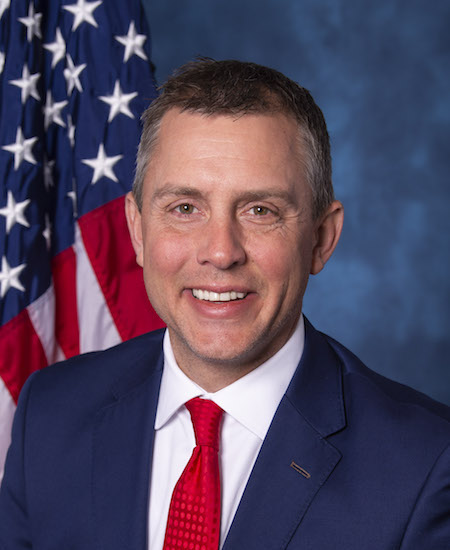
Rep. Kelly Armstrong
Sponsored bills
Life at Conception Act This bill declares that the right to life guaranteed by the Constitution is vested in each human being at all stages of life, including the moment of fertilization, cloning, or other moment at which an individual comes into being. Nothing in this bill shall be construed to authorize the prosecution of any woman for the death of her unborn child.
No Taxpayer Funding for Abortion and Abortion Insurance Full Disclosure Act of 2021 This bill modifies provisions relating to federal funding for, and health insurance coverage of, abortions. Specifically, the bill prohibits the use of federal funds for abortions or for health coverage that includes abortions. Such restrictions extend to the use of funds in the budget of the District of Columbia. Additionally, abortions may not be provided in a federal health care facility or by a federal employee. Historically, language has been included in annual appropriations bills for the Department of Health and Human Services (HHS) that prohibits the use of federal funds for abortions—such language is commonly referred to as the Hyde Amendment. Similar language is also frequently included in appropriations bills for other federal agencies and the District of Columbia. The bill makes these restrictions permanent and extends the restrictions to all federal funds (rather than specific agencies). The bill's restrictions regarding the use of federal funds do not apply in cases of rape, incest, or where a physical disorder, injury, or illness endangers a woman's life unless an abortion is performed. The Hyde Amendment provides the same exceptions. The bill also prohibits qualified health plans from including coverage for abortions. Currently, qualified health plans may cover abortion, but the portion of the premium attributable to abortion coverage is not eligible for subsidies.
Security First Act This bill provides statutory authorization for the Operation Stonegarden program from FY2022 through FY2025 and contains other provisions related to border security. (Operation Stonegarden provides grants to enhance the border security capabilities of state, local, and tribal governments.) From FY2022 through FY2025, the money from unreported monetary instruments seized from individuals crossing the U.S.-Mexico border and transferred into the Department of the Treasury general fund shall be made available without further appropriation to the Department of Homeland Security (DHS) to fund Operation Stonegarden. DHS shall report to Congress on (1) DHS hiring practices from 2017 to 2020, and (2) whether certain Mexican drug cartels meet the criteria to be designated as foreign terrorist organizations. DHS shall also periodically report to Congress about the technology needed to secure the U.S.-Mexico land border.
Solidifying Habitual and Institutional Explanations of Liability and Defenses Act or the SHIELD Act This bill provides that in any enforcement action the Federal Trade Commission (FTC) must prove a violation of law and may not base the action solely on guidelines, policy statements, or similar guidance. The bill provides that no guidelines, general statements of policy, or similar guidance issued by the FTC shall confer any rights or bind the FTC or any person, state, or locality to the approach recommended therein. Further, the bill authorizes a defendant in an enforcement action to offer any such guidelines, policy statements, or similar guidance as evidence of compliance with a provision of law that is enforced by the FTC.
Chiropractic Medicare Coverage Modernization Act of 2021 This bill expands Medicare coverage of chiropractic services to include all services provided by chiropractors, rather than only subluxation corrections through manual manipulation of the spine.
Secure and Fair Enforcement Banking Act of 2021 or the SAFE Banking Act of 2021 This bill generally prohibits a federal banking regulator from penalizing a depository institution for providing banking services to a legitimate cannabis-related business. Prohibited penalties include terminating or limiting the deposit insurance or share insurance of a depository institution solely because the institution provides financial services to a legitimate cannabis-related business and prohibiting or otherwise discouraging a depository institution from offering financial services to such a business. Additionally, proceeds from a transaction involving activities of a legitimate cannabis-related business are not considered proceeds from unlawful activity. Proceeds from unlawful activity are subject to anti-money laundering laws. Furthermore, a depository institution is not, under federal law, liable or subject to asset forfeiture for providing a loan or other financial services to a legitimate cannabis-related business. The bill also provides that a federal banking agency may not request or order a depository institution to terminate a customer account unless (1) the agency has a valid reason for doing so, and (2) that reason is not based solely on reputation risk. Valid reasons for terminating an account include threats to national security and involvement in terrorist financing, including state sponsorship of terrorism. Finally, the bill decreases the cap on the surplus funds of the Federal Reserve banks. (Amounts exceeding this cap are deposited in the general fund of the Treasury.)
This resolution expresses the sense of the House of Representatives that (1) clean water is a national priority, and (2) the 2020 final rule titled The Navigable Waters Protection Rule: Definition of "Waters of the United States" should not be withdrawn or vacated.
Paris Transparency and Accountability Act This bill restricts the President's authority to unilaterally establish or revise actions the United States plans to take to meet its obligations under the Paris Agreement (a climate change treaty adopted in 2015) and increases congressional oversight of those actions. The bill also prohibits any legal cause of action in U.S. courts pursuant to the Paris Agreement. Specifically, the President must report to Congress before proposing new or revised actions under the agreement. The report must describe the proposed actions, including their impact on global emissions, and outline a detailed plan to address economic effects and related considerations of the actions. If a proposed action results in increased energy or manufacturing costs, the report must include specific policy measures (and timelines for implementing the measures) to prevent (1) job displacement, (2) reduced global competitiveness of U.S. goods, and (3) leaked emissions that may occur as a result of the proposed action. After the President submits a report, the bill provides Congress with a 60-day period to review it. During the review period, Congress may block the actions proposed in the report by enacting a joint resolution of disapproval. The bill also outlines procedures for the introduction and consideration of this type of joint resolution.
This resolution honors and recognizes the patriotism and contributions made by generations of veterans service organizations and commends the members of such organizations for their dedicated service to members of the Armed Forces, veterans, their families, and their communities. Additionally, the resolution encourages citizens to volunteer their support and services to veterans service organizations and to promote awareness of the contributions of such organizations to members of the Armed Forces, veterans, and their families.