

State Antitrust Enforcement Venue Act of 2022 This bill limits the transfer and consolidation of antitrust cases that are brought by states in federal court. Current law generally permits federal civil cases that are related to be transferred to a single district court and consolidated for pretrial proceedings. However, under current law, antitrust cases brought by the federal government are exempt from transfer and consolidation. This bill adds to that exemption antitrust cases brought by states.
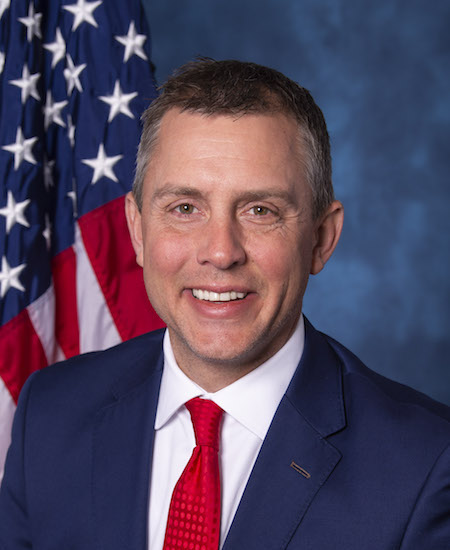
Rep. Kelly Armstrong
Sponsored bills
Clean Slate Act of 2021 This bill establishes a framework for sealing records related to certain federal criminal offenses. Courts must automatically seal records related to (1) a conviction for simple possession of a controlled substance or for any nonviolent offense involving marijuana, or (2) an arrest for an offense that does not result in a conviction. Additionally, an individual who meets certain criteria may petition to seal records related to a conviction for other nonviolent offenses.
Patient Advocate Tracker Act This act requires the Office of Patient Advocacy within the Veterans Health Administration to establish an information technology system that allows veterans or their representatives to electronically file a complaint with a patient advocate and review the status of a filed complaint.
Improving Seniors' Timely Access to Care Act of 2022 This bill establishes several requirements and standards relating to prior authorization processes under Medicare Advantage (MA) plans. Specifically, MA plans must (1) establish an electronic prior authorization program that meets specified standards, including the ability to provide real-time decisions in response to requests for items and services that are routinely approved; (2) annually publish specified prior authorization information, including the percentage of requests approved and the average response time; and (3) meet other standards, as set by the Centers for Medicare & Medicaid Services, relating to the quality and timeliness of prior authorization determinations.
Harriet Tubman Bicentennial Commemorative Coin Act This bill directs the Department of the Treasury to mint and issue 50,000 $5 gold coins, 400,000 $1 silver coins, and 750,000 half-dollar clad coins emblematic of the legacy of Harriet Tubman as an abolitionist. The Secretary may issue coins under this bill only during the period of January 1, 2024, through December 31, 2024. All surcharges received by Treasury from the sale of such coins must be paid equally to the National Underground Railroad Freedom Center in Cincinnati, Ohio, and The Harriet Tubman Home, Inc. in Auburn, New York, for the purpose of accomplishing and advancing their missions.
Indian Health Service Advance Appropriations Act This bill authorizes advance appropriations for the following Indian Health Service appropriations accounts: Indian Health Services, Indian Health Facilities, Contract Support Costs, and Payments for Tribal Leases. The advance appropriations provide new budget authority that first becomes available in the first fiscal year after the budget year. The bill requires the President's budget request to include information on estimates for the advance appropriations.
Securing and Enabling Commerce Using Remote and Electronic Notarization Act of 2022 or the SECURE Notarization Act of 2022 This bill allows a notary public commissioned under state law to remotely notarize electronic records and perform notarizations for remotely located individuals. The bill provides technical requirements for such notarizations, including the creation and retention of video and audio recordings and the use of communication technologies (i.e., video chat). Additionally, the bill requires U.S. courts and states to recognize notarizations—including remote notarizations of electronic records and notarizations of remotely-located individuals—that occur in or affect interstate commerce and are performed by a notary public commissioned under the laws of other states. The bill also allows a notary public to remotely notarize electronic records involving an individual located outside of the United States, subject to certain requirements.
Biking on Long-Distance Trails Act This bill establishes requirements related to long-distance bike trails. The Department of the Interior and the Department of Agriculture (USDA) shall identify not fewer than 10 long-distance bike trails that make use of existing trails and roads, and not fewer than 10 areas in which there is an opportunity to develop or complete a trail that would qualify as a long-distance bike trail. Interior and USDA shall develop a process to allow members of the public to comment regarding the identification of trails and areas; and consider the identification, development, and completion of long-distance bike trails in a geographically equitable manner. The Department concerned shall ensure that each identified long-distance bike trail or area does not conflict with the uses of any trail or road that is part of that long-distance bike trail; multiple-use areas where biking, hiking, horseback riding, or use by pack and saddle stock are existing uses; the purposes for which any trail was or is established under the National Trails System Act; and any area managed under the Wilderness Act. The Department concerned shall also ensure that each identified long-distance trail or area complies with land use and management plans of the federal recreational lands that are part of that long-distance bike trail.
Allowing Greater Access to Safe and Effective Contraception Act This bill requires the Food and Drug Administration to prioritize review of supplemental applications for over-the counter oral contraceptives that are intended for routine use. It also removes certain limitations in relation to such products and health savings accounts, flexible spending arrangements, and other arrangements (e.g., limitations on the number of items that may be purchased).
Active Shooter Alert Act of 2022 This bill requires a designated officer of the Department of Justice to act as the national coordinator of an Active Shooter Alert Communications Network regarding an emergency involving an active shooter. The bill sets forth duties of the coordinator, including to work with state, tribal, and local governments to encourage coordination of various elements of the network. The coordinator must also encourage federal, state, local, and tribal government agencies to establish procedures for responding to active shooters. Finally, the bill requires the Government Accountability Office to study and report on state and local responses to active shooters and situations requiring the issuance of a public alert or warning.