This joint resolution nullifies the final rule issued by the Consumer Financial Protection Bureau titled Small Business Lending under the Equal Credit Opportunity Act (Regulation B) and published on May 31, 2023. The rule requires financial institutions to collect and report to the bureau credit application data for small businesses. On July 31, 2023, the U.S. District Court for the Southern District of Texas ordered the bureau not to implement or enforce the rule until a related pending case is resolved.
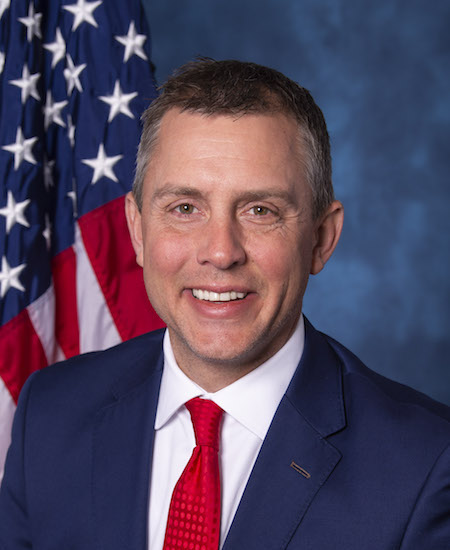
Rep. Kelly Armstrong
Sponsored bills
Maddy summaryHR 2454, the United States-Israel PTSD Collaborative Research Act, establishes a grant program to fund joint research projects between U.S. academic or nonprofit entities and Israeli institutions focused on post-traumatic stress disorder (PTSD). The bill directs the Secretary of Defense, with coordination from the Departments of Veterans Affairs and State, to award grants for collaborative research addressing PTSD treatment gaps, building on existing U.S.-Israel scientific cooperation frameworks. It specifically targets research into improved PTSD diagnosis and treatment methods, rather than providing direct services or benefits. The program requires annual reporting to Congress on research outcomes and terminates seven years after the first grant is issued.
Maddy summary# Summary of the TAPP American Resources Act This comprehensive legislation, titled the "TAPP American Resources Act" (or "Transparency, Accountability, and Permitting Process for American Resources Act"), is a major overhaul of federal energy and natural resource permitting processes. The key provisions include: 1. **Streamlined Permitting Processes**: - Creates a 50-year term limit for pipeline rights-of-way - Allows oil and gas exploration on non-Federal surface estate without Federal permits - Reduces royalty rates for oil and gas leases from 16.67% to 12.5% - Limits judicial review of permits to cases involving "imminent and substantial environmental harm" 2. **NEPA Reforms**: - Expands categorical exclusions for certain energy projects - Allows use of previously completed environmental assessments for similar projects - Limits environmental reviews to areas directly affected by the proposed action - Reduces consideration of downstream effects of oil and gas consumption 3. **Mining and Mineral Development**: - Designates mining as a "covered sector" for permitting improvement - Creates a memorandum of agreement process for mining projects - Requires mineral resource assessments before land withdrawals - Ensures uranium is considered a critical mineral 4. **Revenue Sharing**: - Changes distribution of Gulf of Mexico revenue to states (37.5% to Gulf states, 62.5% to general fund) - Creates parity in offshore wind revenue sharing with offshore oil and gas - Eliminates administrative fees under the Mineral Leasing Act 5. **Water Quality Certification**: - Limits certification requirements to specific provisions of Clean Water Act sections - Requires states to publish certification requirements within 30 days - Sets 90-day timeline for states to identify additional materials needed The legislation represents a significant shift toward expediting domestic energy production while reducing regulatory burdens, with a focus on oil, gas, and mineral development on federal lands. It includes numerous amendments to existing laws including the National Environmental Policy Act, Mineral Leasing Act, Outer Continental Shelf Lands Act, and Clean Water Act.

Maddy summaryHR 1139, the GUARD VA Benefits Act, amends federal law to strengthen penalties for individuals or organizations charging veterans unauthorized fees when helping with VA benefit claims. It directly affects veterans seeking assistance with VA claims and the representatives (like advocates or attorneys) who might charge them fees. The bill adds a new provision making it a violation to solicit, charge, or receive any fee for preparing, presenting, or prosecuting VA claims, punishable by fines under Title 18. This change specifically targets unauthorized fee-charging while excluding fees covered under existing exceptions in sections 5904 or 1984 of the law.
Maddy summaryHR 1818, the Aviation Workforce Development Act, expands tax-advantaged savings plans (529 plans) to cover costs for specific aviation training programs. It allows funds from these plans to pay for tuition, fees, and required materials at FAA-certified aviation maintenance technician schools (Part 147) or commercial pilot training programs (Part 61 or 141). This directly affects students pursuing careers as aircraft maintenance technicians or commercial pilots by making these training costs more affordable through existing tax-advantaged savings. The bill amends the tax code to include these programs under "qualified higher education expenses" for 529 plan distributions.
Maddy summaryHR 1831 would award Billie Jean King a Congressional Gold Medal to honor her lifelong advocacy for equal rights in sports and society. The bill directs the Secretary of the Treasury to strike the medal and have it presented by congressional leaders, recognizing her pivotal role in advancing women's equality through tennis (including founding the Women’s Tennis Association and securing equal prize money) and her broader impact on society through initiatives like Title IX advocacy.
Maddy summaryHR 1806, the Small LENDER Act, reduces reporting burdens for small lenders by creating a phased transition period for new data collection rules under the Equal Credit Opportunity Act. It requires regulators to give qualifying small lenders a 3-year period to comply with new rules and a subsequent 2-year "safe harbor" period during which they aren’t penalized for non-compliance. A "small business lender" is defined as one originating at least 500 small business loans (defined as loans to entities with $1 million or less in annual revenue) in each of the two prior calendar years. This directly affects small lenders meeting these volume thresholds, easing their administrative burden without changing existing lending standards.
Maddy summaryHR 1777 establishes a $50 million annual fund (2024-2028) for collaborative defense research between the U.S. and Israel in emerging technologies like artificial intelligence, cybersecurity, directed energy, and automation. The bill directly supports U.S. and Israeli military forces by enabling joint development of new warfare capabilities to address current and future defense challenges. Key provisions include authorizing $50 million per year for collaborative projects, building on existing U.S.-Israel defense partnerships like counter-tunnel and counter-drone systems. This funding aims to strengthen bilateral defense innovation without altering existing military aid structures.
Maddy summaryHCONRES 28 is a symbolic resolution expressing Congress's view that tax-exempt fraternal benefit societies - organizations providing life, health, and accident benefits to members - have long delivered critical community support. It states these societies, with about 7 million members nationwide, generate significant annual value through charitable work and volunteer activities (estimated at over $3.8 billion yearly). The resolution affirms that their tax-exempt status under Section 501(c)(8) of the tax code is essential for sustaining their volunteer-driven model and relieving pressure on government safety programs. As a non-binding expression of congressional sentiment, it does not alter existing laws or create new obligations.
Maddy summaryH.J. Res. 30 seeks to block a Department of Labor rule that would have required retirement plan managers (like those handling 401(k)s) to follow strict "prudence and loyalty" standards when selecting investments and voting on company matters. The rule, published in December 2022, aimed to protect retirement savings by ensuring fiduciaries prioritize participants' interests. This resolution, if passed, would prevent the rule from taking effect, avoiding new compliance requirements for retirement plan managers and sponsors. It directly affects retirement plan administrators and the millions of participants in these plans.