

Maddy summaryThis bill directs the U.S. Treasury to mint commemorative coins marking the Marine Corps' 250th anniversary in 2025. It authorizes three coin types: $5 gold coins (max 50,000), $1 silver coins (max 400,000), and half-dollar coins (max 750,000), with surcharges of $35, $10, and $5 respectively. The surcharge proceeds will fund the Marine Corps Heritage Center's educational programs, with no net cost to taxpayers as the Treasury must recover all minting costs through the surcharges. The coins can only be issued during 2025, and the Treasury must ensure all costs are covered before distributing funds to the Heritage Foundation.
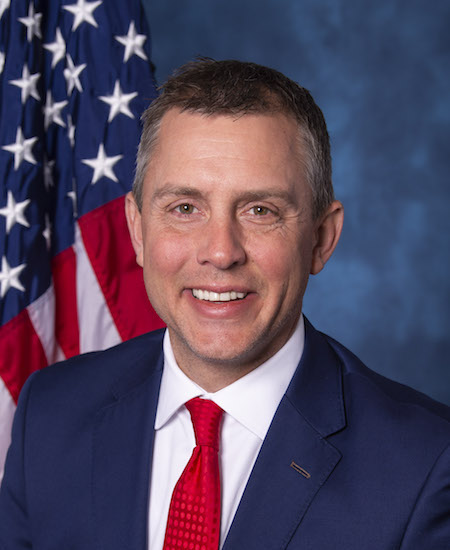
Rep. Kelly Armstrong
Sponsored bills
Maddy summaryHR 4726 terminates the requirement that aliens (non-citizens) must be vaccinated against COVID-19 to obtain visas, adjust to permanent residency, or naturalize as U.S. citizens. The bill immediately ends this mandate upon enactment and prohibits federal funding for any administration or enforcement of the vaccination rule. It specifically targets requirements set by the CDC and DHS under existing public health laws. This change directly affects non-citizens applying for visas, green cards, or U.S. citizenship who previously faced this vaccination condition. The policy shift removes a specific health-related barrier from three key immigration processes.
Maddy summaryHR 4663, the Federal Mechanical Insulation Act, defines "mechanical insulation" (insulation around pipes and equipment in federal buildings) as an eligible energy efficiency measure. It requires federal agencies to include mechanical insulation in their required energy and water evaluations, specifically mandating that evaluations identify this insulation as a potential efficiency measure. The bill specifies that such insulation must meet minimum standards under Reference Standard 90.1 to qualify. This change directly affects federal building managers and contractors by formally recognizing mechanical insulation as a standard efficiency option in compliance with existing energy conservation laws.
Maddy summaryHR 4721, the Main Street Tax Certainty Act, makes a permanent the 20% tax deduction for eligible small business owners under Section 199A of the tax code. This provision directly affects pass-through business owners (like S-corps, partnerships, and sole proprietorships) who qualify for the deduction. The bill achieves this by removing the temporary expiration language (subsection (i)) from the existing tax code provision. The key change is ending the need for annual congressional extensions of this deduction, providing long-term tax certainty for small businesses.
Maddy summaryHRES 580 is a symbolic resolution expressing the House's support for designating "Journeyman Lineworkers Recognition Day." It honors lineworkers who work in hazardous conditions (such as at heights near live wires) and respond to disasters like hurricanes and wildfires, while recognizing their contributions and the legacy of Henry Miller, an early electrical worker who died on the job. The resolution has no legal effect - it solely encourages public recognition and reflection on these workers' service.
Maddy summaryThis bill prohibits U.S. federal agencies from entering new contracts with companies that boycott Israel after January 1, 2024. Companies must certify they are not boycotting Israel at contract signing, and contracts must include this prohibition. It applies to federal contracts over $100,000 for services or IT with companies employing more than 10 people. If a company violates the boycott prohibition, the agency must terminate the contract after 30 days unless the company ends the boycott. The bill explicitly states it does not infringe on First Amendment rights or take sides on the Israeli-Palestinian conflict.
Maddy summaryThe Speech Privacy Act of 2023 prohibits federal agencies from collecting or publicly disclosing the identities of donors to tax-exempt organizations (like charities and nonprofits under IRS Section 501(c)). It specifically bans government entities from sharing donor names with the public, with limited exceptions for the IRS (under tax law), Congress (under lobbying rules), the Federal Election Commission, and court-ordered disclosures. Violations by federal employees could result in criminal penalties, including fines up to $250,000 or up to 5 years in prison. The bill explicitly excludes political organizations (Section 527 groups) from its definition of "tax-exempt organization."
Maddy summaryThe Project Safe Neighborhoods Reauthorization Act of 2023 extends federal funding for the Project Safe Neighborhoods (PSN) program through fiscal years 2024-2028, replacing its previous authorization period. The bill directly affects state, local, tribal, and federal law enforcement agencies, prosecutors, and community groups that receive PSN grants to reduce violent crime. Key provisions allow grantees to use funds for hiring crime analysts, covering overtime for officers and assistants, purchasing technology for crime reduction, and supporting multi-jurisdictional task forces. It also requires annual reports from the Attorney General detailing fund usage, community outreach, and violent crime statistics (including murder, robbery, and assault) in each program area. The program operates across all 94 U.S. federal judicial districts and territories.
Healthcare Equality and Rights for Our Heroes Act or the HERO Act This bill allows claims to be brought against the United States for damages relating to the personal injury or death of a member of the Armed Forces arising out of a negligent or wrongful act or omission in providing medical, dental, or related health care functions at a military medical treatment facility. However, the bill does not apply to care provided at a medical treatment location deployed in an area of armed combat.
Maddy summaryThis bill establishes a Rural Export Center within the U.S. Commercial Service to help rural businesses overcome export barriers. The Center provides customized market research (focused on up to three international markets), strategic planning, and export support services tailored to rural businesses' specific products and needs. It requires tracking metrics like the number of businesses served, services used (e.g., trade shows), and the total export value facilitated. The Center must operate from existing U.S. Commercial Service offices, prioritizing locations with prior rural export support experience outside major cities.