

New Source Review Permitting Improvement Act This bill modifies terminology for purposes of the New Source Review (NSR) permitting program of the Environmental Protection Agency (EPA). In order for a change to a stationary source to be a modification (a change to a stationary source that increases the air pollutant emissions or results in new pollutants) for purposes of the NSR permitting program, the maximum hourly emission rate achievable by such source must be higher than the maximum hourly rate achievable by such source during any hour in the 10-year period preceding the change. A change at a stationary source is not considered to be a modification under the bill if it is designed to (1) reduce the amount of any air pollutant emitted; or (2) restore, maintain, or improve the reliability of operations at, or safety of, the source. However, such changes are not excepted if the EPA determines the increase in the maximum achievable hourly emission rate from such change would cause an adverse effect on human health or the environment. Construction , in connection with a major emitting facility (a type of stationary source), does not include a change at such a facility that does not result in a significant emissions increase or a significant net emissions increase. In relation to major emitting facilities in nonattainment areas, the terms modifications and modified do not include changes at such facilities that do not result in a significant emissions increase or a significant net emissions increase.
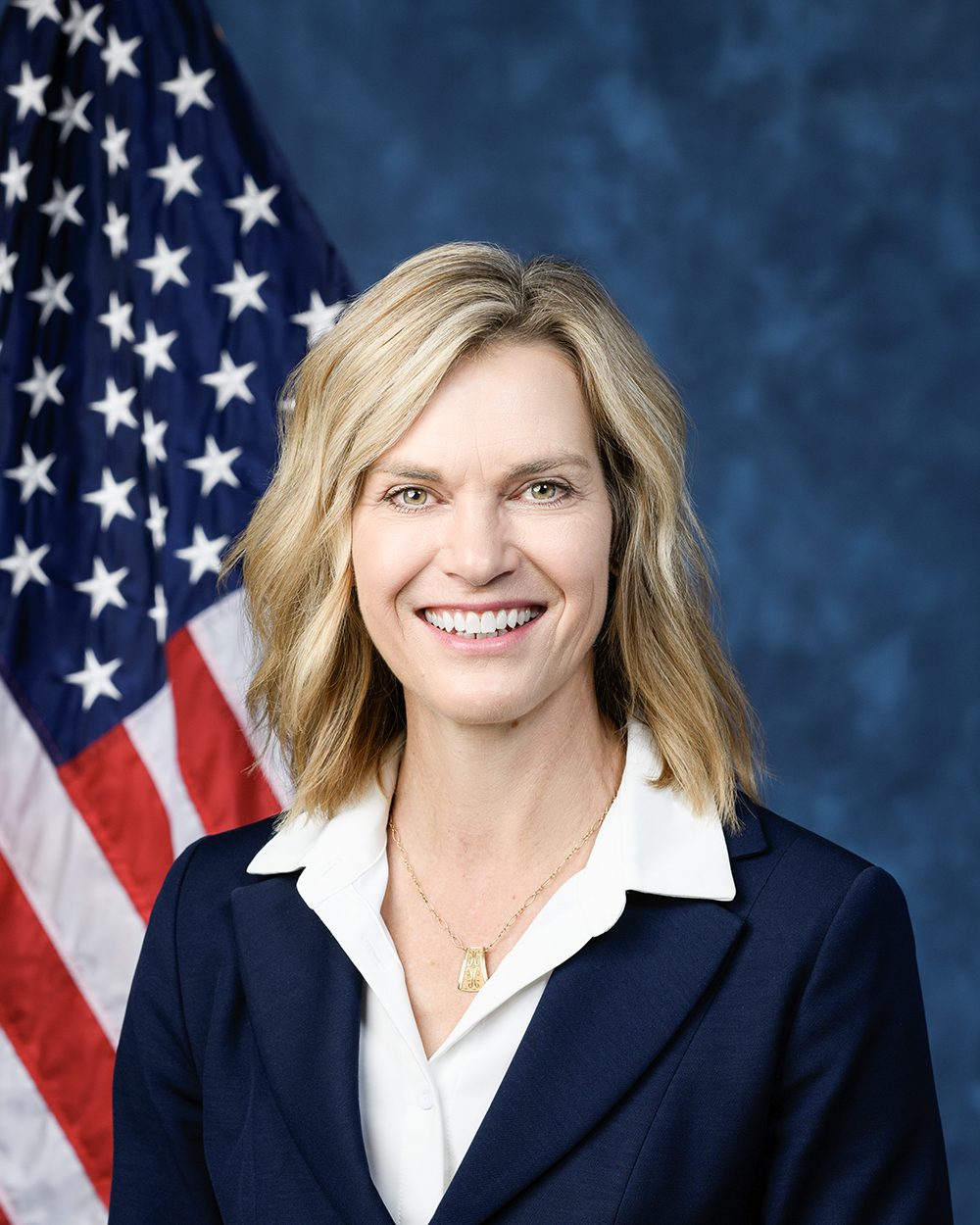
Rep. Julie Fedorchak
Sponsored bills
Maddy summaryHR 4690, the Reliable Federal Infrastructure Act, repeals specific energy efficiency standards for federal buildings. It directly affects federal agencies and buildings subject to the repealed standards under Section 305(a)(3)(D) of the Energy Conservation and Production Act (42 U.S.C. 6834(a)(3)(D)). The bill removes these standards from federal law, stating they "shall have no force or effect," and updates related provisions in the Energy Independence and Security Act of 2007 to eliminate references to the repealed standards. This is a procedural repeal focused solely on removing existing requirements, not creating new infrastructure or policy.
Maddy summaryThis bill modernizes housing assistance programs for Native American tribes and Native Hawaiians by streamlining environmental reviews, extending funding authorization through 2032, and expanding loan guarantee options. Key provisions include consolidating environmental review requirements to reduce paperwork for tribes, allowing 99-year leasehold interests on trust lands for housing, and creating new rental assistance specifically for homeless or at-risk Native American veterans. The legislation also clarifies rent rules, waives certain housing counseling certifications for tribal entities, exempts tribal housing projects from some federal civil rights and Buy America requirements, and establishes a direct loan guarantee process for tribal housing projects.
Maddy summaryThe SECURE Data Act establishes a comprehensive federal privacy framework that grants consumers specific rights to access, correct, delete, and opt out of the sale of their personal data, while requiring companies to provide clear privacy notices and implement reasonable data security measures. It directly affects large businesses and data brokers that process significant amounts of consumer information, mandating that these entities obtain explicit consent for sensitive data and prohibiting discrimination against individuals who exercise their privacy rights. The legislation creates a registration system for data brokers, allows for enforcement actions by the Federal Trade Commission and state attorneys general, and preempts conflicting state laws to ensure a uniform national standard.
Equal Representation Act This bill requires that the statement sent by the President to Congress after the decennial census indicating the number of persons in each state exclude noncitizens. (This statement is the basis for reapportionment of U.S. Representatives.) The bill also requires any questionnaire used in the decennial census to include a checkbox or other similar option for respondents to indicate whether the respondent and each household member is (1) a U.S. citizen, (2) a U.S. national but not a citizen, (3) a non-U.S. national ( alien under federal law) lawfully residing in the United States, or (4) a non-U.S. national unlawfully residing in the United States. The Department of Commerce must make public the number of persons in each state, disaggregated by each of these four categories.
Maddy summaryThis bill prohibits the issuance of U.S. visas to individuals who have committed particularly severe violations of religious freedom, either while serving as foreign government officials or while acting outside the United States. It directly affects foreign nationals by adding them to the list of inadmissible aliens under U.S. immigration law if they meet specific criteria related to religious persecution. The law requires the Secretary of State to publish the names and locations of these individuals on a public website, though the Secretary retains discretion to withhold identities if doing so would harm U.S. foreign policy interests. This measure expands existing immigration restrictions to specifically target those responsible for religious freedom violations, creating a new ground for visa denial.
Maddy summaryThe PREDICT Act prohibits federal government officials, including Members of Congress, their spouses and dependents, high-ranking executive branch employees, and political appointees from trading on prediction markets tied to political events. This restriction applies to any agreement or transaction where payment depends on whether a specific political event occurs, does not occur, or happens to a certain degree. If a covered individual violates this rule, they must pay a 10% fee and forfeit any profits from the transaction, with penalties paid from personal funds rather than government salaries or allowances. The Office of Government Ethics will issue guidance on undefined terms and publish details of any fines on a public website.
Maddy summaryThis bill authorizes funding for various water infrastructure projects in North Dakota, including treatment plants, pump stations, and pipeline expansions for both municipal and rural communities. It specifically allocates money to complete projects like the Northwest Area Water Supply Biota Water Treatment Plant and the Southwest Pipeline Project, while also directing funds to four Native American reservations for rural water system improvements. The legislation includes provisions to transfer money between projects with limits on increases and requires final engineering reports to be completed within two years to define project scopes. Additionally, the bill establishes indexing mechanisms to adjust funding amounts for construction cost fluctuations, ensuring the financial allocations remain relevant over time.
Deporting Fraudsters Act of 2026 This bill makes certain acts related to public benefits fraud grounds for (1) barring a non-U.S. national ( alien under federal law) from admission into the United States, or (2) deporting the individual. The bill also makes such an individual ineligible for immigration enforcement relief, including relief for an individual in danger of subjection to torture. Specifically, this bill applies to individuals who have been convicted of, admit to having committed, or admit to acts which constitute certain offenses. Offenses covered by this bill include (1) fraud involving Supplemental Nutrition Assistance Program (SNAP) benefits, (2) fraud involving Social Security benefits, (3) fraud involving programs that receive federal funds, and (4) the production of fraudulent identification documents.
Maddy summaryThis bill requires that U.S. Representatives and Senators have their pay withheld for each day a government shutdown occurs during their pay period. If a shutdown happens, Congress's payroll office would withhold an amount equal to one day's salary for each full day of the shutdown, either reducing the current pay or holding funds in a special account until after the November 2026 election (for shutdowns before that date). The law applies to all federal agency shutdowns and specifies that withheld funds must be released to members on the 2026 election date to comply with constitutional pay protections. It takes effect for shutdowns occurring after the 2026 election.