

Maddy summaryThis bill modifies the $800 de minimis exemption for small shipments entering the U.S. duty-free. It excludes goods from nonmarket economy countries and nations on the U.S. trade "priority watchlist" from this exemption. Importers must submit detailed documentation (including origin, value, shipper details, and classification) to U.S. Customs within 180 days of enactment. Providing false information could result in $5,000 civil penalties per violation. The changes apply to shipments entered on or after 180 days after the bill’s enactment.
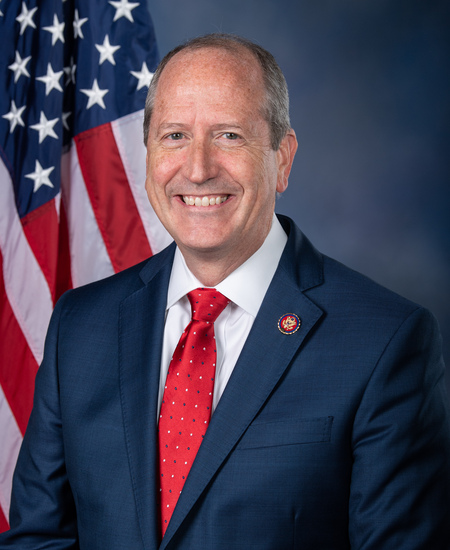
Rep. Dan Bishop
Sponsored bills
Maddy summaryThe Border Reinforcement Act of 2023 requires the immediate resumption of border wall construction along the US-Mexico border using previously allocated funds, with annual goals to complete 200 miles of wall until operational control is achieved. It mandates a comprehensive 5-year technology investment plan for border security systems, including surveillance and detection technology, and sets staffing requirements for U.S. Border Patrol, including a target of 22,000 full-time equivalent agents by 2025. The bill also requires U.S. Customs and Border Protection to publish monthly operational statistics on border encounters, drug seizures, and other border security metrics. Additionally, it includes provisions for DNA collection at land borders, eradication of certain vegetation impeding border security, and a report on Mexican cartels as potential foreign terrorist organizations.
Maddy summaryThis bill amends the Social Security Act to exclude wages earned and self-employment income derived from unauthorized employment in the United States from being counted toward Social Security credits. It directly affects undocumented immigrants who work without authorization, preventing those earnings from contributing to their future Social Security benefits. The law changes existing Social Security rules by adding specific exclusions for "service performed by an alien while employed... not authorized to be so employed" and similar self-employment activities. These changes apply to all wages and income earned before, during, or after the bill's enactment, with Social Security recompiling existing benefit calculations to reflect the new rules.
Maddy summaryHR 497, the Freedom for Health Care Workers Act, eliminates a federal requirement for healthcare workers in Medicare and Medicaid programs to be vaccinated against COVID-19. The bill directly affects healthcare providers who treat patients under these federally funded programs by preventing the enforcement of the November 2021 HHS rule mandating staff vaccinations. Its key provision prohibits the Department of Health and Human Services from implementing, enforcing, or creating a similar rule regarding vaccination for these workers. This bill changes the policy by removing a specific vaccine mandate for providers in Medicare and Medicaid programs.
Maddy summaryHR 407, the "Protect the UNBORN Act," prohibits federal agencies from implementing or enforcing two specific executive orders issued by President Biden in 2022 (Executive Orders 14076 and 14079), which aimed to protect access to reproductive healthcare services. The bill bans the use of federal funds, including those from the 2022 Consolidated Appropriations Act, to carry out, administer, or enforce these executive orders. It directly affects federal agencies and programs that would otherwise comply with the Biden administration's policies on reproductive healthcare access. The bill does not create new healthcare rules but blocks the implementation of existing executive actions.
Maddy summaryThis bill bans federal funding for abortions in most cases, prohibiting the use of taxpayer money for abortion services or health insurance plans covering abortion. Exceptions allow funding for abortions resulting from rape, incest, or when a pregnancy endangers a woman's life. It requires health insurance plans sold through the Affordable Care Act (ACA) marketplaces to clearly disclose any separate costs for abortion coverage and prohibits ACA subsidies from being used for plans that cover abortion (except in the specified exceptions). The law directly affects federal programs like Medicaid, ACA marketplace plans, and insurers offering health coverage to individuals using federal subsidies.
Maddy summaryHR 152, titled the "Hearing Protection Act," actually addresses firearm silencers (suppressors), not hearing protection. The bill removes federal registration requirements for silencers by directing the Attorney General to destroy all existing silencer records within 365 days. It also preempts state laws that tax, register, or impose recordkeeping requirements on silencers, making such state rules unenforceable. Additionally, the bill updates tax codes to include silencers as taxable items and clarifies their definition in firearm laws.
Maddy summaryHJRES 142 is a congressional disapproval resolution targeting a Department of Labor rule issued on April 25, 2024. It seeks to block the "Retirement Security Rule: Definition of an Investment Advice Fiduciary" (89 Fed. Reg. 32122), which defined standards for financial advisors handling retirement accounts. If passed, this resolution would make the Labor Department's rule ineffective, directly affecting retirement plan advisors and financial institutions subject to the regulation. The bill uses a specific procedural mechanism under Title 5, U.S. Code, to nullify the rule without creating new law.
Maddy summaryHR 10414 seeks to repeal the Impoundment Control Act of 1974 (2 U.S.C. 681 et seq.), a law that limited the President's authority to withhold funds Congress had appropriated. This bill would remove the legal restrictions requiring the President to seek Congressional approval before delaying or refusing to spend money already approved by Congress. The repeal would directly affect the executive branch's budget implementation powers, restoring the pre-1974 practice where the President could withhold funds without specific Congressional consent. This is a procedural change altering the legal framework governing federal spending, with no new provisions or direct impact on specific programs or citizens.
Maddy summaryHR 9749 abolishes the Department of Homeland Security's (DHS) authority to reorganize its internal structure without new congressional approval, as provided under specific sections of the Homeland Security Act of 2002. The bill removes sections 857, 858, 872, and 881 from the Act and adjusts related provisions to reflect this change. This directly affects DHS by preventing it from altering its own organizational structure through internal processes alone. The bill makes no new policy changes but eliminates an existing procedural mechanism for DHS restructuring.