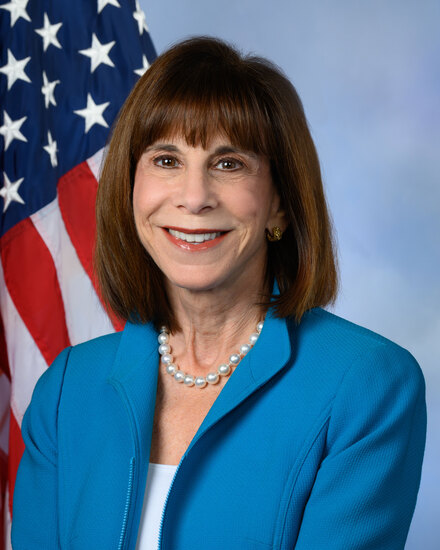
Photo of Kathy E. Manning
D United States House · District 6 · North Carolina

Rep. Kathy E. Manning

Compare
Total votes
2,168
all sessions
Attendance
99%
11 missed
Higher than 84% of chamber peers
With party
95%
of cast votes
Near the chamber average
Bipartisan score
3%
crosses aisle rarely
Near the chamber average
Sponsored
776
bills & resolutions
Near the chamber average
Committees
0
assignments
776 bills and resolutions

Sponsored bills

Total
776
Primary
24
Co-sponsor
752
This page
776
matching current filters
Co-sponsor HR 1579
In committee · United States House · Co-sponsor
Ban Conflicted Trading Act

Ban Conflicted Trading Act This bill prohibits a Member of Congress or certain congressional officers or employees from (1) purchasing or selling specified investments, (2) entering into a transaction that creates a net short position in a security, or (3) serving as an officer or member of any board of any for-profit entity.

In committee Apr 29, 2021 1 co-sponsor
Co-sponsor HJRES 28
In committee · United States House · Co-sponsor
Proposing an amendment to the Constitution of the United States relative to equal rights for men and women.

This joint resolution proposes a constitutional amendment declaring that women shall have equal rights in the United States and every place subject to its jurisdiction.  The amendment prohibits the United States or any state from denying or abridging equal rights under the law on account of sex.

In committee Apr 28, 2021 1 co-sponsor
Co-sponsor HR 2335
In committee · United States House · Co-sponsor
VET TEC Enhancement Act of 2021

VET TEC Enhancement Act of 2021 This bill increases the amount authorized to be appropriated for the Department of Veterans Affairs (VA) High Technology Pilot Program from $45 million to $125 million for FY2022 and each succeeding year. The High Technology Pilot Program provides eligible veterans with the opportunity to enroll in high technology programs of education that the VA determines provide training or skills sought by employers in a relevant field or industry.

In committee Apr 28, 2021 1 co-sponsor
Co-sponsor HR 1470
In committee · United States House · Co-sponsor
Ending Qualified Immunity Act

Ending Qualified Immunity Act This bill eliminates the defense of qualified immunity in civil actions for deprivation of rights. Qualified immunity is a judicially created doctrine that protects government employees or those acting with state authority from being held personally liable for constitutional violations. The bill provides that under the statute allowing a civil action alleging deprivation of rights under color of law, it shall not be a defense or immunity to any such action that (1) the defendant was acting in good faith or believed that his or her conduct was lawful at the time it was committed; (2) the rights, privileges, or immunities secured by the Constitution or federal laws were not clearly established at the time of their deprivation; or (3) the state of the law was such that the defendant could not reasonably have been expected to know whether his or her conduct was lawful.

In committee Apr 28, 2021 1 co-sponsor
Co-sponsor HR 1368
In committee · United States House · Co-sponsor
Mental Health Justice Act of 2021

Mental Health Justice Act of 2021 This bill creates a grant program for states and local governments to train and dispatch mental health professionals to respond, instead of law enforcement officers, to emergencies that involve people with behavioral health needs. The Substance Abuse and Mental Health Services Administration (SAMHSA) must manage the program in consultation with the Department of Justice (DOJ). SAMHSA may cancel grants that increase incarceration or institutionalization. Grantees must use funds for purposes including de-escalation and anti-racism training. The Department of Health and Human Services and the DOJ must evaluate this program.

In committee Apr 28, 2021 1 co-sponsor
Co-sponsor HR 1378
In committee · United States House · Co-sponsor
Do No Harm Act

Do No Harm Act This bill prohibits the application of the Religious Freedom Restoration Act of 1993 (RFRA) to specified federal laws or the implementation of such laws. Currently, RFRA prohibits the government from substantially burdening a person's exercise of religion even if the burden results from a rule of general applicability, except in furtherance of a compelling governmental interest when using the least restrictive means. Under the bill, RFRA is inapplicable to laws or the implementation of laws that protect against discrimination or the promotion of equal opportunity (e.g., the Civil Rights Act of 1964); require employers to provide wages, other compensation, or benefits, including leave; protect collective activity in the workplace; protect against child labor, abuse, or exploitation; or provide for access to, information about, referrals for, provision of, or coverage for, any health care item or service. The bill prevents RFRA from being used to deny (1) goods or services the government has contracted, granted, or made an agreement to provide to a beneficiary of or participant in a program or activity funded by such government contract, grant, agreement, or other award; or (2) a person's full and equal enjoyment of a government-provided good, service, benefit, facility, privilege, advantage, or accommodation. In order for a person to assert a RFRA claim or defense in a judicial proceeding, the government must be a party to the proceeding.


In committee Apr 28, 2021 1 co-sponsor
Co-sponsor HR 1334
In committee · United States House · Co-sponsor
DISCLOSE Act of 2021

Democracy Is Strengthened by Casting Light On Spending in Elections Act of 2021 or the DISCLOSE Act of 2021 This bill addresses campaign finance, including by expanding the prohibition on campaign spending by foreign nationals, requiring additional disclosures of campaign expenditures, and requiring additional disclosures regarding certain political advertisements. First, the bill prohibits foreign nationals from participating in the decision-making process regarding an election expenditure. Additionally, the bill expands existing foreign money prohibitions to include disbursements for paid web-based or digital communications and federal judicial nomination communications. It also prohibits foreign nationals from contributing to campaigns related to ballot initiatives and referenda. The Federal Election Commission (FEC) must conduct an audit after each federal election cycle to determine the incidence of illicit foreign money. Next, the bill makes it unlawful to establish or use a corporation, company, or other entity with the intent to conceal an election contribution or donation by a foreign national. A violator is subject to criminal penalties—a fine, a prison term of up to five years, or both. Covered organizations (e.g., corporations, labor organizations, and political organizations) must, within 24 hours, file reports with the FEC to disclose campaign expenditures of more than $10,000 during an election cycle. Finally, the bill requires organizations to provide additional disclosures regarding political advertisements, including the donors who contributed the most money to that organization in the last year.

In committee Apr 28, 2021 1 co-sponsor
Co-sponsor HR 1384
In committee · United States House · Co-sponsor
Mainstreaming Addiction Treatment Act of 2021

Mainstreaming Addiction Treatment Act of 2021 This bill removes the requirement that a health care practitioner apply for a separate waiver through the Drug Enforcement Administration (DEA) to dispense certain narcotic drugs (e.g., buprenorphine) for maintenance or detoxification treatment (i.e., substance use disorder treatment). Further, a community health aide or community health practitioner may dispense certain narcotic drugs for maintenance or detoxification treatment without registering with the DEA if the drug is prescribed by a health care practitioner through telemedicine. It preempts state laws related to licensure for this activity. The bill also directs the Substance Abuse and Mental Health Services Administration to conduct a national campaign to educate health care practitioners and encourage them to integrate substance use disorder treatment into their practices.

In committee Apr 28, 2021 1 co-sponsor
Co-sponsor HR 1177
In committee · United States House · Co-sponsor
U.S. Citizenship Act

U.S. Citizenship Act This bill establishes a path to citizenship for certain undocumented individuals. The bill also replaces the term alien with noncitizen in the immigration statutes and addresses other related issues. Specifically, the bill establishes a new status of lawful prospective immigrant . This status shall be available to an applying noncitizen who meets certain requirements, including being continually present in the United States from January 1, 2021, and passing background checks. After at least five years with this status, an eligible noncitizen may apply for and receive permanent resident status. The bill also provides permanent resident status to certain applying noncitizens, specifically for eligible noncitizens who (1) entered the United States as a minor, (2) were eligible for temporary protected status or deferred enforced departure on January 1, 2017, or (3) worked a certain amount of agricultural labor in the five years prior to applying. Among other things, the bill also redefines for immigration purposes the term conviction to exclude convictions that have been expunged or vacated, requires the Department of State to implement a strategy to advance reforms in Central America and address key factors contributing to migration from the region to the United States, requires the State Department to establish refugee processing centers in Central America, requires Customs and Border Patrol sectors and stations to have a certain number of employees with certain qualifications such as paramedic training, generally prohibits religious discrimination in granting or denying immigration benefits, and establishes grant programs for providing training and services to immigrants.

In committee Apr 28, 2021 1 co-sponsor
Co-sponsor HR 1026
In committee · United States House · Co-sponsor
LABEL Opioids Act

Lessening Addiction By Enhancing Labeling Opioids Act of 2021 or the LABEL Opioids Act This bill requires prescription opioids to contain a warning label specifying that the opioids may cause dependence, addiction, and overdose. A registrant (e.g., a pharmacist) who dispenses an opioid in violation of the labeling requirement is subject to penalties.

In committee Apr 28, 2021 1 co-sponsor
Showing 661 to 670 of 776 bills
Previous 1 … 66 67 68 … 78 Next