

Taiwan Peace and Stability Act This bill requires various reports to Congress related to Taiwan. The Department of State must report on (1) a strategy to advance Taiwan's meaningful participation in certain international organizations, and (2) a plan for strengthening Taiwan's community of civilian defense professionals. (China has taken actions to block Taiwan's participation in certain international organizations, such as opposing Taiwan's attendance at World Health Assembly meetings as an observer.) The U.S. Agency for International Development must report on cooperation with Taiwan on trilateral and multilateral development initiatives. The U.S. Trade Representative must report a legal template for establishing trade and investment agreements with Taiwan that is consistent with U.S.-Taiwan relations. The President must report a whole-of-government strategy to enhance deterrence over a military conflict between China and Taiwan. Among other matters, the strategy must include an examination of the present and future capabilities of the United States and Taiwan to respond to potential actions by China's military, such as a naval blockade. The Department of Defense must report on options for (1) supporting Taiwan's defense budgeting and procurement process in a way that is consistent with Taiwan's asymmetric defense strategy, and (2) strengthening Taiwan's implementation of its territorial defense force concept.
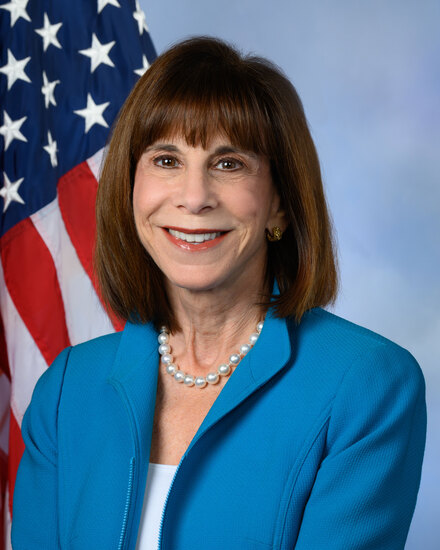
Rep. Kathy E. Manning
Sponsored bills
This bill repeals the Authorization for Use of Military Force Against Iraq Resolution of 2002.
This resolution recognizes the historical significance to the nation of Juneteenth Independence Day (commemorating the end of slavery in the United States).
Support UNFPA Funding Act This bill authorizes annual contributions to support the core functions and programs of the United Nations Population Fund for the five fiscal years following the bill's enactment.
Michael Lecik Military Firefighters Protection Act This bill establishes a presumption of service-connection for specified diseases becoming manifest in certain veterans to a degree of disability of 10% or more within 15 years of the veteran's separation from active military, naval, or air service. Under a presumption of service-connection, specific diseases or disabilities diagnosed in certain veterans are presumed to have been caused by the circumstances of their military service. Health care benefits and disability compensation may then be awarded. Veterans addressed by this bill are those who (1) are trained in fire suppression, and (2) served on active duty in a military occupational specialty or career field with a primary responsibility of firefighting or damage control for at least five years in the aggregate.
Flexible Financing for Rural America Act This bill allows rural utility service providers to submit to the Department of Agriculture (USDA) a request to adjust the interest rate or modify the terms of certain loans. The request shall include a report summarizing how the adjustment or modification will assist the borrower in providing critical utility services to a rural community. Specifically, on receipt of a request, USDA or the Department of the Treasury (in the case of a loan owned by the Federal Financing Bank) must adjust the interest rate on the loan to match certain interest rates for obligations of comparable maturity to the term remaining on the loan (or a higher rate requested by the borrower), and make modifications to the loan terms as necessary to address changes in the financial position of the borrower due to the COVID-19 public health emergency and to promote the financial sustainability of the borrower. In carrying out the adjustments or modifications, USDA or Treasury shall not impose or collect any fee from, or impose any penalty on, a borrower. The bill also provides funding to implement the adjustments and modifications and for the liquidation of residual intragovernmental amounts owed by the Federal Financing Bank in connection with certain loans.
American Dream and Promise Act of 2021 This bill provides certain aliens with a path to receive permanent resident status and contains other immigration-related provisions. The Department of Homeland Security (DHS) or the Department of Justice (DOJ) shall provide conditional permanent resident status for 10 years to a qualifying alien who entered the United States as a minor and (1) is deportable or inadmissible, (2) has deferred enforced departure (DED) status or temporary protected status (TPS), or (3) is the child of certain classes of nonimmigrants. The bill imposes various qualifying requirements, such as the alien being continuously physically present in the United States since January 1, 2021, passing a background check, and being enrolled in or having completed certain educational programs. DHS shall remove the conditions placed on permanent resident status granted under this bill if the alien applies and meets certain requirements, such as completing certain programs at an educational institution, serving in the military, or being employed. Furthermore, DHS and DOJ shall cancel the removal of certain aliens who had TPS, were eligible for TPS, or were eligible for DED status on certain dates. Such an alien shall receive permanent resident status upon meeting certain requirements and applying for such status within three years of this bill's enactment. For an alien seeking permanent resident status under this bill, DHS may (1) waive certain grounds of inadmissibility, or (2) provisionally deny the application if the alien poses a danger to public safety or has knowingly participated in certain offenses involving a criminal street gang. An alien shall have the right to administrative and judicial review of a denial or revocation of permanent resident status granted under this bill. An alien seeking judicial review of a provisional denial shall be appointed counsel upon request. An alien who appears to be prima facie eligible for relief under this bill shall receive a reasonable chance to apply for such relief and may not be removed until there is a final decision on that application for relief. DHS may not use information from applications filed under this bill or for Deferred Action for Childhood Arrivals status for immigration enforcement purposes. DHS shall establish a grant program for nonprofit organizations that assist individuals with certain immigration-related issues. This bill also repeals a restriction that bars a state from providing higher education benefits to undocumented aliens unless those benefits are available to all U.S. nationals without regard to residency in the state.
This resolution expresses support for the goals and ideals of PCOS Awareness Month. Polycystic ovary syndrome (PCOS) is caused by a hormone imbalance. Symptoms can include infertility, weight gain, excess hair growth, and acne.
Critical Supply Chains Commission Act This bill establishes a National Commission on Critical Supply Chains to identify and investigate the dependencies, limitations, and risks associated with critical supply chains. The commission may hold hearings as appropriate and obtain relevant information directly from federal, state, and local governmental bodies as needed. The commission must annually report its findings, conclusions, and recommendations for actions to mitigate the risks of future American supply chain disruptions.
Accounting STEM Pursuit Act of 2021 This bill authorizes states and local educational agencies (LEAs) to use grant funds provided through the Student Support and Academic Enrichment Program for accounting education. In particular, LEAs may use these grant funds to implement programs to teach accounting, including by increasing access to high-quality accounting courses through 12th grade for students who are members of underrepresented groups.