

Maddy summaryHR 7338 establishes an Office of the Community Development Advocate within the Community Development Financial Institutions Fund to address concerns from community-focused financial institutions. The Advocate will handle complaints about certification processes, application delays, and administrative responsiveness, while ensuring clear decertification procedures with cure periods for institutions facing noncompliance. It mandates an annual report to Congress on the Fund’s responsiveness and process efficiency, and requires $1 million in funding for implementation. The bill directly affects community development financial institutions (CDFIs) and aims to streamline their access to programs by creating clearer, more transparent administrative processes.
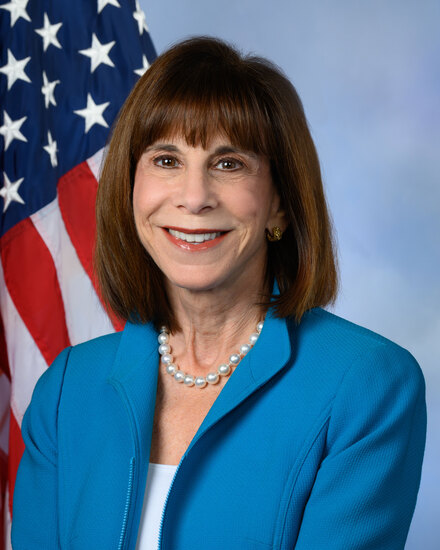
Rep. Kathy E. Manning
Sponsored bills
Maddy summaryThe JOBS Act of 2023 would expand Federal Pell Grant eligibility to cover certain short-term job training programs that prepare students for high-demand careers. It defines "eligible job training programs" as those offering 150-600 hours of instruction over 8-15 weeks, aligned with in-demand industry sectors, and leading to recognized credentials that help students meet hiring requirements and take licensure exams. The bill would allow students in these programs to receive Pell Grants under standard terms, with the minimum Pell Grant amount reduced from 10% to 5% of the maximum. It also requires accrediting agencies to evaluate these programs and creates data-sharing between Education and Labor departments to track program effectiveness.
Maddy summaryHR 7132 creates a federal grant program to help state and local governments, tribes, and Native Hawaiian organizations develop and implement housing plans. Grants fund both planning (creating strategies) and implementation (putting strategies into action) to increase housing supply and affordability while avoiding displacement of current residents. At least 10% of funds must support rural communities, and recipients must report annually on progress and submit final evaluations after three years. The program requires comprehensive plans addressing housing needs, land use reforms, and community engagement to expand housing options.
Maddy summaryHR 7095 requires states conducting congressional redistricting to establish public internet portals with real-time access to maps, demographic data, and proposed plans. It mandates multiple regional public hearings with virtual options, 72-hour posting of all public comments, and detailed analysis of proposed plans - including population breakdowns, voting history, partisan fairness, and Voting Rights Act compliance. States must also provide accessible materials in languages required under the Voting Rights Act and maintain all redistricting data online for 10 years. The law applies to redistricting after the 2030 census, with limited retroactive application for states still revising 2020 census plans.
Maddy summaryHR 7056, the Access to Family Building Act, establishes federal rights for individuals to access assisted reproductive technology (ART) like IVF without unreasonable restrictions, directly affecting patients seeking fertility treatments and health care providers offering ART services. The bill prohibits states from imposing limitations on ART that are more burdensome than those for comparable medical procedures, fail to advance safety, or unduly restrict access, while allowing health and safety regulations that are necessary and least restrictive. It creates federal enforcement mechanisms, including lawsuits by the Attorney General or affected individuals to challenge violating state laws, and preempts conflicting state regulations. The bill explicitly preserves state authority over health/safety regulations and does not alter existing state insurance coverage laws for ART.
Maddy summaryHR 5780, the Land-Grant Research Equity and Accountability Act, requires states to annually match federal research funds provided to eligible land-grant universities (1862 and 1890 institutions) with state or private funds equal to non-Federal contributions. It mandates that states submit annual attestations to the USDA confirming whether they can meet this matching requirement, with these reports published by the USDA and submitted to Congress yearly. The bill directly affects land-grant universities and their state governments by creating a formal process for tracking and reporting funding commitments. Key mechanisms include the annual state attestation, USDA publication of these reports, and mandatory outreach to state legislatures about matching obligations. This focuses on transparency and accountability in funding for agricultural research and extension programs.
Maddy summaryThis bill increases loan limits for farmers under the Farm Service Agency. It raises the maximum farm ownership loan amount from $600,000 to $850,000 (and guaranteed loans from $1.75 million to $3.5 million), and operating loans from $400,000 to $750,000 (guaranteed from $1.75 million to $3 million). It also doubles the microloan cap from $50,000 to $100,000. Additionally, the bill creates a new process allowing distressed guaranteed loans to be refinanced into direct loans if borrowers can't resolve issues with lenders and the farm operation can become financially viable. These changes directly affect farmers and ranchers seeking credit through the Farm Service Agency.
Maddy summaryHR 6935, the Creative Workforce Investment Act, authorizes $300 million in federal grants (2024-2026) to fund community-based arts programs that employ creative workers. It directly affects nonprofit organizations, local governments, and community groups that create public arts projects while hiring individuals facing employment barriers, including marginalized communities. Key provisions require grantees to avoid outsourcing jobs, maintain collective bargaining agreements, and document diverse histories through public art, performances, and storytelling. The bill mandates annual reports tracking employment outcomes and median earnings for participants after program completion, ensuring transparency in how funds create accessible cultural opportunities.
Maddy summaryThe Affordable Connectivity Program Extension Act of 2024 allocates $7 billion in funding for the Affordable Connectivity Program (ACP) during fiscal year 2024. The ACP provides subsidies to low-income households to help cover the cost of internet service and connected devices like laptops or tablets. This funding ensures the program can continue supporting eligible households throughout the year, with the money remaining available until fully spent. The bill extends existing program funding without changing eligibility criteria or service requirements.
Maddy summaryHR 6631, the Investing in Digital Skills Act, updates the Workforce Innovation and Opportunity Act (WIOA) to require adult education programs to integrate digital literacy skills. The bill adds "digital literacy skills" to program definitions and mandates that services must help adults develop these skills for employment, economic self-sufficiency, and family support. Key provisions include amending WIOA sections 202 and 203 to explicitly include digital skills training in program purposes and activities. This directly affects federally funded adult education programs serving adults seeking job readiness and economic opportunity.