

Bruce's Law This bill reauthorizes certain grants through FY2028 and sets out other activities to address the dangers of fentanyl-related drug overdoses, with a particular focus on drug contamination with fentanyl or other synthetic opioids. Specifically, the bill (1) reauthorizes grants that are available through the White House Office of National Drug Control Policy (ONDCP) for community-based coalitions to address local drug crises, and (2) authorizes new grants for coalitions to implement education and prevention strategies in communities that face significant levels of drug overdoses related to fentanyl and other synthetic opioids. The ONDCP may delegate authority to execute the new grants to the Centers for Disease Control and Prevention. Additionally, the Department of Health and Human Services (HHS) must carry out a campaign to increase public awareness of the dangers of fentanyl, including the risk of contamination of counterfeit drugs with fentanyl or other synthetic drugs. The bill also establishes an interagency work group to coordinate and improve federal efforts to reduce and prevent drug overdoses involving contamination with fentanyl or other synthetic opioids. Work group members include the ONDCP, HHS, the Department of Justice, and the Department of State.
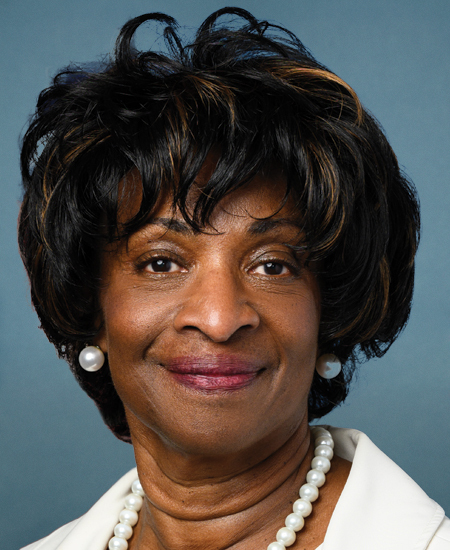
Rep. Valerie P. Foushee
Sponsored bills
Raise the Age Act of 2023 This bill establishes new restrictions on the sale or transfer of certain semiautomatic firearms to individuals under 21 years of age. Specifically, this bill makes it unlawful for a licensed gun dealer, importer, manufacturer, or collector to sell or deliver a semiautomatic center-fire rifle or semiautomatic center-fire shotgun that has (or has the capacity to accept) an ammunition feeding device with a capacity of more than five rounds to an individual who the licensee knows or has reasonable cause to believe is under age 21. The prohibition does not apply if the individual under age 21 is a full-time law enforcement officer or active-duty member of the Armed Forces. The bill also requires the Federal Bureau of Investigation to report on the operation of its public access line, including a description of information sharing protocols and recommendations for improving such protocols.
Maddy summaryThe Child Labor Exploitation Accountability Act requires U.S. Department of Agriculture (USDA) contractors to annually disclose if they or their subcontractors faced serious labor violations - including child labor violations under the Fair Labor Standards Act - in the past three years. Contractors with such violations must report corrective steps, and those failing to address issues or repeating violations face a five-year ban from USDA contracts (including the year of listing and the next four years). The law mandates annual reports to Congress tracking the number of contractors on the ineligible list and the program's effectiveness. This policy directly affects agricultural businesses and suppliers contracting with the USDA, aiming to enforce labor compliance through financial consequences.
Maddy summaryHR 2825, the Prison Libraries Act of 2023, establishes a federal grant program to fund library services in state and territorial correctional facilities. It directly affects incarcerated individuals by providing access to books, digital resources, educational programs, and staff support, with funds requiring states to submit detailed plans demonstrating need and measurable goals like improving literacy or job skills. Key provisions include funding for modern library infrastructure, hiring qualified librarians, and programming such as job training, digital literacy, restorative justice, and cultural activities - all while prohibiting use for food, general prison operations, or unrelated staff costs. The program authorizes $10 million annually for six years (2024-2029), prioritizing grants that align with library standards, prioritize post-secondary education, and show clear impact on reducing recidivism.
Ending Qualified Immunity Act This bill eliminates the defense of qualified immunity in certain civil actions for deprivation of rights. Qualified immunity is a judicially created doctrine that protects government officials from being held personally liable for constitutional violations. The bill provides that, under the statute allowing a civil action alleging deprivation of rights under color of state law, it shall not be a defense or immunity to any such action that (1) the defendant was acting in good faith or believed that his or her conduct was lawful at the time it was committed; (2) the rights, privileges, or immunities secured by the Constitution or federal laws were not clearly established at the time of their deprivation; or (3) the state of the law was such that the defendant could not reasonably have been expected to know whether his or her conduct was lawful.
Maddy summaryThis bill establishes a comprehensive framework to address environmental justice by requiring federal agencies to identify and address disproportionately adverse environmental and health effects on communities of color, low-income communities, and Tribal and Indigenous communities. It creates a White House Environmental Justice Interagency Council to coordinate federal efforts, mandates that agencies develop environmental justice strategies, and requires consideration of cumulative impacts in permitting decisions for pollution sources. The bill also establishes grant programs for environmental justice communities, creates training requirements for federal employees, and includes specific provisions for safer cosmetics and economic revitalization in fossil fuel-dependent communities. These provisions aim to ensure fair treatment and meaningful involvement of all people in environmental decision-making processes, directly affecting federal agencies and communities disproportionately burdened by environmental hazards.
This resolution urges (1) the President to issue a proclamation recognizing Earth Day; and (2) governments and people to continue building upon the Paris Agreement and other efforts to ensure that future generations inherit a livable, sustainable, and ecologically rich planet.
Maddy summaryHR 2785, the REEF Act, amends a 2020 law to change when certain payments from the Railroad Unemployment Insurance Account take effect. It retroactively applies changes to these payments as if they had been in place before the national emergency related to the COVID-19 pandemic ended. This directly affects railroad workers who receive unemployment benefits through this account, ensuring they receive payments under the revised timing. The bill's key change is making the effective date of these payment rules apply retroactively from before the pandemic emergency period.
Maddy summaryThe Dignity for Detained Immigrants Act establishes new standards for Department of Homeland Security detention facilities, requiring them to meet or exceed the American Bar Association's Civil Immigration Detention Standards. The bill mandates annual, unannounced inspections by the DHS Inspector General, public reporting on facility compliance, and a phased-out timeline for private detention facilities (phasing out by 3 years after enactment). It prohibits solitary confinement for all detainees, requires community-based alternatives to detention for vulnerable individuals, and mandates detailed public reporting on facility conditions, staffing, and detainee demographics. The legislation directly affects all immigrants held in DHS custody, including children, vulnerable persons, and primary caregivers, with specific protections for these groups in detention procedures.
American Innovation and R&D Competitiveness Act of 2023 This bill eliminates the five-year amortization requirement for research and experimental expenditures, thus allowing continued expensing of such expenditures in the taxable years in which they are incurred.