

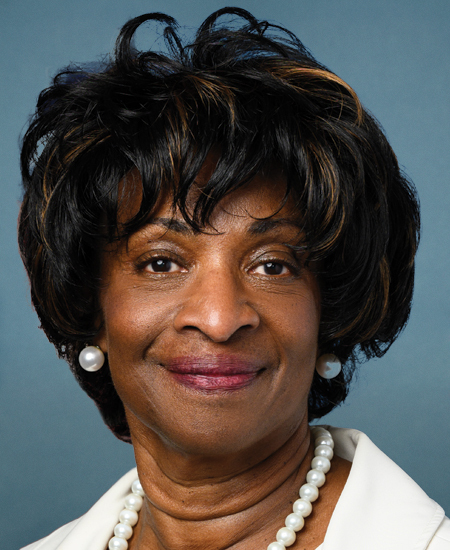
Photo of Valerie P. Foushee
D United States House · District 4 · North Carolina On the 2026 ballot

Rep. Valerie P. Foushee

Compare
Total votes
1,879
all sessions
Attendance
97%
54 missed
Near the chamber average
With party
98%
of cast votes
Near the chamber average
Bipartisan score
1%
crosses aisle rarely
Near the chamber average
Sponsored
896
bills & resolutions
Higher than 84% of chamber peers
Committees
6
assignments
896 bills and resolutions

Sponsored bills

Total
896
Primary
47
Co-sponsor
849
This page
896
matching current filters
Co-sponsor HRES 1342
In committee · United States House · Co-sponsor
Expressing support for the designation of June 5, 2026, as "National Gun Violence Awareness Day" and June 2026 as "National Gun Violence Awareness Month".

Maddy summaryThis resolution expresses support for designating June 5, 2026, as National Gun Violence Awareness Day and June 2026 as National Gun Violence Awareness Month. The bill calls on the public to wear orange on the designated day to honor victims and promote awareness of gun safety. It highlights statistics on gun-related deaths and injuries to underscore the need for community discussions on making neighborhoods safer.

In committee Jun 4, 2026 1 co-sponsor
Co-sponsor HCONRES 84
Failed · United States House · Co-sponsor
Directing the President pursuant to section 5(c) of the War Powers Resolution to remove United States Armed Forces from Lebanon.

Maddy summaryThis concurrent resolution directs the President to withdraw all United States Armed Forces from Lebanon within seven days of the bill's adoption. It operates under section 5(c) of the War Powers Resolution, which allows Congress to mandate the removal of troops from foreign locations. The measure directly affects the executive branch by requiring immediate compliance with the specified timeline for troop withdrawal.

Failed Jun 4, 2026 1 co-sponsor
Co-sponsor HR 9125
In committee · United States House · Co-sponsor
Sectoral AI Governance Act of 2026

Maddy summaryThe Sectoral AI Governance Act of 2026 gives federal agencies with enforcement powers the ability to create specific rules targeting algorithmic decision-making systems that are likely to cause violations of existing federal laws. Under this bill, agencies must publish a public notice at least 60 days before proposing rules to allow for feedback, while also consulting with other agencies and technical experts to ensure consistency and avoid conflicts. The legislation requires agencies to periodically review these rules every five years and submit biennial reports to Congress detailing their rulemaking activities, enforcement actions, and assessments of potential discriminatory impacts. By clarifying regulatory authority and mandating transparency, the bill aims to improve coordination across the federal government without preempting state laws on the same topics.

In committee Jun 3, 2026 1 co-sponsor
Co-sponsor HR 9112
In committee · United States House · Co-sponsor
CREATOR Act

Maddy summaryThe CREATOR Act establishes a new federal intellectual property right that allows visual artists to control the commercial use of their distinctive visual style. This right applies specifically to works created using artificial intelligence that are intentionally designed to imitate an artist's style and marketed in a way that could mislead viewers about the work's origin. The law protects this right for the artist's lifetime and for up to 50 years after their death, while explicitly excluding general artistic influence, parody, and the mere capability of AI systems to produce similar outputs. Online platforms are granted safe harbors from liability if they remove flagged content promptly upon receiving valid notices, and the Act includes provisions to prevent abuse through penalties for false claims.

In committee Jun 2, 2026 1 co-sponsor
Co-sponsor HR 9036
In committee · United States House · Co-sponsor
American High-Speed Rail Act

Maddy summaryThe American High-Speed Rail Act expands federal funding and streamlines regulations to support the development of high-speed and higher-speed rail projects across the United States. It authorizes billions of dollars in grants for corridor planning, technology improvements, and construction, while allowing the federal government to cover up to 100% of project costs under specific conditions. The bill also introduces new provisions to facilitate land acquisition, prioritize border projects, and extend labor protections to workers involved in federally funded rail infrastructure. Additionally, the legislation defines higher-speed rail as trains traveling between 110 and 186 miles per hour and includes tax incentives for rail carriers that sell or lease property to support these projects.

In committee May 26, 2026 1 co-sponsor
Co-sponsor HRES 1318
In committee · United States House · Co-sponsor
Expressing support for the designation of the month of May 2026 as "Progressive Supranuclear Palsy and Corticobasal Degeneration Awareness Month".

Maddy summaryThis resolution expresses support for designating May 2026 as Awareness Month for Progressive Supranuclear Palsy and Corticobasal Degeneration, two rare and complex neurodegenerative diseases. The measure highlights the challenges faced by the approximately 32,000 Americans living with these conditions, including difficulties with diagnosis, limited treatment options, and the significant impact on families and caregivers. By officially recognizing this month, the House aims to encourage increased public awareness, promote research into better treatments and cures, and honor the resilience of the affected community.

In committee May 21, 2026 1 co-sponsor
Co-sponsor HR 8968
In committee · United States House · Co-sponsor
No Presidential Self-Serving Lawsuits Act of 2026

Maddy summaryThis bill, titled the No Presidential Self-Serving Lawsuits Act of 2026, prevents the current or former President of the United States from filing civil lawsuits against the federal government. It specifically invalidates an existing settlement agreement between a former President and the Internal Revenue Service and bars the use of federal funds to create compensation for such lawsuits. Additionally, the legislation authorizes the Treasury Secretary to recover any money already spent in violation of these new restrictions. The primary goal is to stop a President from using taxpayer money to settle legal disputes with the government they lead.

In committee May 21, 2026 1 co-sponsor
Co-sponsor HR 1993
Passed · United States House · Co-sponsor
25th Anniversary of 9/11 Commemorative Coin Act

Maddy summaryThis bill authorizes the U.S. Mint to produce commemorative $5 gold and $1 silver coins marking the 25th anniversary of the September 11, 2001, terrorist attacks. The coins must feature designs honoring victims and first responders (including the inscription "Never Forget") and will be sold only during 2027-2028. All surcharges ($35 per gold coin, $10 per silver coin) collected from sales will fund the National September 11 Memorial and Museum at the World Trade Center, with no net cost to the federal government. The coins are legal tender but primarily intended for collectors, not circulation.

Passed May 21, 2026 1 co-sponsor
Co-sponsor HR 1329
Failed · United States House · Co-sponsor
Smithsonian American Women’s History Museum Act

Maddy summaryThe Smithsonian American Women’s History Museum Act authorizes the creation of a new Smithsonian museum dedicated to women’s history, to be located within the National Mall Reserve in Washington, D.C. If the site is managed by another federal agency, the bill requires that agency to transfer the land after notifying Congress and relevant committees. The museum must ensure exhibits and programs accurately represent diverse women’s experiences by consulting a broad range of experts and community voices. The Smithsonian will submit biennial reports to Congress detailing how the museum meets these representation standards.

Failed May 21, 2026 1 co-sponsor
Primary HR 8926
In committee · United States House · Lead sponsor
State and Local Public Sector Innovation Act

Maddy summaryThe State and Local Public Sector Innovation Act creates a grant program to help state and local governments upgrade their technology systems to improve security and service efficiency. Funded by $500 million over four years, the program distributes money equally based on population and specific needs, with at least 70% of funds directed directly to local political subdivisions. Recipients can use the money for tasks such as buying new technology, updating cybersecurity, hiring staff, and ensuring compliance with data privacy and post-quantum cryptography standards. The Assistant Secretary of Commerce for Communications and Information will oversee the program, conduct surveys to assess state needs, and provide technical guidance on data security and artificial intelligence usage.

In committee May 20, 2026 0 co-sponsors
Showing 61 to 70 of 896 bills
Previous 1 … 6 7 8 … 90 Next