Maddy summaryHCONRES 130 is a symbolic concurrent resolution commending state and local governments that treat reproductive rights as human rights following the *Dobbs* decision. It recognizes efforts by cities like Austin, Texas, and Montgomery County, Maryland, to expand abortion access and condemn criminalization of pregnancy outcomes. The resolution affirms that reproductive rights are human rights, urges states to repeal restrictive laws, and references U.S. obligations under international human rights treaties. As a non-binding resolution, it does not create new laws or alter existing policies.
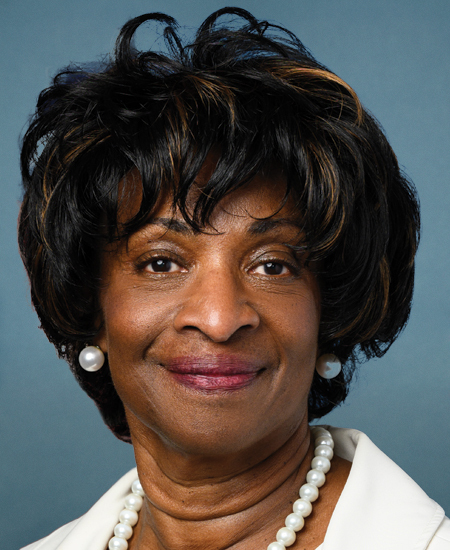
Rep. Valerie P. Foushee
Sponsored bills
Maddy summaryHR 9782, the Uterine Cancer Study Act of 2024, directs the U.S. Department of Health and Human Services (HHS) to study whether hair straighteners - specifically chemical products - may be linked to uterine cancer, with a focus on higher rates among women of color. The study will review existing research, examine impacts across racial and ethnic groups, and break down results by product type (e.g., dyed, bleached, or permed straighteners). HHS must submit a study methodology within 45 days of the bill’s enactment and complete the study, reporting findings to Congress within two years. The bill does not impose new regulations but may inform future FDA safety requirements for hair straightening products. This affects women of color disproportionately impacted by uterine cancer and the broader population using such products.
Maddy summaryThe IMPACT Act establishes a federal research program to develop low-emissions cement, concrete, and asphalt production technologies. It directs the Department of Energy to create a 5-year strategic plan, fund demonstration projects at manufacturing sites, and provide technical assistance to help industries adopt cleaner methods. The program focuses on carbon capture, alternative fuels, energy efficiency, and engineering performance standards to reduce greenhouse gas emissions during production. It affects manufacturers, researchers, and government agencies through coordinated funding and demonstration requirements, with the program set to expire seven years after enactment.
Maddy summaryHR 3433, the "Give Kids a Chance Act of 2024," requires pharmaceutical companies developing certain cancer drugs to conduct pediatric studies if the drugs target molecular pathways relevant to childhood cancers. It directly affects drug manufacturers submitting new applications for cancer treatments, particularly those combining previously approved adult cancer drugs or containing a single new active ingredient. The bill amends FDA regulations to mandate these pediatric investigations only when specific conditions are met, such as when a drug's molecular target is relevant to pediatric cancer growth. The FDA must issue implementing guidance within 12 months, and reports to Congress will track implementation and effectiveness starting 2 years after enactment.
Maddy summary# Summary of Health Equity and Accountability Act of 2024 This comprehensive legislation addresses multiple aspects of health care access, workforce development, and immigration policy with a strong focus on health equity. ## Key Themes 1. **Workforce Diversity**: Significant emphasis on increasing racial, ethnic, and socioeconomic diversity in the health care workforce 2. **Language Access**: Mandates for language access services for individuals with limited English proficiency 3. **Underserved Communities**: Targeted investments in medically underserved areas and communities 4. **Immigration Policy**: Modifications to programs that bring health care professionals to the U.S. ## Major Provisions ### Workforce Development - **$1 billion** for nursing education enhancement and modernization grants in underserved areas - **$552 million** for health professions workforce development in 2032 (increasing annually) - **$392 million** for health professions education programs in 2025 - New grants for schools of medicine and osteopathic medicine in underserved areas - Expansion of the Conrad State 30 program for foreign physicians to address physician shortages ### Language Access - Requires health care providers to provide language access services to individuals with limited English proficiency - Mandates translation services and interpretation services for all health care settings ### Diversity Initiatives - **David Satcher Public Health and Health Services Corps** to increase awareness of health career opportunities - **Louis Stokes Public Health Scholars Program** for underrepresented students - **Patsy Mink Health and Gender Research Fellowship Program** - **Paul David Wellstone International Health Fellowship Program** - **Edward R. Roybal Health Scholar Program** ### Immigration Policy - **Conrad State 30 program extension** through 2027 - **Physician retention** provisions to help foreign physicians stay in medically underserved areas - **Dual intent for physicians** seeking graduate medical training - **Clarifications to national interest waiver** requirements - **Automatic extension** of physician nonimmigrant status during residency transitions ### Funding - **Health Professions Workforce Fund** established with multi-year funding increasing from $392 million in 2025 to $552 million in 2032 - Specific allocations for nursing workforce development and health professions education This legislation represents a comprehensive approach to addressing health care disparities through workforce development, improved access, and policy changes to support a more diverse and equitable health care system.

Maddy summaryThe Homes Act of 2024 would establish a new Housing Development Authority within the Department of Housing and Urban Development to develop permanently affordable housing. The Authority would acquire properties and convey them to eligible entities (including community land trusts, tenant organizations, and public housing agencies) under strict requirements for permanent affordability, climate resilience, and community control. The bill would set rents at 25% of household income, limit annual rent increases to 3% or the Consumer Price Index, and require "just-cause" evictions with tenant protections. It would also create a tenant right to purchase their rental properties through a "first look" process and prioritize housing for underserved communities and families experiencing homelessness.
Maddy summaryThis bill directs the U.S. government to immediately restore funding to the United Nations Relief and Works Agency for Palestine Refugees (UNRWA), reversing a temporary funding pause. It repeals two appropriations acts that halted payments and requires the Secretary of State to resume UNRWA funding under existing authorities. The legislation specifically aims to support UNRWA’s critical humanitarian work - providing shelter, education, healthcare, and aid to Palestinian refugees across Gaza, the West Bank, Syria, Lebanon, and Jordan - during an acute famine risk in Gaza. It also mandates quarterly reports to Congress on UNRWA’s implementation of reforms from an independent review, ensuring accountability for its humanitarian mission.
Maddy summaryThis bill directs the Joint Committee on the Library to procure a statue of Benjamin Franklin and place it in the U.S. Capitol. The committee must secure the statue within two years of the bill's enactment and install it in a public-accessible location by January 1, 2026, for viewing during Capitol Visitor Center guided tours. It is a procedural measure with no policy changes or direct impact on constituents or legislation.
Maddy summaryThe Expanding AI Voices Act directs the National Science Foundation to provide competitive grants to institutions not among the top 100 in federal research spending, Historically Black Colleges and Universities, minority-serving institutions, Tribal Colleges, or consortia of these entities. These grants fund concrete AI capacity-building activities like developing research programs, recruiting AI faculty, creating student bridge programs, and providing access to computing resources and partnerships. The program specifically aims to broaden participation in AI from underserved communities and avoid duplicating existing federal initiatives. It requires outreach to underrepresented groups and mandates that funded activities integrate ethical AI practices and workforce development.
Maddy summaryThe CREATE AI Act of 2023 establishes a National Artificial Intelligence Research Resource (NAIRR) to improve access to AI research tools, computational resources, data, and educational materials for researchers and students across the United States. The NAIRR will provide computational resources, curated datasets, educational tools, and access to AI testbeds, with special emphasis on supporting groups historically underrepresented in STEM fields. Governed by a Steering Subcommittee chaired by the Director of the Office of Science and Technology Policy and managed by a Program Management Office within the National Science Foundation, the NAIRR includes specific requirements for ethical AI development, privacy protections, and security measures. The resource will be accessible to researchers at U.S. institutions of higher education, nonprofits, government agencies, and certain businesses, with priority given to projects addressing privacy, ethics, civil rights, and AI safety.