

Safe Step Act This bill requires a group health plan to establish an exception to medication step-therapy protocol in specified cases. A medication step-therapy protocol establishes a specific sequence in which prescription drugs are covered by a group health plan or a health insurance issuer. A request for such an exception to the protocol must be granted if (1) an otherwise required treatment has been ineffective, (2) such treatment is expected to be ineffective and delaying effective treatment would lead to irreversible consequences, (3) such treatment will cause or is likely to cause an adverse reaction to the individual, (4) such treatment is expected to prevent the individual from performing daily activities or occupational responsibilities, (5) the individual is stable based on the prescription drugs already selected, or (6) there are other circumstances as determined by the Employee Benefits Security Administration. The bill requires a group health plan to implement and make readily available a clear process for an individual to request an exception to the protocol, including required information and criteria for granting an exception. The bill further specifies timelines under which plans must respond to such requests.
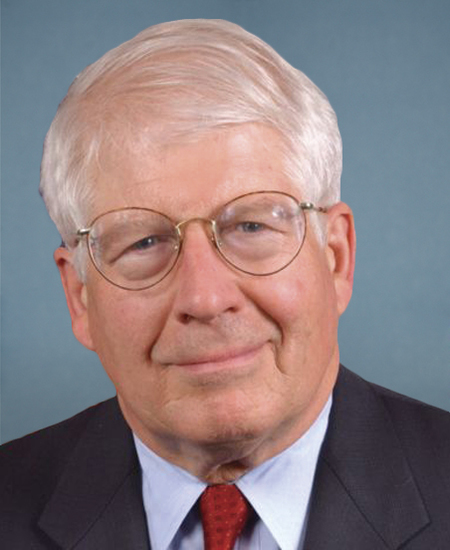
Rep. David E. Price
Sponsored bills
Protect Democracy in Burma Act of 2021 This bill requires the Department of State to report to Congress on the military coup in Burma (Myanmar), including a description of U.S. efforts to (1) engage with the Association of Southeast Asian Nations to support a return to Burma's democratic transition and democratic values throughout Southeast Asia, and (2) influence the United Nations to hold accountable those responsible for the coup.
Ethan's Law This bill establishes a framework to regulate the storage of firearms on residential premises at the federal, state, and tribal levels. At the federal level, the bill establishes statutory requirements for firearms on residential premises to be safely stored if a minor is likely to gain access without permission or if a resident is ineligible to possess a firearm. An individual who violates the requirements is subject to criminal penalties. A firearm stored in violation of the requirements is subject to seizure and forfeiture. At the state and tribal levels, the bill requires the Department of Justice to award grants to implement functionally identical requirements for the safe storage of firearms.
Pandemic Treatment Access and Affordability Act of 2021 This bill imposes licensing and price restrictions on federally supported drugs and other medicines intended to address COVID-19 (i.e., coronavirus disease 2019) or other public health emergencies. With respect to a COVID-19 drug patent developed using certain types of federal support, any license granted by the federal government shall be open and nonexclusive. Similarly, a licensee or assignee for such a patent shall grant open nonexclusive licenses for the patent. An entity that receives a license shall pay reasonable royalties to (1) the patent holder, or (2) the owner of marketing exclusivity rights granted by the Food and Drug Administration (FDA) that were terminated under this bill. The bill requires that such drugs be offered at a fair and reasonable price based on certain considerations, such as access. If the Department of Health and Human Services (HHS) finds that the price of any drug to address a public health emergency is excessive, HHS must void any FDA-granted exclusivity for the drug and grant open and nonexclusive licenses to other manufacturers. Such licenses are subject to reasonable royalty requirements.
This resolution condemns the military coup that took place in Burma (Myanmar) on February 1, 2021. It also calls on the Burmese military to (1) release all those detained arbitrarily in the coup, (2) restore all forms of communications, and (3) return to power all members of the civilian government.
Improving Access to Mental Health Act of 2021 This bill increases the Medicare reimbursement rate for clinical social worker services. The bill excludes clinical social worker services from the prospective payment system in which predetermined amounts form the basis for payment under Medicare. Additionally, the bill alters the definition of clinical social worker services as it relates to Medicare. Under current law, such services (1) include services performed for the diagnosis and treatment of mental illnesses, and (2) exclude services furnished to an inpatient of a skilled nursing facility as a condition of the facility's participation in the Medicare program. The bill repeals these provisions and instead specifies that such services include certain types of health behavior assessment and intervention.
Huntington's Disease Disability Insurance Access Act of 2021 This bill expedites payment of Social Security Disability Insurance (SSDI) benefits and eligibility for Medicare coverage for those with Huntington's disease. This is an inherited disorder that causes brain cells to die, including in areas of the brain that help to control voluntary movement. Specifically, the bill eliminates the 5-month waiting period for SSDI benefits and the subsequent 24-month waiting period for Medicare coverage for individuals with Huntington's disease. Under current law, individuals generally must wait five months after the onset of disability to begin receiving SSDI benefits and an additional 24 months to become eligible for Medicare.
American Dream Employment Act of 2021 This bill establishes that, for the purposes of eligibility to be an officer or employee of an office of Congress, an individual shall be treated as a U.S. citizen if that individual has (1) employment authorization under the Deferred Action for Childhood Arrivals program, (2) employment authorization under a grant of deferred enforced departure, or (3) temporary protected status. (Generally, these programs and statuses allow eligible aliens to remain and work in the United States.)
Increasing Access to Quality Cardiac Rehabilitation Care Act of 2021 This bill accelerates and expands certain changes that are scheduled to take effect relating to the coverage of cardiac, intensive cardiac, and pulmonary rehabilitation programs under Medicare. Currently, such programs require physician supervision. Effective January 1, 2024, physician assistants, nurse practitioners, and clinical nurse specialists may also supervise these programs. The bill expedites the effective date of these changes to January 1, 2022, and also allows these practitioners to administer programs in their offices, prepare and sign treatment plans, and prescribe exercise.
This bill directs the Speaker of the House and the President pro tempore of the Senate to arrange for the award of three Congressional Gold Medals to the U.S. Capitol Police (USCP) and other law enforcement agencies that protected the U.S. Capitol on January 6, 2021. Following the award of these medals, one medal shall be given to the USCP, one medal shall be given to the Metropolitan Police Department of the District of Columbia, and one medal shall be given to the Smithsonian Institution and displayed with a plaque listing all law enforcement agencies that participated in protecting the Capitol on January 6, 2021.