

Public Service Freedom to Negotiate Act of 20 21 This bill provides minimum collective bargaining rights and procedures for public employees and prohibits strikes by certain public safety workers. The Federal Labor Relations Authority (FLRA) shall determine for each state whether the laws of such state substantially provide for each of the minimum standard collective bargaining rights and procedures specified by this bill, including the right of public employees and supervisory employees to self-organize, form or join a labor organization, or collectively bargain. The FLRA must issue rules and take actions to establish and administer bargaining rights and procedures for those states that do not substantially provide for them. No employers, emergency services employees, or law enforcement officers may engage in a lockout, strike, or any other organized job action that is likely to result in a measurable disruption of the delivery of emergency or public safety services. Furthermore, no labor organization may be the cause of a violation of such prohibition.
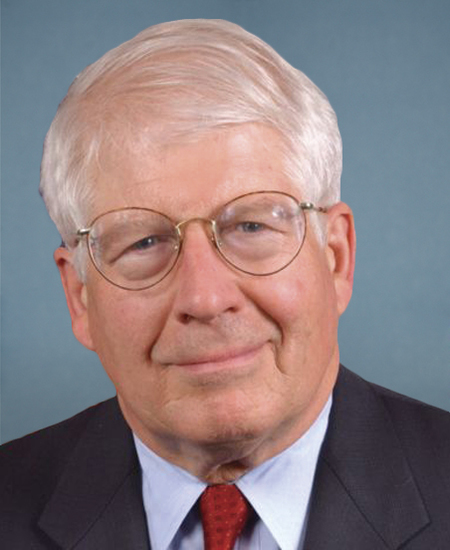
Rep. David E. Price
Sponsored bills
This concurrent resolution recognizes the disparity between wages paid to Latina women, and its impact on women, families, and the nation and reaffirms Congress' commitment to supporting equal pay and to narrowing the gender wage gap.
This resolution strongly disapproves of the escalation of political tensions between the government of Ethiopia and the Tigray People's Liberation Front into armed conflict, and it calls for the immediate cessation of hostilities in the Tigray region as well as an end to violence throughout Ethiopia. Further, the resolution urges all parties to work to protect human rights, and it calls on relevant U.S. agencies to take specified actions that encourage an end to the conflict and that provide humanitarian support.
This resolution calls for the creation of a Green New Deal with the goals of achieving greenhouse gas and toxic emissions reductions needed to stay under 1.5 degrees Celsius of warming; establishing millions of high-wage union jobs and ensuring economic security for all; investing in infrastructure and industry; securing clean air and water, climate and community resiliency, healthy food, access to nature, and a sustainable environment for all; and promoting justice and equality. The resolution calls for accomplishment of these goals through a 10-year national mobilization effort. The resolution also enumerates the goals and projects of the mobilization effort, including building smart power grids (i.e., power grids that enable customers to reduce their power use during peak demand periods); upgrading all existing buildings and constructing new buildings to achieve maximum energy and water efficiency; removing pollution and greenhouse gas emissions from the transportation and agricultural sectors; cleaning up existing hazardous waste and abandoned sites; ensuring businesspersons are free from unfair competition; and providing higher education, high-quality health care, and affordable, safe, and adequate housing to all.
This resolution recognizes the opportunity for Black Maternal Health Week to raise national awareness of the state of Black maternal health in the United States.
Camp Lejeune Justice Act of 2021 This bill allows certain individuals to sue and recover damages for harm from exposure to contaminated water at Camp Lejeune in North Carolina between August 1, 1953, and December 31, 1987. This action is available only to individuals who were exposed to contaminated water for at least 30 days. The bill prohibits the U.S. government from asserting specified immunity from litigation in response to such a lawsuit. The bill also prohibits an individual who brings such an action from bringing a separate tort action against the United States based on the same harm.
Guaranteed Refugee Admission Ceiling Enhancement Act or the GRACE Act This bill establishes that the maximum number of refugees admitted each fiscal year shall be no less than 125,000 and that the maximum number shall be treated as the numerical goal for refugee admissions for the applicable fiscal year. The President may set a higher number if it is justified by humanitarian concerns or is otherwise in the national interest. Currently, the number admitted each fiscal year may not exceed 50,000 unless the President determines that a higher number is justified by humanitarian concerns or is otherwise in the national interest. The bill directs the President to take into consideration information from the United Nations High Commissioner for Refugees when establishing the maximum admission number and making certain other related decisions. The President shall report to Congress quarterly on (1) the number of refugees admitted during the preceding quarter, (2) the number of aliens who were security-cleared during the preceding quarter, (3) a plan to reach the numerical goal for admitted refugees for that fiscal year, and (4) other related information.
Dignity for Detained Immigrants Act of 2021 This bill directs the Department of Homeland Security (DHS) to establish standards for facilities holding aliens in its custody, phases out using non-DHS facilities for such purposes, and contains other related provisions. The standards shall comply with the American Bar Association's Civil Immigration Detention Standards. The DHS Office of Inspector General (OIG) shall conduct periodic unannounced inspections of each facility and shall take various actions against noncompliant facilities, including imposing fines, cancelling contracts, and closing facilities. DHS shall report to Congress any death of an alien in its custody within 24 hours and conduct an investigation within 30 days that identifies policy changes that could reduce the likelihood of such a death. DHS is prohibited from entering into contracts for third parties to operate detention facilities or alternatives to detention programs and shall terminate existing contracts within three years of the bill's enactment. The bill establishes that OIG facility inspection reports and contracts for an outside entity to operate a detention facility are records available to the public under the Freedom of Information Act. DHS shall maintain certain information relating to detained aliens, including the alien's location and whether the alien was separated from family. The bill provides for various requirements and procedures related to detaining aliens, including (1) prohibiting DHS from detaining children, (2) imposing a presumption that an alien should be released, and (3) establishing that aliens in custody shall be subject to the least restrictive conditions. The bill also abolishes mandatory detention for asylum seekers.
Equal Access to Abortion Coverage in Health Insurance Act of 2021 or the EACH Act of 2021 This bill requires federal health care programs to provide coverage for abortion services and requires federal facilities to provide access to those services. The bill also permits qualified health plans to use funds attributable to premium tax credits and reduced cost sharing assistance to pay for abortion services.
Arts Education for All Act This bill expands arts education and programming for children in early education, K-12 students, and juveniles and adults in the criminal justice system. Specifically, the bill allows Child Care and Development Block Grant funding to be used for additional activities, including arts programming. Additionally, the bill addresses arts programming in elementary and secondary schools by directing each state educational agency to include information on arts programming in its state plan, including how it will integrate arts education instruction into the curriculum and increase the number of arts teachers in schools; requiring state report cards to include information on arts courses; requiring local educational agency (LEA) plans to describe how the LEA will encourage the use of arts education to improve student achievement; and allowing certain funds to be used for professional development for arts teachers. The bill directs the National Center for Education Research to carry out research on the use of arts and arts education in elementary and secondary schools, including in low-performing schools. Further, the National Center for Education Statistics must compile data on arts education. The National Assessment of Educational Progress must include a specified arts assessment. The bill requires a state's juvenile justice and delinquency plan to describe how the state will coordinate services and activities for juvenile justice and delinquency prevention with arts agencies and arts organizations. Additionally, grants for adult offender reentry demonstration projects may be used for facilitating arts education.