

Stop Reckless Student Loan Actions Act of 2022 This bill limits executive authority to (1) suspend or defer federal student loan payments or interest accrual on such loans, and (2) cancel federal student loans. Specifically, the bill prohibits the President or the Department of Education (ED) from suspending or deferring federal student loan payments or the accrual of interest on such loans for borrowers with annual household incomes over 400% of the federal poverty line. Further, ED may only suspend or defer federal student loan payments or the accrual of interest for such loans for a total of 90 days after the declaration of a national emergency by the President. ED must submit recommendations to Congress on relief necessary for recipients of student financial-aid assistance. Additionally, the bill prohibits the President or ED from cancelling the outstanding balances or portions of balances on student loans due to the COVID-19 national emergency or any other national emergency. Executive or regulatory action to suspend or defer federal student loan payments or to cancel federal student loans shall be subject to congressional review. The bill also revises the definition of affected individual for purposes of the Higher Education Relief Opportunities for Students (HEROES) Act of 2003 to exclude from relief under the act (1) an individual who resides or is employed in an area that is declared a disaster area in connection with a national emergency; or (2) an individual who suffered direct economic hardship as a direct result of a war, military operation, or national emergency.
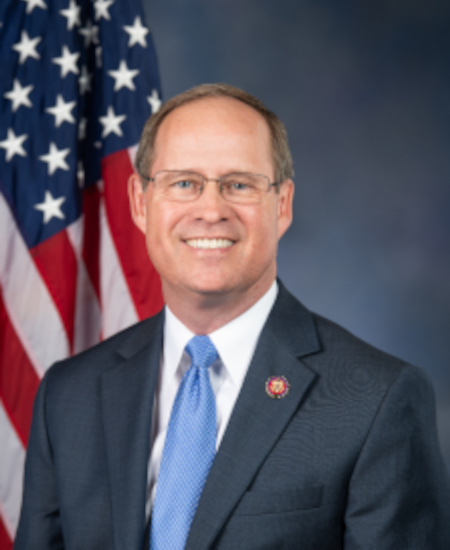
Rep. Gregory F. Murphy
Sponsored bills
Protecting Free Speech Act This bill terminates the Disinformation Governance Board of the Department of Homeland Security (DHS) and prohibits using DHS funding for the activities of any other entity that is substantially similar to the board.
This joint resolution nullifies the rule issued by the Centers for Disease Control and Prevention on February 3, 2021, that requires the use of face masks on planes, trains, buses, and other public conveyances and at transportation hubs to prevent the transmission of COVID-19.
Protection of Women and Girls in Sports Act of 2021 This bill makes it a violation of federal law for a recipient of federal funds who operates, sponsors, or facilitates athletic programs or activities to permit a person whose sex is male to participate in an athletic program or activity that is designated for women or girls. The bill specifies that sex shall be recognized based solely on a person's reproductive biology and genetics at birth.
This bill requires the reinstatement of individuals who were discharged or dismissed from the Armed Forces solely because they refused to receive a COVID-19 vaccination. Specifically, such individuals must be reinstated, at their request, in the same rank and grade they held at the time of their separation from the Armed Forces. The discharge or dismissal of such individuals must be characterized as honorable. Such individuals may not be denied retired or retainer pay or any benefits through the Department of Defense or Department of Veterans Affairs solely on the basis they refused to receive a COVID-19 vaccination.
Suspending Normal Trade Relations with Russia and Belarus Act This bill suspends normal trade relations with Russia and Belarus. It also permanently authorizes the President to impose visa- and property-blocking sanctions based on violations of human rights. Specifically, the bill authorizes the President to proclaim increases in the rates of duty applicable to products of Russia or Belarus. This authority terminates on January 1, 2024. The President may restore normal trade relations with Russia and Belarus, subject to congressional disapproval. The bill directs the U.S. Trade Representative to (1) condemn the recent aggression in Ukraine, (2) encourage other World Trade Organization (WTO) members to suspend trade concessions to Russia and Belarus, (3) consider steps to suspend Russia's participation in the WTO, and (4) seek to halt the accession process of Belarus.
Protecting American Innovation Act This bill establishes certain limitations on modifying trade agreements, including those related to the TRIPS Agreement (i.e., the Agreement on Trade-Related Aspects of Intellectual Property Rights). The TRIPS Agreement contains obligations for World Trade Organization members to protect patents and other intellectual property rights. Specifically, the bill prohibits the President (or any U.S. official, employee, or agent) from negotiating or concluding any withdrawal, suspension, or modification to a trade agreement that adversely affects the rights of the United States or U.S. persons under a trade agreement with China or Russia. Additionally, the bill states that a TRIPS waiver to address the COVID-19 pandemic shall not take effect if (1) the President does not submit required reports from the Department of Commerce and the Department of Defense (DOD), (2) the Commerce report concludes that the TRIPS waiver will not result in an increase in global vaccine access, or (3) the DOD report concludes that the TRIPS waiver would adversely impact U.S. national security. Prior to entering into a negotiation with a trading partner concerning a suspension of or modification to a trade agreement, the bill requires (1) the U.S. Trade Representative to publish certain information in the Federal Register and allow for public comment, and (2) the President to provide written notice and consult with Congress. Further, the President shall not enter into any suspension of or modification to a trade agreement unless the President has complied with such consultation requirements and receives congressional approval.
Postal Service Reform Act of 202 2 This bill addresses the finances and operations of the U.S. Postal Service (USPS). The bill requires the Office of Personnel Management (OPM) to establish the Postal Service Health Benefits Program within the Federal Employees Health Benefits Program under which OPM may contract with carriers to offer health benefits plans for USPS employees and retirees. The bill provides for coordinated enrollment of retirees under this program and Medicare. The bill repeals the requirement that the USPS annually prepay future retirement health benefits. Additionally, the USPS may establish a program to enter into agreements with an agency of any state government, local government, or tribal government, and with other government agencies, to provide certain nonpostal products and services that reasonably contribute to the costs of the USPS and meet other specified criteria. The USPS must develop and maintain a publicly available dashboard to track service performance and must report regularly on its operations and financial condition. The Postal Regulatory Commission must annually submit to the USPS a budget of its expenses. It must also conduct a study to identify the causes and effects of postal inefficiencies relating to flats (e.g., large envelopes). The USPS Office of Inspector General shall perform oversight of the Postal Regulatory Commission.
Ensuring Lasting Smiles Act This bill requires private health insurance plans to cover diagnosis and treatment of congenital anomalies and birth defects, such as reconstructive services and items. Coverage must include services and items that functionally improve, repair, or restore any body part that is medically necessary for normal bodily functions or appearance, as determined by the treating physician. Coverage limits and cost-sharing requirements for such services and items may not be more restrictive than those applicable to all medical and surgical benefits under the plan.
This resolution condemns any calls made by a Member of the House of Representatives to defund the police and expresses the sense of the House of Representatives that any member who advocates for such defunding should not be permitted to use federal funds to contract with a private entity for security personnel support.