

Maddy summaryThe Alice Cogswell and Anne Sullivan Macy Act amends the Individuals with Disabilities Education Act to better serve children and youth who are deaf, hard of hearing, deafdisabled, blind, visually impaired, or deafblind. It requires states to identify and provide appropriate services to these students regardless of how they're classified in disability categories, ensures access to language instruction in the student's primary language (including American Sign Language), and mandates improved data collection about these students. The bill establishes the Anne Sullivan Macy Center on Visual Disability and Educational Excellence to support research, training, and program development for blind and visually impaired students. These changes aim to improve educational outcomes by addressing the unique language, communication, and learning needs of students with sensory disabilities through concrete policy changes to IDEA.
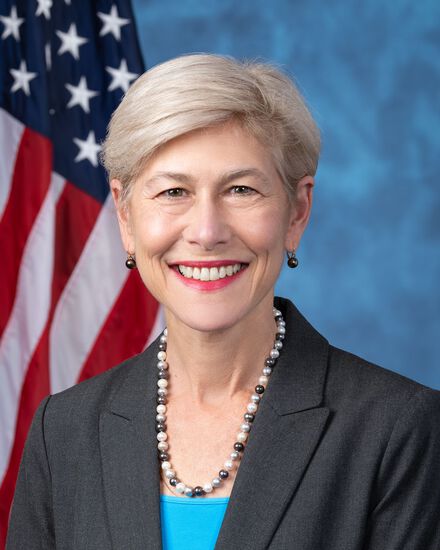
Rep. Deborah K. Ross
Sponsored bills
This concurrent resolution (1) recognizes the 133 years of significant and meaningful contributions the 1890 Institutions (i.e., historically Black universities established under the Second Morrill Act of 1890) have made to the United States, (2) supports the efforts of the Department of Agriculture and other federal agencies to build stronger partnerships with such institutions, and (3) commits to working in a bipartisan way to address the past funding and program inequities of such institutions.
Maddy summaryThe Student Loan Refinancing and Recalculation Act establishes a program allowing eligible borrowers to refinance existing Federal Direct and FFEL loans. Borrowers with loans first disbursed or applications received before July 1, 2024, can apply to have their loans reissued with a new interest rate calculated as the 10-year Treasury note yield plus 1 percent. The bill also eliminates origination fees for future Federal Direct Loans and prevents interest capitalization on certain loans, meaning borrowers won't pay interest on unpaid interest. This program aims to provide relief by potentially lowering interest rates while maintaining original repayment terms for eligible borrowers. The refinancing program will expire on a date determined by the bill's provisions.
Maddy summaryHR 5097 establishes new federal funding programs to support the development of alternative proteins - foods that mimic animal meat using plants, cell cultivation, or fermentation. It allocates $15 million annually (2024-2028) for Centers of Excellence focused on research and workforce training, $10 million for USDA research, $50 million for manufacturing grants to U.S. companies and institutions, and $25 million for workforce development programs. The bill requires the USDA to create a national strategy coordinating multiple federal agencies to advance this sector. These provisions directly affect U.S. businesses, universities, and workers in the alternative protein industry by providing targeted funding for research, production, and job training.
Maddy summaryThis bill amends the Higher Education Act to require all U.S. colleges and universities receiving federal financial aid to create detailed anti-harassment policies covering physical, online, and institution-sponsored settings. It mandates policies prohibiting harassment based on race, sex (including sexual orientation and gender identity), disability, religion, and other protected characteristics, including harassment via institutional email, computers, or electronic messaging. The bill also establishes a $50 million annual grant program to fund colleges developing prevention programs, victim support services, and training for students and staff on recognizing and addressing harassment. These policies and grants must comply with existing civil rights laws like Title IX but add specific requirements for reporting and prevention.
Maddy summaryHRES 714 is a formal recognition resolution celebrating Hispanic Restaurant Week (September 22-October 3, 2023) and acknowledging the economic contributions of Hispanic restaurant owners and employees to the U.S. restaurant industry. It highlights statistics showing Hispanic individuals own a significant share of restaurants and workforce participation in the sector, but does not create new policies, funding, or regulations. This resolution is purely ceremonial, expressing congressional appreciation without any legislative impact.
Maddy summaryThe Protect Working Musicians Act of 2023 allows independent musicians and music creators who own their copyrights to collectively negotiate licensing terms with large online music platforms without violating antitrust laws. It specifically applies to creators earning under $1 million annually in licensing revenue or qualifying as small businesses. The bill creates a safe harbor that protects coordinated negotiations (not limited to price, non-discriminatory, and only involving independent creators and platforms) from antitrust lawsuits. This aims to address an imbalance where dominant platforms set low rates and ignore creators who refuse unfavorable terms, without requiring platforms to change their current licensing practices.
Maddy summaryHR 5492, the Veteran Families Health Services Act of 2023, provides fertility treatment, counseling, and adoption assistance to military members and veterans with infertility conditions. The bill requires the Department of Defense to offer fertility preservation services like cryopreservation before deployment or hazardous assignments, and to cover fertility treatments including in vitro fertilization for current service members. For veterans, it adds fertility treatment and counseling to VA medical services, allows adoption assistance up to the cost of three adoptions, and mandates coordination between military and VA health systems. These provisions apply regardless of sex, gender identity, sexual orientation, or marital status, and are designed to support military families affected by service-related infertility.
Maddy summaryThe Better CARE for Animals Act of 2023 amends the Animal Welfare Act to strengthen enforcement of animal welfare standards. It gives the Attorney General authority to bring civil cases for violations, including seeking penalties up to $10,000 per day per violation and injunctions to remove or relocate animals. The bill also requires the Secretary of Agriculture and Attorney General to coordinate through a new Memorandum of Understanding, focusing on repeat violators. These changes directly affect dealers, exhibitors, and enforcement agencies by expanding civil enforcement tools and clarifying jurisdiction over rule violations.
Maddy summaryThe John R. Lewis Voting Rights Advancement Act of 2023 would strengthen the Voting Rights Act of 1965 by updating the criteria for which states and localities must obtain federal preclearance before changing voting practices. It would establish new standards for proving vote dilution and vote denial by requiring courts to consider historical discrimination, racial polarization in voting, and whether voting practices disproportionately burden minority voters. The bill would also require states and localities to provide public notice of voting changes and share demographic data about polling locations. These changes would primarily affect jurisdictions with a history of voting rights violations, aiming to prevent discriminatory voting practices before they take effect.