

Maddy summaryThe Nurse Faculty Shortage Reduction Act of 2024 creates a new federal grant program to address nursing faculty shortages. It authorizes $28.5 million annually (2024-2028) to help nursing schools supplement faculty salaries, covering the gap between clinical nurse pay and teaching salaries. Schools must submit detailed salary data and plans to sustain higher pay after the 3-year grant period. The program prioritizes schools in high-need areas, serving vulnerable populations, or recruiting underrepresented faculty, with a report required to Congress after 3 years.
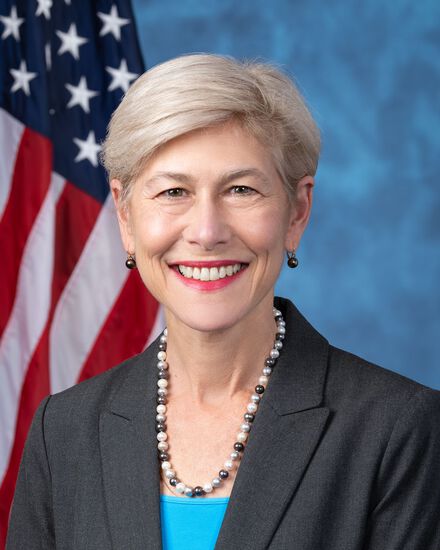
Rep. Deborah K. Ross
Sponsored bills
Maddy summaryHRES 882 is a non-binding resolution passed by the U.S. House of Representatives on November 21, 2023, declaring support and gratitude to food banks, food pantries, and community-based organizations addressing food insecurity. It recognizes these groups' work in serving over 5 billion meals annually, rescuing wasted food (nearly 118 billion pounds yearly), and supporting vulnerable populations including 44.2 million people in food-insecure households in 2022. The resolution specifically acknowledges their role in providing emergency aid, nutrition education, and disaster response, while highlighting that 55% of food-insecure households did not access federal nutrition programs. It does not create new policies or funding but formally commends these organizations' contributions to reducing food insecurity and improving community health.
Maddy summaryHR 7051, the Parity for Child Exploitation Offenders Act, amends Title 18 of the U.S. Code to ensure military personnel accused of child exploitation offenses face the same federal legal standards as civilians. The bill updates references in multiple sections (including 2241, 2251, 2252, 2252A, 2426, and 3559) to explicitly include offenses under the Uniform Code of Military Justice alongside State offenses. This means military cases involving child exploitation will now be prosecuted under the same federal statutes as civilian cases, eliminating a previous distinction. The bill directly affects military service members charged with such offenses by aligning their legal treatment with civilian counterparts. It makes no new penalties but ensures consistency in how these crimes are addressed under federal law.
Maddy summaryThe Stronger Communities through Better Transit Act establishes a new federal grant program to improve public transportation service. It provides funding to urban areas, states, and Indian tribes to cover up to 50% of public transit operating costs (up to 80% in persistent poverty areas and 100% for Indian tribes), with requirements to report on service frequency, access to jobs, and conduct community surveys. The program mandates that a majority of funds must benefit underserved communities and areas of persistent poverty, defined as census tracts with high poverty rates or minority populations. Recipients must maintain their transit funding levels and report on improvements in access to essential services. The bill authorizes $20 billion annually for fiscal years 2024-2027.
Maddy summaryHCONRES 82 is a symbolic resolution recognizing and supporting the New Heights Bid Committee's effort to secure the 2027 FIFA Women's World Cup for a joint U.S.-Mexico bid. It directs Congress to encourage the President and federal agencies to assist the committee in meeting hosting requirements and to consider future legislation if the bid is successful. The resolution does not create new laws or funding but formally expresses congressional backing for the bid committee's work. It directly affects the New Heights Bid Committee by affirming congressional support for their efforts to host the tournament.
Maddy summaryHR 7007, the BEST Act, provides federal grants to states to establish or improve Seal of Biliteracy programs recognizing students proficient in English and one additional language. It requires states to include Native American languages as a base language (allowing proficiency in them to substitute for English) and ensures equitable access for English learners, students with disabilities, and heritage language learners. The $10 million annual funding (2024-2028) supports program administration, public outreach, and subsidizing testing for low-income students. States must award students a permanent seal on diplomas or transcripts upon meeting state-set proficiency criteria for speaking and writing in both languages.
Maddy summaryHRES 963 is a symbolic resolution honoring Korean American Day, which commemorates the January 13, 1903 arrival of the first large wave of Korean immigrants to the U.S. It recognizes Korean Americans' contributions to U.S. society, including their economic, cultural, and military impacts, and marks the 121st anniversary of this historic migration. The resolution urges all Americans to observe Korean American Day to appreciate these contributions. As a commemorative measure, it does not create new policies or affect specific groups beyond this ceremonial recognition.
Maddy summaryHR 6963, the Pediatric Cancer Drug Supply Act of 2024, creates a federal pilot program to prevent shortages of essential pediatric cancer drugs. The Secretary of Health and Human Services will enter agreements with manufacturers to maintain a 6-month reserve supply of each covered drug - defined as drugs on a list developed by the Secretary that treat pediatric cancer and meet specific criteria - held in the U.S. by manufacturers. Manufacturers must store extra inventory beyond normal levels, ensure drugs have over a year of shelf life, and allow the government to audit compliance. During shortages, the Secretary can order these reserves distributed to patients, with recipients paying the government's purchase price to replenish the supply. The program is funded with $500 million for fiscal year 2024.
Maddy summaryThe Affordable Connectivity Program Extension Act of 2024 allocates $7 billion in funding for the Affordable Connectivity Program (ACP) during fiscal year 2024. The ACP provides subsidies to low-income households to help cover the cost of internet service and connected devices like laptops or tablets. This funding ensures the program can continue supporting eligible households throughout the year, with the money remaining available until fully spent. The bill extends existing program funding without changing eligibility criteria or service requirements.
Maddy summaryHR 6950, the Working Dog Health and Welfare Act of 2024, requires federal agencies and their contractors managing working dog programs to implement specific health and welfare recommendations from a 2022 Government Accountability Office report within 180 days of the law's enactment. It directly affects all federal agencies (including Congress and courts as defined), their contractors, and the Department of State when providing working dogs to foreign partners. Key mechanisms include mandatory implementation of the GAO's recommendations, a 60-day reporting requirement to Congress on steps taken, and ensuring new programs established after enactment follow these standards. The bill focuses on concrete policy changes to standardize care for working dogs used in federal operations, without altering existing program structures or outcomes.