

Maddy summaryHR 6858, the Social Security Overpayment Relief Act, limits the Social Security Administration's ability to recover overpayments made to beneficiaries. It amends Sections 204 of Title II (retirement/disability benefits) and 1631(b) of Title XVI (Supplemental Security Income) to prohibit recovery of overpayments older than 10 years from the date the Commissioner identifies the overpayment. This directly affects individuals who received Social Security or SSI benefits in error more than a decade ago, preventing the government from seeking repayment for those old overpayments. The key provision sets a clear 10-year limit on recovery efforts, applying to both retirement/disability and SSI programs. The bill makes a concrete change to existing recovery rules without altering benefit eligibility or payment amounts.
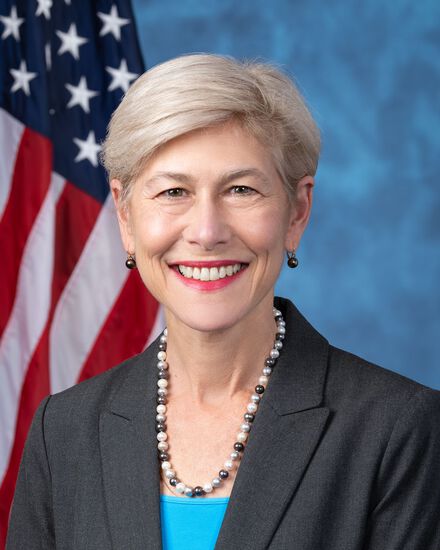
Rep. Deborah K. Ross
Sponsored bills
Maddy summaryHR 6790 establishes National Institutes of Health centers to advance research, early detection, and public awareness of rare kidney diseases, with a focus on rural and underserved communities. It mandates a federal study on genetic testing barriers, treatment patterns, and public awareness for rare kidney diseases affecting disproportionately impacted populations, including barriers to insurance coverage and access to specialists. The bill also funds nephrology training programs to increase specialists serving these communities and requires experiments to delay or prevent the need for dialysis and transplants. Total funding of $7 million is authorized for fiscal years 2024-2028 to support these research, education, and early intervention efforts.
Maddy summaryThis bill updates Medicare physician payment rules to improve stability and accuracy. It raises the budget neutrality threshold from $20 million (pre-2025) to $53 million in 2025, with annual indexing after 2026, to prevent excessive payment adjustments. The bill requires the Medicare program to correct budget neutrality payments based on actual service utilization data (not estimates) starting in 2025, and mandates updating direct cost inputs (like staff wages and equipment prices) every 5 years. It also caps annual changes to the physician payment conversion factor at 2.5% to limit sudden payment shifts, directly affecting Medicare physicians and healthcare providers receiving these payments.
Maddy summaryThe Ejiao Act of 2023 prohibits the import, export, transportation, sale, or purchase of donkeys, donkey hides, and products containing ejiao (a gelatin made from donkey skin) within U.S. borders. It directly affects U.S. businesses and consumers involved in trading these items, aiming to reduce global demand driving the slaughter of millions of donkeys - particularly harming communities in Africa and Latin America that rely on donkeys for farming, transportation, and livelihoods. Key mechanisms include civil penalties of up to $10,000 per violation, criminal penalties for severe breaches (including fines and imprisonment), and mandatory forfeiture of violative goods. The bill is grounded in congressional findings that the donkey skin trade has caused population collapses (e.g., 76% decline in China since 1992) and devastating social impacts on impoverished families.
Maddy summaryThe Disaster Relief Medicaid Act creates a new Medicaid program for survivors of major disasters, providing continuous health coverage for up to two years after a disaster is declared. It establishes simplified eligibility requirements with no documentation needed, allowing individuals with income up to 133% of the poverty level (or their home state's standard) to qualify, including those who received FEMA assistance or lost employment due to the disaster. The law requires states to provide medical assistance equivalent to what would be provided in the survivor's home state, with 100% federal funding for all costs during the relief period. It also includes special provisions for pregnant individuals, children born during the relief period, and expanded mental health services.
Maddy summaryHR 5819, the COMPLETE Care Act, incentivizes Medicare primary care providers to integrate behavioral health services by increasing payments for specific services (like mental health and substance use disorder support) during 2025-2027. Providers using designated HCPCS codes for integrated care would receive 125-175% of standard payment rates, with the percentage declining annually. The bill also requires these providers to report on integration quality measures and mandates technical assistance for practices adopting integrated models, funded through new appropriations for 2024-2027. It directly affects Medicare-participating primary care practices serving beneficiaries needing mental health or substance use services.
Maddy summaryHR 5744, the Energy Innovation and Carbon Dividend Act of 2023, would impose a carbon fee on fossil fuels (crude oil, coal, and natural gas) based on their greenhouse gas emissions, starting at $15 per metric ton of CO2 equivalent in 2023 and increasing by $10 annually. The revenue from this fee would be distributed directly to American citizens as monthly "carbon dividends" through a new trust fund, with adults receiving full payments and children under 19 receiving half payments. The bill also establishes a border fee adjustment on imported carbon-intensive products to prevent companies from moving operations to countries with weaker environmental regulations. It sets specific emissions reduction targets: 8% annual reductions from 2025-2030 and 2.5% annual reductions from 2031-2050 relative to 2005 levels. The carbon fee would be phased out once emissions drop to 10% of 2005 levels and monthly dividends fall below $20 for three consecutive years.
Maddy summaryThe End Diaper Need Act of 2023 creates a federal program that will provide free diapers and incontinence supplies to low-income families with infants, toddlers, medically complex children (3+ years old with chronic health conditions), and low-income adults with disabilities. It allocates $200 million annually from 2024-2027 to fund this assistance through states and community organizations, making medically necessary diapers eligible for reimbursement through health savings accounts and other health benefit programs. The legislation requires integration with existing services like Medicaid, WIC, and TANF, and includes annual reporting requirements and an evaluation of the program's effectiveness within two years.
Maddy summaryThis bill makes permanent Medicare coverage for telehealth services provided by Federally Qualified Health Centers (FQHCs) and Rural Health Clinics (RHCs), including audio-only visits. It directly affects Medicare beneficiaries who use these services and the FQHCs/RHCs delivering them by removing location restrictions - allowing telehealth visits to occur regardless of the patient's geographic location. Key provisions include permanently covering audio-only telehealth (previously temporary), treating telehealth visits as equivalent to in-person visits for payment, and ensuring costs for telehealth are included in FQHC/RHC payment calculations. These changes simplify access to telehealth for rural and underserved communities while maintaining consistent Medicare reimbursement for providers.
Maddy summaryThis bill imposes U.S. sanctions on foreign individuals and entities that facilitate North Korea's transfer of arms or material support to Russia for use in Russia's invasion of Ukraine. It targets those responsible for such transfers, including foreign financial institutions enabling significant transactions related to these activities, requiring property blocks and visa restrictions. The bill also amends existing North Korea sanctions to explicitly require halting such material support and mandates the President to submit regular reports to Congress on North Korea's involvement and U.S. strategies to counter it.