

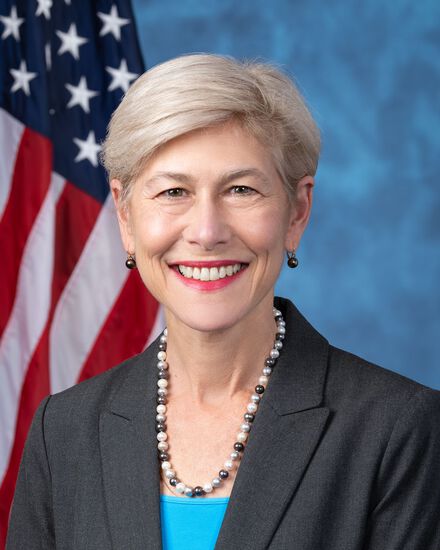
Photo of Deborah K. Ross
D United States House · District 2 · North Carolina On the 2026 ballot

Rep. Deborah K. Ross

Compare
Total votes
2,837
all sessions
Attendance
99%
22 missed
Higher than 96% of chamber peers
With party
98%
of cast votes
Higher than 94% of chamber peers
Bipartisan score
1%
crosses aisle rarely
Lower than 95% of chamber peers
Sponsored
1,961
bills & resolutions
Higher than 93% of chamber peers
Committees
7
assignments
1,961 bills and resolutions

Sponsored bills

Total
1,961
Primary
86
Co-sponsor
1,875
This page
1,961
matching current filters
Co-sponsor HRES 152
In committee · United States House · Co-sponsor
Reaffirming the deep and steadfast United States-Canada partnership and the ties that bind the two countries in support of economic and national security.

Maddy summaryHouse Resolution 152 is a symbolic congressional resolution reaffirming the U.S.-Canada partnership. It highlights their $1 trillion annual trade relationship (supporting 8 million U.S. jobs), joint border security efforts against fentanyl trafficking, and energy cooperation - including Canada as the U.S.'s top oil supplier and critical minerals partner. The resolution emphasizes shared security interests, integrated supply chains, and collaboration on defense, Arctic security, and democratic values. It does not create new laws but formally expresses congressional support for strengthening this alliance.

In committee Feb 24, 2025 1 co-sponsor
Co-sponsor HRES 160
In committee · United States House · Co-sponsor
Recognizing January 2025 as "National Mentoring Month".

Maddy summaryHRES 160 designates January 2025 as "National Mentoring Month" to highlight the positive impact of mentoring relationships on young people. The resolution emphasizes how mentoring improves academic performance, mental health, career readiness, and social skills - particularly for underserved youth - and addresses the "mentoring gap" where one in three young people lacks a supportive adult outside their family. It calls for expanding mentoring programs in schools, communities, and workplaces without creating new laws or funding. As a symbolic resolution, it aims to raise public awareness and encourage participation in existing mentoring initiatives.

In committee Feb 24, 2025 1 co-sponsor
Co-sponsor HRES 159
In committee · United States House · Co-sponsor
Expressing support for the designation of the week of February 24 through February 28, 2025, as "Public Schools Week".

Maddy summaryHRES 159 is a symbolic resolution expressing the U.S. House of Representatives' support for designating February 24-28, 2025, as "Public Schools Week." It does not create new laws or allocate funds but aims to highlight the importance of public schools in communities. The resolution cites reasons such as public schools serving 90% of U.S. students, fostering critical thinking, and requiring equitable funding - though these are context, not policy changes. It directly affects public schools and their communities by raising awareness of their role in education. As a non-binding resolution, it has no direct impact on school operations or funding.

In committee Feb 24, 2025 1 co-sponsor
Co-sponsor HR 1518
In committee · United States House · Co-sponsor
New Era of Preventing End-Stage Kidney Disease Act

New Era of Preventing End-Stage Kidney Disease Act This bill establishes regional centers of excellence, postgraduate fellowships, and training for health professionals relating to the diagnosis and treatment of rare kidney disease. It also requires the Department of Health and Human Services (HHS) to conduct various studies on rare kidney disease. Specifically, it authorizes the National Institute of Diabetes and Digestive and Kidney Diseases to award funding to public and private nonprofit entities for establishing regional centers of excellence that will increase public awareness, conduct research, and develop resources for diagnosing and treating rare kidney diseases. A center may receive such funding for up to five years, unless extended by the institute.  The bill also requires health professions schools receiving a grant from the Health Resources and Services Administration (HRSA) Centers of Excellence program to award fellowships for training on preventing, diagnosing, and treating rare kidney disease in disproportionately impacted populations. Also, the bill expands the priorities of HRSA’s Primary Care Training and Enhancement program to include training for health care workers to care for individuals with kidney disease. Additionally, HHS must conduct several studies and report to Congress on topics such as treating rare kidney disease in disproportionately affected populations, eliminating the need for dialysis or kidney transplants, and increasing public awareness of rare kidney disease.

In committee Feb 24, 2025 1 co-sponsor
Co-sponsor HR 1517
In committee · United States House · Co-sponsor
Prevent Interruptions in Physical Therapy Act of 2025

Maddy summaryThis bill allows physical therapists to use temporary replacement staff (locum tenens) under Medicare, similar to how physicians currently can. It directly affects physical therapists providing outpatient services and Medicare beneficiaries relying on those services. The key change modifies Medicare rules to apply the same provisions for physical therapy services as are already used for physician services. This means physical therapists can more easily fill temporary staffing gaps without disrupting patient care. The amendment applies to services provided after the bill's enactment date.

In committee Feb 24, 2025 1 co-sponsor
Co-sponsor HR 1548
In committee · United States House · Co-sponsor
Leveling the Playing Field 2.0 Act

Maddy summaryHR 1548, the "Leveling the Playing Field 2.0 Act," amends U.S. trade laws to strengthen enforcement of antidumping and countervailing duty regulations. The bill creates new rules for handling multiple investigations on the same merchandise (successive investigations), addresses market distortions in foreign countries that affect production costs, and improves mechanisms to prevent companies from circumventing existing duties. It also establishes procedures for investigating currency undervaluation as a form of subsidy and strengthens requirements for importers to certify compliance with trade laws. These changes primarily affect U.S. importers of foreign goods, foreign exporters, and the Department of Commerce, which administers these trade enforcement mechanisms.

In committee Feb 24, 2025 1 co-sponsor
Co-sponsor HR 1521
In committee · United States House · Co-sponsor
DOC Access Act of 2025

Dentist and Optometric Care Access Act of 2025 or the DOC Access Act of 20 25 This bill prohibits private health insurance plans from setting rates for items and services, except for dental cleanings, provided by a doctor of optometry, of dental surgery, or of dental medicine (or an employer of such a doctor) for which the plan does not pay a substantial amount. Additionally, an agreement between a plan and such a doctor for limited scope dental or vision benefits may last longer than two years only with the prior acceptance of the doctor for each term extension. Plans also may not restrict such a doctor's choice of laboratories or suppliers. Such doctors may elect to waive the application of the payment amount and choice of laboratories provisions of this bill. The bill does not supersede state laws regarding health insurers and dental or vision benefit plans.

In committee Feb 24, 2025 1 co-sponsor
Co-sponsor HR 1530
In committee · United States House · Co-sponsor
American Victims of Terrorism Compensation Act

Maddy summaryThe American Victims of Terrorism Compensation Act amends the Justice for United States Victims of State Sponsored Terrorism Act to increase funding for victims of terrorism. It directs the transfer of approximately $1.5 billion from the Binance Holdings Limited case, plus 50% of excess unobligated balances from Department of Justice and Treasury forfeiture funds, into the Victims Fund. The bill establishes deadlines for agencies to deposit funds (within 30 days of receipt or 15 days after enactment), requires annual reports on fund activity, and authorizes annual payments to eligible claimants starting in 2026. This legislation directly affects terrorism victims who receive compensation from the fund and federal agencies that handle forfeited assets from terrorism-related cases.

In committee Feb 24, 2025 1 co-sponsor
Co-sponsor HR 1506
In committee · United States House · Co-sponsor
SWIM Act of 2025

Maddy summaryHR 1506, the SWIM Act of 2025, creates a new tax deduction for basic water safety and swimming instruction. It allows taxpayers to deduct up to $500 annually (or $1,000 for joint returns or heads of household) for qualified water competency and safety lessons, including necessary equipment costing no more than $100 per item. The bill specifically defines eligible expenses as those for basic swimming instruction focused on safety - not competitive training - and requires lessons to meet this safety criterion. This change applies to tax years beginning after the bill's enactment.

In committee Feb 21, 2025 1 co-sponsor
Co-sponsor HR 1464
In committee · United States House · Co-sponsor
MODERN WIC Act of 2025

More Options to Develop and Enhance Remote Nutrition in WIC Act of 2025 or the MODERN WIC Act of 2025 This bill permanently allows individuals to remotely certify their eligibility for, and receive benefits through, the Special Supplemental Nutrition Program for Women, Infants, and Children (WIC). Specifically, the bill requires that a state agency allow an individual seeking a WIC certification, recertification, or a nutritional risk evaluation to do so by phone or through video teleconference, in addition to the in-person option. A state agency has 90 days to collect data for a nutritional risk evaluation for a remotely certified individual. Further, a state agency may consider an applicant who meets the income eligibility standards to be temporarily eligible on an interim basis to participate in the program and may certify the individual for immediate participation without waiting for a nutritional risk evaluation. The bill also allows states to provide benefits on WIC electronic benefit transfer cards through mail or remote issuance instead of requiring participants to pick up or reload benefits in person at a WIC office. Further, the Department of Agriculture must report to Congress about the use of remote technologies and other digital tools in the WIC program. Currently, individuals are generally required to be physically present to certify their WIC eligibility and receive benefits, with exceptions. The Food and Nutrition Service  has temporarily waived these requirements and allowed remote certification and benefits using authorities that were provided by laws that were enacted to address COVID-19.

In committee Feb 21, 2025 1 co-sponsor
Showing 581 to 590 of 1,961 bills
Previous 1 … 58 59 60 … 197 Next