

Maddy summaryThis bill (HJRES 63) would rename the Robert E. Lee Memorial, a National Park Service site in Arlington, Virginia, to "Arlington House National Historic Site." It directly affects the National Park Service, which manages the site, and all federal government documents, maps, and records referencing the location. The key provision updates all official references to the site to the new name and repeals two prior resolutions that established the memorial. As a procedural renaming bill, it does not create new policies or funding but changes the site's official designation.
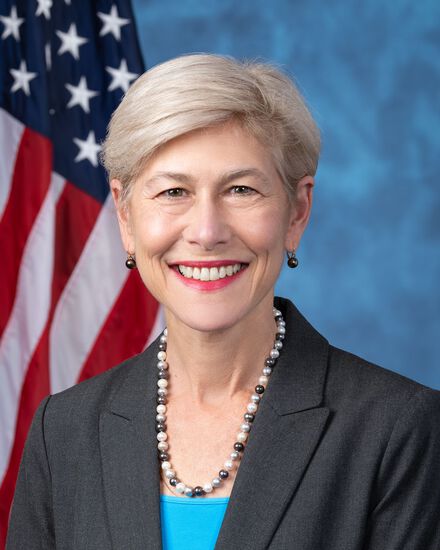
Rep. Deborah K. Ross
Sponsored bills
Maddy summaryThis resolution urges the European Union to formally designate Iran's Islamic Revolutionary Guard Corps (IRGC) as a terrorist organization under the EU's Common Position 931 framework, which allows for such designations. It cites the U.S. (2019) and Canada (2024) as precedents for designating the IRGC, noting the EU has only sanctioned individual IRGC members, not the entity itself. The resolution emphasizes the IRGC's documented ties to terrorism, human rights abuses in Iran, support for proxy groups like Hamas and Hezbollah, and its role in supplying drones to Russia for its war in Ukraine. The House requests the EU expedite this designation and encourages U.S. diplomatic efforts to prioritize it.
Maddy summaryThis resolution symbolically recognizes polycystic ovary syndrome (PCOS) as a serious health condition affecting millions of women and girls in the U.S., highlighting its impacts on reproductive, metabolic, and mental health. It designates September as "PCOS Awareness Month" to promote public education, improve diagnosis rates, and support better management of related health issues like diabetes and cardiovascular disease. The resolution urges increased awareness and research but does not create new laws, funding, or programs. It directly affects individuals with PCOS, healthcare providers, and public health efforts focused on the condition.
Maddy summaryThis bill changes tax rules so dental school faculty receiving loan repayment assistance through specific federal programs no longer have to pay income tax on those payments. It directly affects dental faculty at institutions participating in the Dental Faculty Development Program under the Public Health Service Act. The key provision amends tax law to exclude these loan repayments from taxable income, reducing their financial burden. The bill also requires a report to Congress on how many faculty remain in teaching roles after receiving this assistance.
Maddy summaryHR 1751, the Stop Electronic Stalking Act of 2025, amends federal stalking law to explicitly include unauthorized use of geotracking devices. It adds "uses an unauthorized geotracking device" to the definition of stalking under Title 18, U.S. Code, and defines two key terms: a "geotracking device" as any tool that remotely tracks a person's location, and "unauthorized" as use without the person's consent or after consent was revoked. This bill directly affects individuals who use such devices to track others without permission, making this specific conduct a federal stalking offense. The law does not create new penalties but expands existing stalking provisions to cover digital location tracking. It focuses on clarifying the legal definition of stalking related to modern technology.
Maddy summaryHR 1715, the Public Health Funding Restoration Act, restores annual funding for the Prevention and Public Health Fund to $2 billion starting in fiscal year 2026. This bill directly affects federal public health programs, including the CDC’s immunization initiatives and state/local health departments, by reversing prior funding cuts. It amends the Affordable Care Act to set the annual funding level at $2 billion, enabling continued support for evidence-based prevention programs like childhood lead poisoning prevention, tobacco cessation, and immunizations. The restored funding aims to maintain existing programs proven to reduce healthcare costs and improve community health outcomes. This change specifically targets the Prevention and Public Health Fund (Section 4002 of the ACA) without creating new programs.
Maddy summaryHR 1688, the Hatch Act Enforcement Transparency and Accountability Act, requires the Office of Special Counsel (OSC) to provide greater transparency about enforcement actions against federal employees for prohibited political activities. It mandates annual reports to Congress detailing investigations and outcomes for noncareer employees (political appointees), including anonymized demographic data on race, gender, and other factors. The bill also requires the OSC to publish detailed written explanations for decisions not to pursue cases against noncareer employees, excluding those in Senate-confirmed positions. These provisions aim to increase accountability in enforcing the Hatch Act, which restricts political activities by federal workers, while focusing on noncareer appointees rather than career civil servants.
Maddy summaryThe Keep Americans Safe Act (HR 1674) restricts the sale, transfer, and possession of large capacity ammunition feeding devices (LCFDs) - defined as magazines or similar devices holding more than 15 rounds of ammunition - for most individuals. Exceptions allow law enforcement officers (including campus law enforcement), retired officers, and nuclear security personnel to possess LCFDs under specific conditions. The bill requires new LCFDs to have serial numbers and manufacturing dates, permits federal seizure of violative devices, and authorizes federal grant programs to fund buy-back initiatives for LCFDs. It directly affects gun owners and manufacturers while preserving access for covered law enforcement and security personnel.
Maddy summaryThe BEST Act establishes a federal grant program to help states create or improve Seal of Biliteracy programs for K-12 students. It provides $10 million annually (2025-2029) for states to develop programs recognizing students who demonstrate speaking and writing proficiency in both English and a second language, including Native American languages and American Sign Language. States must ensure equitable access for English learners, students with disabilities, and heritage language learners, and provide free testing for low-income students. The program requires states to award permanent seals or documentation on diplomas/transcripts for qualifying students.
Maddy summaryHR 1657, the Humane Cosmetics Act of 2025, prohibits cosmetic companies from conducting or contracting animal testing for products sold in the U.S. beginning one year after the law takes effect. It also bans the sale or transport of cosmetics developed using such testing after that date, with limited exemptions (e.g., for foreign regulatory requirements or when no non-animal safety alternatives exist). The bill directly affects cosmetic manufacturers, retailers, and distributors by requiring them to shift to non-animal testing methods. The Food and Drug Administration (FDA) will enforce the law, including reviewing records and imposing civil penalties for violations.