

Maddy summaryThis bill, HR 2936 (the ABC-ED Act), aims to reduce emergency department crowding by requiring real-time tracking of hospital bed capacity and related metrics like patient wait times. It allows federal grants to modernize public health data systems that monitor emergency department boarding rates, bed availability, and ambulance offload times, with results displayed on a public dashboard (while protecting privacy). The bill also adds two new Medicare Innovation Center pilot programs: one focused on improving care for older adults (through staffing, infrastructure, and senior care coordination) and another for psychiatric crisis care (including dedicated units and faster facility transfers). Finally, it mandates a one-year study by the Government Accountability Office to evaluate best practices for these data systems and their impact on emergency department efficiency.
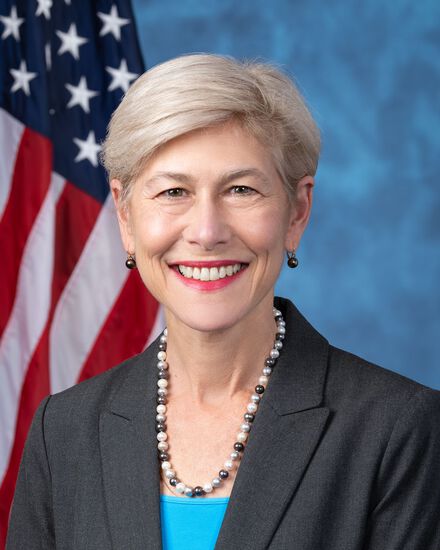
Rep. Deborah K. Ross
Sponsored bills
Maddy summaryThis bill increases the federal tax credit for rehabilitating historic buildings. It raises the standard credit rate from 20% to 30% for qualifying small projects (with a $3.75 million expenditure cap) and further increases the cap to $5 million for projects in rural areas. The bill also allows taxpayers to transfer all or part of this credit to another taxpayer, creating a new market for the credit. These changes apply to properties placed in service after the bill's enactment date. The bill directly affects developers and owners of historic properties seeking tax incentives for rehabilitation projects.
Maddy summaryHR 2948, the Safer Neighborhoods Gun Buyback Act of 2025, authorizes $360 million annually from 2025-2027 to fund gun buyback programs across the country. The bill creates a grant program for states, local governments, tribal governments, and eligible gun dealers to collect firearms from individuals using "smart prepaid cards" that cannot be used to purchase guns. Participants would pay 125% of a gun's market value (with possible increases for modified weapons) and must destroy all collected firearms and ammunition within 30 days. The program requires criminal background checks on all collected weapons and prohibits reselling any guns obtained through the initiative, with a new federal criminal provision making it illegal to use these cards for firearm transactions.
Maddy summaryThis concurrent resolution (HCONRES 28) expresses Congress's non-binding opinion that overseas military voters' absentee ballots must be counted under the existing Uniformed and Overseas Citizens Absentee Voting Act (UOCAVA). It states that states and election authorities must fully count legally submitted ballots from military personnel and overseas citizens without rejection due to administrative errors or delays. The resolution urges the Attorney General to monitor compliance with UOCAVA and take action against violations, reinforcing federal protections for military voters' right to participate in elections. It does not create new law but affirms existing legal obligations under UOCAVA.
Maddy summaryHR 2910, the Youth Workforce Readiness Act of 2025, establishes a federal grant program to fund community-based organizations in creating after-school and out-of-school-time workforce readiness programs for youth aged 6-18. The bill authorizes $100 million annually (2026-2030) to support activities like career pathway planning, paid work experiences (including apprenticeships), occupational skill training aligned with local job needs, and employer partnerships. It directly affects eligible youth - particularly those in underserved communities - and requires grantees to coordinate with schools, employers, and local workforce boards, while mandating youth councils to advise on program design. The program emphasizes measurable outcomes, including improved school attendance, skill development, and transitions to postsecondary education or employment.
Maddy summaryThis bill amends the Elementary and Secondary Education Act to explicitly include accounting education as part of a well-rounded K-12 curriculum. It requires schools to develop and strengthen programs teaching accounting, including increasing access to high-quality accounting courses for students from groups historically underrepresented in accounting careers. The key provision inserts specific language into existing law, directing schools to promote accounting career awareness and expand course availability through grade 12. This directly affects K-12 students, particularly those from underrepresented backgrounds, by making accounting education a recognized component of career-focused learning.
Maddy summaryThis bill prohibits the federal government from issuing new oil and gas leases for exploration, development, or production in the Mid-Atlantic region of the Outer Continental Shelf. It specifically blocks leasing in the area defined by the 2023 federal leasing plan (2024-2029 National Outer Continental Shelf Oil and Gas Leasing Proposed Final Program). The law directly affects energy companies seeking to drill in this coastal zone and requires the Secretary of the Interior to halt such lease sales. It does not impact existing leases or operations already authorized.
Maddy summaryHR 2831, the Small Business Energy Loan Enhancement Act, doubles the maximum loan amounts for certain small business energy projects under the Small Business Investment Act of 1958, raising the cap from $5.5 million to $10 million for two specific loan categories. This directly affects small businesses seeking financing for energy-related investments, such as efficiency upgrades or renewable energy installations. The bill requires the Small Business Administration (SBA) to annually report to Congress on which industries and geographic areas receive these loans. These changes aim to increase access to capital for qualifying energy projects without altering eligibility criteria.
Maddy summaryHR 2859, the Child Care Nutrition Enhancement Act of 2025, adds a 10-cent per meal reimbursement to the Child and Adult Care Food Program (CACFP) for meals served to children in licensed childcare settings. This change directly affects childcare providers, including family and group day care homes and centers participating in CACFP, starting after the bill's enactment. The bill amends existing law to require this additional payment for every meal and supplement served under the program. The increase applies to all qualifying meals served after the effective date, without altering existing reimbursement tiers or eligibility rules.
Maddy summaryHR 2881, the COAST Anti-Drilling Act of 2025, prohibits the federal government from issuing new oil and gas leases in four specific coastal planning areas: the North Atlantic, Mid-Atlantic, South Atlantic, and Straits of Florida. This directly affects the Department of the Interior (specifically the Secretary) and oil and gas companies seeking to explore or develop resources in these regions. The bill amends the Outer Continental Shelf Lands Act to ban all new leasing authorizations in these areas, as defined by the 2024-2029 leasing program notice. It does not affect existing leases or operations but prevents future development in these designated coastal zones.