

Maddy summaryHR 3121, "Anna’s Law of 2025," requires federal grants to fund trauma-informed training for law enforcement and emergency medical personnel who handle sexual assault, domestic violence, and stalking cases. The training must cover how trauma affects victims’ behavior, prevent retraumatization during interactions, and teach victim-centered communication techniques. It mandates 8 hours of training for new recruits in law enforcement or EMT programs and 4 hours annually for existing staff. The bill also requires grant recipients to use diverse trainers and report annually to Congress on program effectiveness and survivor experiences. This policy directly affects law enforcement agencies, emergency medical services providers, and survivors interacting with these responders.
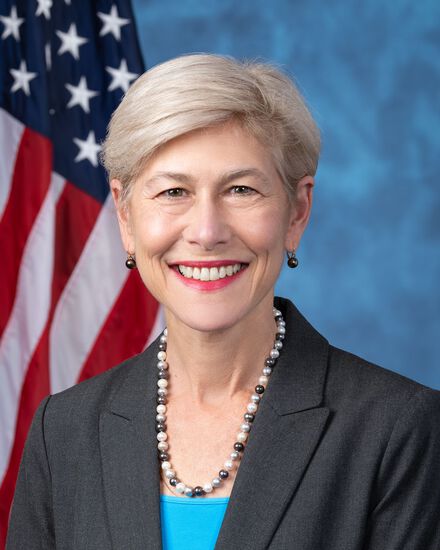
Rep. Deborah K. Ross
Sponsored bills
Maddy summaryThe Equality Act (HR 15) amends federal civil rights laws to explicitly prohibit discrimination based on sexual orientation and gender identity in employment, housing, public accommodations, credit, and jury service. It expands existing protections under the Civil Rights Act of 1964 by adding sexual orientation and gender identity as protected characteristics under sex discrimination prohibitions. The bill clarifies that discrimination against LGBTQ people is a form of sex discrimination, consistent with the Supreme Court's Bostock decision, and adds specific definitions for gender identity and sexual orientation. This legislation directly affects businesses, employers, housing providers, financial institutions, and government entities that serve the public. The bill creates a more comprehensive legal framework to address discrimination that LGBTQ people face in multiple aspects of daily life.
Maddy summaryHR 3067, the Arctic Refuge Protection Act, repeals the existing oil and gas program for the Arctic National Wildlife Refuge (ANWR) and designates approximately 1.56 million acres of the refuge's Coastal Plain as wilderness. This directly affects federal management of the ANWR, halting potential oil drilling in the designated area. The bill requires the Secretary of the Interior to administer the newly designated wilderness area under the Wilderness Act, treating it as part of the existing wilderness within ANWR. The change prevents future oil and gas development on this specific portion of the refuge.
Maddy summaryThe Next Generation Pipelines Research and Development Act establishes a new demonstration initiative that will award competitive grants to eligible entities - including universities, research organizations, and private companies - for projects developing advanced pipeline technologies. The bill focuses on improving pipeline safety, efficiency, and environmental performance through research on leak detection, novel materials, sensor technologies, and cybersecurity for pipelines and associated infrastructure. It authorizes $45 million for fiscal year 2026 (increasing to $50 million annually through 2030) for demonstration projects and creates a National Pipeline Modernization Center to coordinate research and development efforts. The program specifically prioritizes projects that reduce environmental impacts, leverage existing infrastructure, and involve diverse geographic and technological approaches to pipeline innovation.
Maddy summaryThe Protecting America's Workers Act (HR 3036) strengthens workplace safety protections for all employees, including public sector workers and voluntary emergency responders, by expanding coverage under the Occupational Safety and Health Act. Key provisions include enhanced whistleblower protections against retaliation for reporting safety concerns, mandatory employer reporting of work-related injuries and deaths, and increased civil penalties for violations (up to $70,000 per violation). The bill also establishes new rights for victims and families of workplace incidents, requiring employers to preserve evidence after fatalities, and creates procedures for faster resolution of safety complaints through improved inspection and enforcement mechanisms. These changes directly affect employers across all industries, employees reporting safety concerns, and families of workers injured or killed on the job.
Maddy summaryThis bill requires most private health insurance plans to cover diagnostic and supplemental breast exams with no out-of-pocket costs (like deductibles or copays) for enrolled patients. It specifically covers exams used to evaluate abnormalities found in screenings (diagnostic) or for high-risk screening without abnormalities (supplemental), based on medical guidelines. Plans can still require prior authorization for these exams, and state laws offering stronger protections remain in effect. The rule takes effect for plan years starting January 1, 2026.
Maddy summaryHR 3045, the West Bank Violence Prevention Act of 2025, imposes U.S. sanctions on foreign individuals and entities responsible for violence, displacement, or property destruction in the West Bank. It targets those directly involved in attacks on civilians, forced displacement, or property seizures, including settler leaders or officials of groups engaged in such activities. Key provisions require freezing assets of sanctioned individuals within U.S. jurisdiction and blocking their entry into the United States via visa restrictions. The law applies to foreign nationals meeting specific criteria outlined in the bill, not U.S. citizens or entities.
Maddy summaryHR 3006 would limit Medicare coinsurance for certain surgical procedures performed in ambulatory surgical centers (ASCs). Specifically, it prevents patients from paying coinsurance exceeding the annual inpatient hospital deductible for those procedures. If the coinsurance amount would surpass the deductible, the Medicare program must reduce the patient's share to match the deductible and reimburse the ASC for the difference. This change applies to services provided on or after January 1, 2026, directly affecting Medicare beneficiaries using ASCs for qualifying surgeries.
Maddy summaryHRES 340 is a ceremonial resolution recognizing April 2025 as "Community College Month" to celebrate the role of over 1,000 U.S. community colleges. It highlights these institutions' work in providing affordable higher education, workforce training, and economic support - serving 10.2 million students annually and contributing significantly to national economic growth (e.g., generating $898 billion in alumni income in 2020). The resolution emphasizes community colleges' accessibility (average $3,990 tuition for in-district students, 10-mile average student commute) and their role in workforce development across sectors like healthcare and manufacturing. As a non-binding recognition, it does not create new laws or funding.
Maddy summaryHR 2980 establishes a new Energy Cybersecurity University Leadership Program under the Department of Energy to support graduate students and postdoctoral researchers studying cybersecurity for energy infrastructure. The program provides competitive grants for scholarships, fellowships, and research at colleges and universities, including hands-on training at national labs and utility companies. It specifically aims to increase participation from historically Black colleges, Tribal Colleges, and minority-serving institutions. The bill directly affects advanced students and researchers in cybersecurity and energy fields, focusing on building workforce capacity through education and practical experience.