Transportation Equity Act This bill directs the Department of Transportation (DOT) to reestablish the Transportation Equity Committee. The committee must provide independent advice and recommendations to DOT on transportation equity issues. The committee must also evaluate the work of DOT in connecting people to economic and related forms of opportunity and carrying out its strategic, research, technological, regulatory, community engagement, and economic policy activities related to transportation and opportunity. In addition, DOT must appoint a full-time federal employee to serve as coordinator and act as the designated federal officer for the committee.
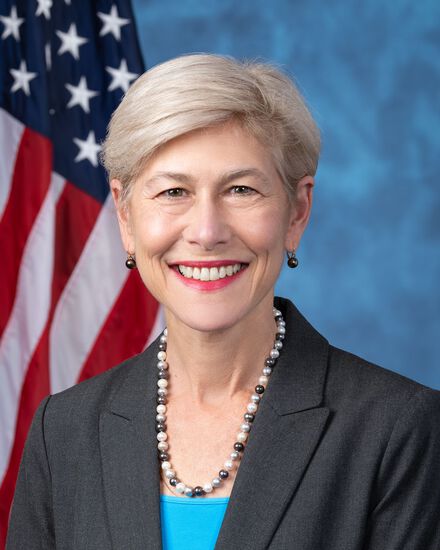
Rep. Deborah K. Ross
Sponsored bills
This bill moves portions of four counties encompassing the Fort Bragg Military Reservation and Camp Mackall from the Middle District to the Eastern District of North Carolina.
Hate Crimes Commission Act of 2021 This bill establishes the United States Commission on Hate Crimes. The commission must investigate and report on whether hate crimes have increased; factors that contributed to an increase in hate crimes, if one is determined to exist; policies or actions by law enforcement agencies to reduce the commission of hate crimes; the impact of underreporting on hate crimes statistics and prevention; and successful community bias prevention responses.
COVID - 19 Hate Crimes Act This bill requires a designated officer or employee of the Department of Justice (DOJ) to facilitate the expedited review of COVID-19 (i.e., coronavirus disease 2019) hate crimes and reports of COVID-19 hate crimes. It defines COVID-19 hate crime as a violent crime that is motivated by two things: (1) the actual or perceived characteristic (e.g., race or ethnicity) of any person, and (2) the actual or perceived relationship to the spread of COVID-19 of any person because of that characteristic. The bill requires DOJ to issue guidance for state and local law enforcement agencies on (1) the establishment of online hate crime reporting processes and the availability of online reporting in multiple languages, and (2) the expansion of culturally competent education campaigns. Additionally, DOJ and the Department of Health and Human Services must issue guidance on best practices for mitigating racially discriminatory language in describing the COVID-19 pandemic.
Journalism Competition and Preservation Act of 2021 This bill creates a four-year safe harbor from antitrust laws for print, broadcast, or digital news companies to collectively negotiate with online content distributors (e.g., social media companies) regarding the terms on which the news companies' content may be distributed by online content distributors.
Uyghur Human Rights Protection Act This bill designates certain residents of the Xinjiang region in China as prioritized refugees of special humanitarian concern and addresses other related issues. This priority designation shall apply to individuals (and the spouses, children, and parents of such individuals) who (1) reside in or fled Xinjiang and who suffered persecution on account of their peaceful political, religious, or cultural activities or associations, or have a well-founded fear of such persecution; or (2) have been formally charged, detained, or convicted for certain peaceful actions related to Xinjiang. Such an individual may not be denied admission into the United States based primarily on an arrest or other adverse government action due to that individual's participation in protests. The bill also waives certain immigration-related requirements for such individuals. Furthermore, a Chinese national seeking refugee status shall be considered to have been persecuted on account of political opinion if the Chinese government revoked that individual's residency in any region of China because the individual submitted a nonfrivolous application for a U.S. immigration benefit. Similarly, if the Chinese government revoked a Chinese national's citizenship, nationality, or residency because that individual filed for a U.S. immigration benefit, that revocation shall constitute a changed circumstance. (Among other things, a changed circumstance may allow an individual who has been rejected for asylum to apply again.)

National Gun Violence Research Act This bill promotes gun violence research, including by removing limitations on the use of firearms tracing data by the Bureau of Alcohol, Tobacco, Firearms and Explosives; permitting funds made available to the Department of Health and Human Services to be used for gun violence research; establishing the National Gun Violence Research Program to promote gun violence research; and authorizing various competitive grants to support research into the nature, causes, consequences, and prevention of gun violence.
Non-Opioids Prevent Addiction In the Nation Act or the NOPAIN Act This bill temporarily establishes separate payments for certain non-opioid treatments under the Medicare prospective payment system for hospital outpatient department services and the payment system for ambulatory surgical center services. The bill applies to pain management treatments that are able to replace or reduce opioid consumption, as shown through clinical trials or data.
Pregnant Workers Fairness Act This bill prohibits employment practices that discriminate against making reasonable accommodations for qualified employees affected by pregnancy, childbirth, or related medical conditions. A qualified employee is an employee or applicant who, with or without reasonable accommodation, can perform the essential functions of the position, with specified exceptions. Specifically, the bill declares that it is an unlawful employment practice to fail to make reasonable accommodations to known limitations of such employees unless the accommodation would impose an undue hardship on an entity's business operation; require a qualified employee affected by such condition to accept an accommodation other than any reasonable accommodation arrived at through an interactive process; deny employment opportunities based on the need of the entity to make such reasonable accommodations to a qualified employee; require such employees to take paid or unpaid leave if another reasonable accommodation can be provided; or take adverse action in terms, conditions, or privileges of employment against a qualified employee requesting or using such reasonable accommodations. The bill sets forth enforcement procedures and remedies that cover different types of employees in relation to such unlawful employment practices. The Equal Employment Opportunity Commission must provide examples of reasonable accommodations that shall be provided to affected employees unless the employer can demonstrate that doing so would impose an undue hardship. The bill prohibits state immunity under the Eleventh Amendment to the Constitution from an action for a violation of this bill.
This bill waives certain eligibility requirements for hospitals participating in the 340B drug discount program (i.e., a program that allows entities to receive covered outpatient drugs at reduced prices from manufacturers) during the COVID-19 (i.e., coronavirus disease 2019) public health emergency. Specifically, the bill waives the required minimum proportion of low-income patients served for hospitals that began participating in the program during or prior to the COVID-19 emergency.