Stop Child Hunger Act of 2021 This bill establishes a permanent program and provides funds for electronic benefit transfer (EBT) cards to cover meals for children during extended school closures. Specifically, the Department of Agriculture must establish a program to provide EBT cards to cover meals for children who are enrolled in the National School Lunch Program or School Breakfast Program when a school is closed, operating remotely, or a combination of both for a period of five days or more. Cards may be used to purchase food from approved retailers under the Supplemental Nutrition Assistance Program.
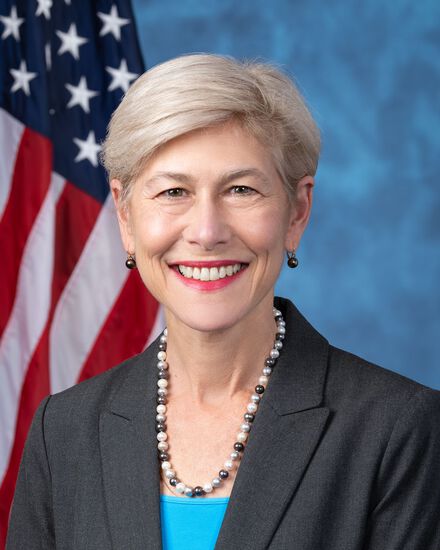
Rep. Deborah K. Ross
Sponsored bills
Long-term Opportunities for Advancing New Studies for Biomedical Research Act or the LOANS for Biomedical Research Act This bill requires the Department of Health and Human Services (HHS), in consultation with the Department of the Treasury, to establish the Biobonds Program to support loans for clinical trials for eligible drugs and medical devices. Specifically, Treasury must contract with institutions to act as fiscal agents to carry out the program. Fiscal agents must (1) purchase loans made to borrowers engaged in eligible biomedical research activities, and (2) sell bonds comprised of such loans. HHS shall guarantee a portion of the bond payments. An eligible borrower under this program is one conducting (or seeking to conduct) research related to a drug or device that is (1) intended to meet an unmet medical need; and (2) under investigation in certain types of controlled clinical trials, including a trial to investigate the safety and effectiveness of the drug or device. HHS must issue rules relating to various aspects of the program, including rules concerning (1) which loans should be prioritized for purchase, (2) the terms and conditions of the loans, and (3) the size of each bond issuance. Treasury must issue rules relating to the program's underwriting practices and compensation for the fiscal agents. The Government Accountability Office must periodically report to Congress on the program, including an analysis of the risk to the government in guaranteeing the bonds.
Midwives for Maximizing Optimal Maternity Services Act of 2021 or the Midwives for MOMS Act of 2021 This bill establishes grants within the Health Resources and Services Administration (HRSA) for establishing or expanding midwifery programs at institutions of higher education and nursing schools. HRSA may prioritize funding for institutions that focus on increasing the number of midwife professionals from underrepresented groups and that promote practicing in areas with limited access to professional health care.
SOS: Sustaining Outpatient Services Act This bill allows for payment under the Medicare prospective payment system for hospital outpatient department services of certain items and services that are furnished at off-campus outpatient departments. Specifically, the bill allows for payment of items and services for which payments to physician specialists (under the Medicare physician fee schedule) did not exceed $2 million during the previous year.
This resolution condemns the acts of gun violence that led to the tragic loss of eight lives in Georgia on March 16, 2021.
Birth Access Benefiting Improved Essential Facility Services Act or the BABIES Act This bill requires the Centers for Medicare & Medicaid Services (CMS) to establish a Medicaid demonstration program to improve freestanding birth center services for women with low-risk pregnancies. Among other things, the CMS must (1) publish criteria for freestanding birth centers to participate in the program, including specified accreditation, licensure, and service requirements; (2) publish guidance for states to establish prospective payment systems under Medicaid for program participants; and (3) award planning grants for states to develop program proposals. The CMS may choose up to six states to participate in the program.
Manufactured Housing Tenant's Bill of Rights Act of 2021 This bill requires manufactured housing communities and home parks to meet minimum consumer protections to be eligible for certain federally-backed loans for the construction, substantial rehabilitation, or purchase of these communities. Specifically, the Department of Housing and Urban Development is prohibited from insuring such a loan, and Fannie Mae and Freddie Mac are prohibited from purchasing such a loan, unless a borrower provides specified tenant protections, including one-year renewable lease terms, unless there is good cause for nonrenewal; at least a 60-day advance notice of any increase in rent, or of a sale or closure of the community; a five-day grace period for rent payments; and a right for a tenant to sell a manufactured home within a reasonable time period after eviction. The bill sets forth penalties for violations of these protections. The bill also establishes the Manufactured Home Company Lending Standards Commission to propose additional consumer protection standards.
Youth Workforce Readiness Act of 2021 This bill requires the Department of Labor to award grants to certain national youth-serving organizations for comprehensive workforce readiness programs provided to youth that take place before or after school, during summer vacation or holiday, or on the weekend (i.e., out-of-school-time programs). Such grants must be used to develop and implement youth workforce readiness programs, including for activities such as on-the-job and leadership opportunities, internships, and other supportive services. The bill also requires local workforce development boards to establish youth councils as subgroups of the boards.
Real Education and Access for Healthy Youth Act of 2021 This bill requires the Department of Health and Human Services (HHS) to establish grants to support sex education and sexual health services for young people (ages 10 through 29) and repeals requirements that apply to certain federally funded sex education programs. HHS must award grants, in coordination with the Department of Education, to (1) provide sex education to young people through elementary and secondary schools, institutions of higher education, and youth-serving organizations; and (2) train education professionals to effectively teach, and otherwise support, sex education. Sex education refers to high quality teaching and learning that follows, to the maximum extent practicable, specified educational standards; covers a variety of topics concerning sex and sexuality; explores values and beliefs about those topics; and helps young people gain skills to navigate relationships and manage sexual health. Additionally, HHS must award grants for the provision of sexual health services to marginalized youth to youth-serving organizations and health care entities that are eligible to receive covered outpatient drugs at reduced prices through the 340B drug discount program. Recipients of any of these grants must comply with certain nondiscrimination requirements. In addition, they may not use funds for sex education programs or sexual health services that provide incomplete or inaccurate medical information or fail to address specified issues. The bill also eliminates prohibitions regarding the content of specified federally funded sexual health education and information programs and repeals the Abstinence Only Until Marriage program.
Combating Sexual Harassment in Science Act This bill addresses sexual harassment and gender harassment in the science, technology, engineering, and mathematics (STEM) fields by supporting research regarding such harassment and efforts to prevent and respond to such harassment. (Sec. 4) This bill directs the National Science Foundation (NSF) to award grants to institutions of higher education or nonprofit organizations (or their consortia) to expand research into sexual harassment and gender harassment in the STEM workforce, including students and trainees; and examine interventions for reducing the incidence and negative consequences of such harassment. (Sec. 5) The NSF must convene a working group composed of representatives of federal statistical agencies to develop questions on sexual harassment and gender harassment in STEM departments in order to gather national data on the prevalence, nature, and implications of such harassment in institutions of higher education. (Sec. 6) The NSF shall enter into agreements with the National Academies of Sciences, Engineering, and Medicine to (1) update a responsible conduct guide issued by the National Academies to include, among other things, updated professional standards of conduct in research and evidence-based practices for fostering a climate that is intolerant of sexual harassment and gender harassment; and (2) study the influence of such harassment in institutions of higher education on the career advancement of individuals in the STEM workforce. (Sec. 7) The National Science and Technology Council shall establish an interagency working group to coordinate the federal science agencies' efforts to reduce the prevalence of sexual harassment and gender harassment involving grant personnel. The Office of Science and Technology Policy must develop a uniform set of policy guidelines for such agencies to prevent and respond to reports of sexual harassment and gender harassment.