

Public Service Freedom to Negotiate Act of 20 21 This bill provides minimum collective bargaining rights and procedures for public employees and prohibits strikes by certain public safety workers. The Federal Labor Relations Authority (FLRA) shall determine for each state whether the laws of such state substantially provide for each of the minimum standard collective bargaining rights and procedures specified by this bill, including the right of public employees and supervisory employees to self-organize, form or join a labor organization, or collectively bargain. The FLRA must issue rules and take actions to establish and administer bargaining rights and procedures for those states that do not substantially provide for them. No employers, emergency services employees, or law enforcement officers may engage in a lockout, strike, or any other organized job action that is likely to result in a measurable disruption of the delivery of emergency or public safety services. Furthermore, no labor organization may be the cause of a violation of such prohibition.
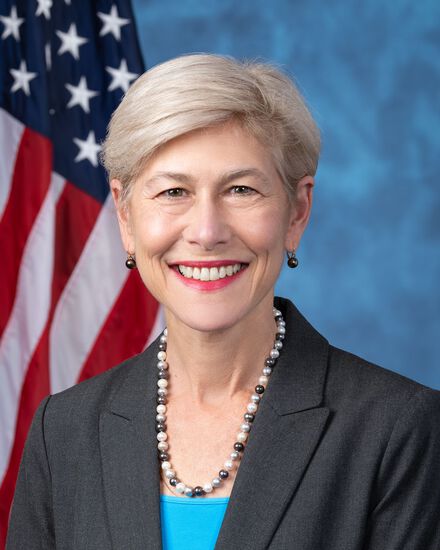
Rep. Deborah K. Ross
Sponsored bills
State, Local, Tribal, and Territorial Fiscal Recovery, Infrastructure, and Disaster Relief Flexibility Act This bill allows states, tribes, territories, and localities to use certain COVID-19 relief funds for new categories of spending, including for natural disasters and infrastructure projects. It also makes changes to expenditure deadlines and other aspects of this funding. Specifically, recipients may use funds for emergency relief from natural disasters and associated negative economic impacts of natural disasters. In addition, recipients may use a portion of their COVID-19 relief funds for designated infrastructure projects, such as nationally significant freight and highway projects. Furthermore, the bill allows recipients to expend COVID-19 relief funds on these types of infrastructure projects until September 30, 2026. Under current law, recipients must expend the funds by December 31, 2024. Other changes in the bill include (1) modifying eligibility and allocation requirements for funding set aside for counties and Indian tribes that are near public lands, (2) allowing Indian tribes an additional year to expend their COVID-19 relief funds, and (3) establishing a process for government entities to decline COVID-19 relief funds and requiring any declined funds to be used to reduce the federal deficit.
This resolution supports the designation of AADC Deficiency Awareness Day. Aromatic L-Amino Acid Decarboxylase (AADC) Deficiency is a genetic condition that affects an individual's development, motor skills, growth, and cognitive skills.
Protect Working Musicians Act of 2021 This bill allows certain individual music creator owners to collectively negotiate music licensing terms with dominant online music distribution platforms. Individual music creator owners include musicians, producers, and technicians who own the copyright to a recording and either (1) earned less than $1 million in associated revenues during the prior year, or (2) qualify as a record production and distribution small business. Dominant online music distribution platforms include interactive online services with annual revenues from music distribution of more than $100 million.
Student Assisted Vaccination Effort Act or the SAVE Act This bill expands the types of medical personnel authorized to administer or use a covered countermeasure (i.e., a qualified pandemic or epidemic product, a security countermeasure, certain drugs, biomedical products, or medical devices, or a respiratory protective device) during a federally-declared public health emergency to include specified health profession students with appropriate training in administering vaccines and supervision by a licensed health professional.
Bring Animals Relief and Kibble Act of 2021 or as the BARK Act of 2021 This bill extends federal protection from civil and criminal liability that applies to donations of food or grocery products for needy individuals to the donation of pet food or supplies.
This concurrent resolution recognizes the disparity between wages paid to Latina women, and its impact on women, families, and the nation and reaffirms Congress' commitment to supporting equal pay and to narrowing the gender wage gap.
Higher Education Mental Health Act of 2021 This bill requires the Department of Education to establish an Advisory Commission on Serving and Supporting Students with Mental Health Disabilities in Institutions of Higher Education. The commission must conduct a study and report on services available to students with mental health disabilities in institutions of higher education (IHEs) and the effectiveness of such services in supporting these students; the impact of policies and procedures, such as reasonable accommodation and disciplinary policies, that help or hinder the goal of providing equal opportunity to these students; the use of protected health information of these students by IHEs; the impact of providing mental health services on a student's academic performance, well-being, and ability to complete college; conclusions on the major challenges facing these students; and recommendations to improve the overall education, retention, and graduation of these students.
This resolution recognizes the opportunity for Black Maternal Health Week to raise national awareness of the state of Black maternal health in the United States.
Fair Housing for Domestic Violence and Sexual Assault Survivors Act of 2021 This bill prohibits discrimination against survivors of domestic violence, sexual assault, or sex trafficking in the sale or rental of housing and other related real estate activities.