

Cut Red Tape For Online Sales Act This bill modifies requirements for third party settlement organizations to eliminate their reporting requirement with respect to the transactions of their participating payees unless they have earned $5,000 or more. A third party settlement organization is the central organization that has the contractual obligation to make payments to participating payees (generally, a merchant or business) in a third party payment network. The bill also requires entities that report income to to issue a plain-language description of the taxability of income reported on Form 1099-K.
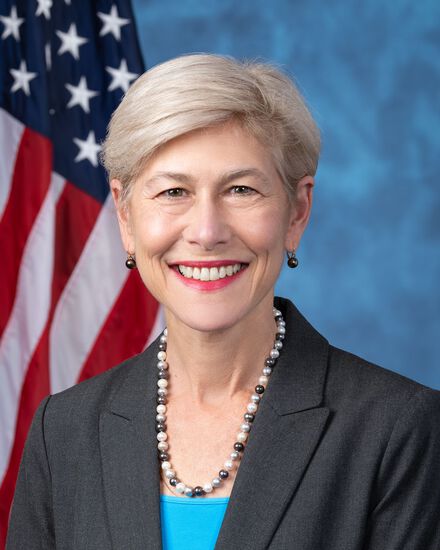
Rep. Deborah K. Ross
Sponsored bills
LIHTC Financing Enabling Long-term Investment in Neighborhood Excellence Act or the LIFELINE Act This bill permits states, territories, or tribal governments to use State and Local Fiscal Recovery Funds to finance qualified low-income housing projects (i.e., projects for residential rental property meeting certain income tests) with loans obligated by December 31, 2024, and having maturities of 30 or more years.
Elijah E. Cummings Family Asthma Act This bill expands various public health activities and related requirements concerning asthma. Specifically, the Centers for Disease Control and Prevention (CDC) must collaborate with state and local health departments to (1) conduct activities regarding asthma, including deterring the harmful consequences of uncontrolled asthma, and disseminating health education and information regarding prevention of asthma episodes and strategies for managing asthma; and (2) develop state plans incorporating public health responses to reduce the burden of asthma, particularly regarding disproportionately affected populations. Additionally, the bill revises and expands requirements for asthma surveillance activities and requires the CDC to coordinate data collection activities to maximize the comparability of results. Further, the Department of Health and Human Services must submit an assessment of current activities related to asthma prevention, management, and surveillance that includes recommendations for the future direction of asthma activities.
This resolution (1) recognizes Girl Scouts of the United States of America for 110 years of providing girls with a safe, inclusive, all-girl space where they can hone their skills and develop leadership abilities; and (2) congratulates all Girl Scouts who earned the Gold Award in 2021.
This concurrent resolution condemns violence and threats of violence against historically Black colleges and universities (HBCUs) and reaffirms the federal government's commitment to combating violence against HBCU students, faculty, and staff.
Maternal and Child Health Stillbirth Prevention Act of 2022 This bill expands the scope of the Maternal and Child Health Services Block Grant to include research and activities to prevent stillbirths.
School Social Workers Improving Student Success Act This bill provides certain resources to increase the number of social workers in elementary and secondary schools. Specifically, the bill directs the Department of Education to award grants to high-need local educational agencies to retain or hire school social workers. The bill also establishes a national technical assistance center for school social work to, among other duties, develop strategies for improving the effectiveness of the school social work workforce.
This resolution condemns the terrorist attack on Congregation Beth Israel in Colleyville, Texas, on January 15, 2022. It also expresses support for the affected community, commends the actions of law enforcement and emergency responders, and reaffirms a commitment to combat hate, bigotry, anti-Semitism, and violence against Jewish Americans.
Clean Slate through Consolidation Act This bill provides for the removal of any adverse credit history related to a defaulted federal student loan from a borrower's credit history once the borrower has obtained a Federal Direct Consolidation Loan discharging the borrower's liability on the defaulted loan.
Food for Thought Act of 2022 This bill allows the Department of Education to award grants for eligible institutions of higher education to provide free meals to low-income students through on-campus meal programs.