

Afghan Adjustment Act This bill expands eligibility for special immigrant visas to certain Afghan nationals (and accompanying spouse and children) and addresses related issues. The Department of Homeland Security may provide such visas to Afghan nationals who provided qualifying service as a member of the Afghan Air Force or other specified entities and meet eligibility requirements, such as passing a background check. Currently, special immigrant visas for Afghan nationals are generally only available to those who were employed by or on behalf of the U.S. government in Afghanistan. Such visas shall also be available to an Afghan national who is a qualifying relative of a veteran or member of the U.S. Armed Forces. The bill also modifies procedures for providing lawful permanent resident status to certain classes of Afghan nationals, such as by (1) providing a streamlined process with specified vetting requirements for certain individuals, including those who provided support to the U.S. government in Afghanistan; and (2) preserving the eligibility of certain battered spouses whose eligibility for such status stemmed from a marriage that has terminated. Furthermore, the Department of State (1) must respond to inquiries from Members of Congress about specific applications from Afghan nationals seeking special immigrant or refugee status; and (2) establish an office in Afghanistan to perform certain tasks, such as issuing visas, if no U.S. embassies are operational in Afghanistan. The President must establish a task force to develop and implement a strategy to assist Afghan nationals who qualify for admission to the United States.
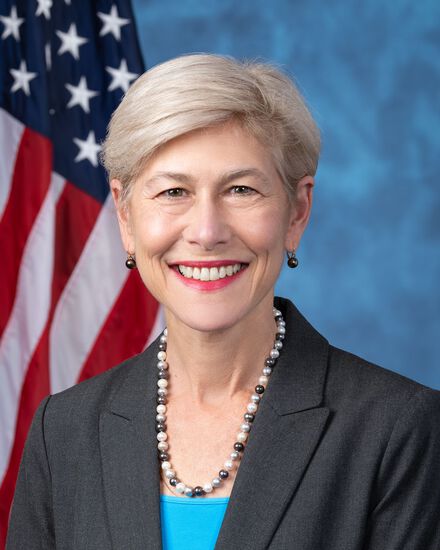
Rep. Deborah K. Ross
Sponsored bills
Unleashing American Innovators Act of 2022 This bill modifies the responsibilities of U.S. Patent and Trademark Office (PTO) satellite offices, increases the discount on patent-related fees for small and micro entities, and addresses related issues. Specifically, the bill modifies the statutory purpose of PTO satellite offices to include outreach and retention activities targeting underrepresented groups and individuals from economically, geographically, and demographically diverse backgrounds. For each satellite office established after July 1, 2022, the PTO must consider the office's proximity to anchor institutions (e.g., hospitals primarily serving veterans and institutions of higher education) and populations that are underrepresented in patent filings, including women, people of color, and rural populations. The PTO must establish (1) a satellite office in the southeastern United States within three years of this bill's enactment, (2) at least four community outreach offices throughout the United States within five years of this bill's enactment, and (3) a pilot program to help prospective first-time patent applicants assess the likelihood that a potential patent will be issued. The PTO must also (1) conduct and report to Congress a study on patent pro bono programs, including whether such programs are sufficiently serving underrepresented groups; and (2) use the study's findings to update such pro bono programs. In addition to increasing the discount on fees for small and micro entities, the bill also imposes penalties for making a fraudulent certification to obtain the discount, specifically by revoking any patent resulting from an application related to the fraudulent certification.
Renewing Immigration Provisions of the Immigration Act of 1929 This bill expands eligibility for a program that authorizes the Department of Homeland Security to, at its discretion, provide lawful permanent resident status to certain long-term residents of the United States, including individuals who are unlawfully present. Currently, this program, sometimes referred to as the Registry program, is only available to eligible non-U.S. nationals ( aliens under federal law) who entered the United States before January 1, 1972. The bill removes this entry cutoff date and opens up the program to eligible individuals who have resided in the United States for at least seven years. Existing requirements (e.g., the individual must not be inadmissible or deportable due to certain grounds related to crime or terrorism) continue to apply.
Youth Voting Rights Act This bill expands voting access for youth. Specifically, the bill establishes a private right of action to enforce the Twenty-Sixth Amendment, which prohibits denying or abridging the right to vote based on age. Additionally, the bill directs each state to designate as voter registration agencies all offices within public institutions of higher education (IHEs) that provide assistance to students, implement a preregistration process to allow minors who are 16 years or older to register to vote in federal elections that take place when or after the preregistered individual turns age 18, and ensure the availability of polling places on campuses of IHEs (with the availability of waivers). The bill prohibits durational residency requirements for voting in all federal elections. Currently, this prohibition applies only to voting for the offices of President and Vice President. States and local jurisdictions with voter identification requirements must treat IHE-issued student identification cards as voter identification. The Election Assistance Commission (EAC) must make grants to states to increase the involvement of individuals under age 18 in public election activities. The Government Accountability Office must report to Congress on trends related to voter registration, absentee voting, and provisional voting. The EAC must also collect and make publicly available certain data from states.
Backlog Justice Act of 2022 This bill requires certain actions to address the backlog of untested sexual assault kits. For example, the bill (1) directs the Bureau of Justice Assistance to establish a publicly accessible online database regarding untested kits, and (2) requires the Department of Justice to provide an increased amount of certain grant funding for states that have in place electronic evidence tracking systems for these kits.
Eliminating Limits to Justice for Child Sex Abuse Victims Act of 2022 This bill eliminates the statute of limitations for a minor victim of a human trafficking offense or federal sex offense to file a civil action to recover damages.
Fighting Post-Traumatic Stress Disorder Act of 2022 This bill requires the Office of Community Oriented Policing Services within the Department of Justice to report on one or more proposed programs to make treatment or preventative care available to public safety officers and public safety telecommunicators for job-related post-traumatic stress disorder or acute stress disorder. The report must also include draft legislative language related to each proposed program, as well as the estimated cost for administering each proposed program.
Safety From Violence for Healthcare Employees Act or the SAVE Act This bill establishes a new criminal offense for knowingly assaulting or intimidating hospital personnel during the performance of their official duties in a manner that interferes with their performance of the duties or limits their ability to perform the duties. Additionally, the bill authorizes grants to reduce the incidence of violence at hospitals, including violence or intimidation against hospital personnel in the performance of their duties.
21st Century Courts Act of 2022 This bill provides for the establishment of a code of conduct for Supreme Court Justices, judges of the courts of appeals, judges of the district courts, and judges of the Court of International Trade. The bill also requires court proceedings to be recorded and published on the internet.
Jumpstart Our Legal Immigration System Act or the Jumpstart Act This bill makes unused employment-based and family-based immigrant visas from FY1992 through FY2021 available in subsequent fiscal years. It also makes diversity immigrant visas available to individuals who were selected for such a visa between FY2017-FY2021 but were unable to receive the visa due to certain (1) executive actions, or (2) limitations related to COVID-19. The bill also establishes supplemental fees for certain immigration-related applications.