

Offshore Pipeline Safety Act This bill establishes requirements to address the environmental risks of decommissioned oil and gas pipelines on the seafloor. Specifically, the bill requires the Bureau of Safety and Environmental Enforcement (BSEE) to finalize regulations proposed in 2007 related to offshore pipelines. The regulations must require owners of oil and gas pipelines to provide for biannual, third-party inspections of pipelines and to equip pipelines with leak detection systems or devices. Further, the BSEE must issue regulations to charge an annual fee on such owners for the purpose of providing the BSEE with funds to decommission or remove offshore pipelines in the event the owner files for bankruptcy. When determining whether to permit an owner to decommission such pipelines, the BSEE must consider the navigational hazards, any interferences with other uses of the Outer Continental Shelf, and the environmental impacts of the pipelines. In addition, the BSEE must continually monitor the condition and location of all oil and gas pipelines that have been decommissioned and remain in place. If the BSEE identifies an exposed segment of any active or decommissioned pipeline, then it must either remove the pipeline from the ocean or ensure it is properly decommissioned and does not pose a threat. If a segment of any active pipeline is exposed or shifts, then the BSEE must resecure the segment to the sea floor.
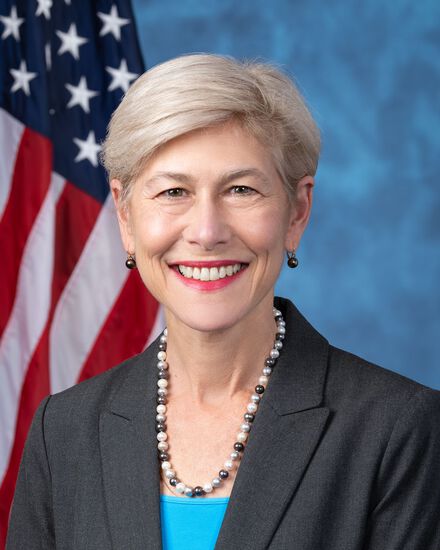
Rep. Deborah K. Ross
Sponsored bills
This resolution expresses that the House of Representatives is committed to building upon the 20 years of success of the George McGovern-Robert Dole International Food for Education and Child Nutrition Program, complementing humanitarian assistance efforts and development programs through the continued implementation of the McGovern-Dole Program to address global food insecurity and create conditions for peace and stability, and supporting U.S. farmers, millers, shippers, and commodity groups that provide agricultural commodities for use in the McGovern-Dole Program to help combat global malnutrition and food insecurity and advance global education.
Respect for Marriage Act This act provides statutory authority for same-sex and interracial marriages. Specifically, the act replaces provisions that define, for purposes of federal law, marriage as between a man and a woman and spouse as a person of the opposite sex with provisions that recognize any marriage between two individuals that is valid under state law. (The Supreme Court held that the current provisions were unconstitutional in United States v. Windsor in 2013.) The act also replaces provisions that do not require states to recognize same-sex marriages from other states with provisions that prohibit the denial of full faith and credit or any right or claim relating to out-of-state marriages on the basis of sex, race, ethnicity, or national origin. (The Supreme Court held that state laws barring same-sex marriages were unconstitutional in Obergefell v. Hodges in 2015; the Court held that state laws barring interracial marriages were unconstitutional in Loving v. Virginia in 1967.) The act allows the Department of Justice to bring a civil action and establishes a private right of action for violations. The act does not (1) affect religious liberties or conscience protections that are available under the Constitution or federal law, (2) require religious organizations to provide goods or services to formally recognize or celebrate a marriage, (3) affect any benefits or rights that do not arise from a marriage, or (4) recognize under federal law any marriage between more than two individuals.
International Violence Against Women Act of 2022 This bill requires a U.S. global strategy to prevent and respond to violence against women and girls. The bill establishes in the Department of State an Office of Global Women's Issues, which shall be headed by an Ambassador-at-Large for Global Women's Issues. The Ambassador-at-Large shall (1) coordinate U.S. government efforts regarding gender equality and the advancement of women and girls in foreign policy, and (2) develop or update periodically a U.S. global strategy to prevent and respond to gender-based violence. The bill establishes in the U.S. Agency for International Development the position of Senior Coordinator for Gender Equality and Women's Empowerment who shall coordinate policies, programs, and funding regarding gender equality and women's empowerment.
This concurrent resolution recognizes the disparity between wages paid to Latina women, and its impact on women, families, and the nation and reaffirms Congress' commitment to supporting equal pay and to narrowing the gender wage gap.
Protecting America from Seasonal and Pandemic Influenza Act of 2022 This bill establishes new, and expands existing, programs and activities to prevent and respond to seasonal and pandemic influenza (flu). In particular, the bill addresses flu vaccine development, manufacturing, and supply chains; genomic sequencing, diagnostic tools, and other technologies to detect, prevent, and respond to flu; and public health communications and related efforts to increase flu vaccination rates and access to antiviral medications. The bill also sets out a process through which Congress may adjust discretionary spending limits to accommodate additional funding for health defense operations (e.g., flu-related activities).
This concurrent resolution commends the bravery, courage, and resolve of the women and men of Iran who are (1) participating in the current protests to defend their fundamental human rights, and (2) risking their safety to speak out against the human rights abuses committed by the Iranian regime. The resolution condemns (1) the brutal beating and death of Mahsa Amini; and (2) the violent suppression by the Iranian regime of women and men participating in the current demonstrations, including children, and calls for transparent accountability for all killings of protesters by Iranian security forces. Finally, the resolution encourages continued efforts by the Biden Administration to respond to the protests, including the recent sanctioning of the Iranian morality police.
End Tuberculosis Now Act of 2022 This bill authorizes actions, including the provision of international assistance, to combat tuberculosis. The President may provide international assistance for the prevention, treatment, control, and elimination of tuberculosis. The President must also establish goals for U.S. efforts to detect, cure, and prevent all forms of tuberculosis globally by updating the U.S. Government Tuberculosis Strategy (2015-2019) and the National Action Plan for Combating Multidrug-Resistant Tuberculosis. The Government Accountability Office must periodically report to Congress on the impact of efforts to combat tuberculosis that are supported by U.S. bilateral assistance.
READ Act Reauthorization Act of 2022 This bill reauthorizes a law that requires the implementation of a strategy to promote quality basic education in partner countries by (1) expanding access to basic education for all children, particularly marginalized children and vulnerable groups; and (2) improving the quality of basic education and learning outcomes.
Truth and Healing Commission on Indian Boarding School Policies Act This bill establishes the Truth and Healing Commission on Indian Boarding School Policies in the United States and sets forth its powers, duties, and membership. Among other duties, the commission must investigate the impacts and ongoing effects of the Indian Boarding School Policies (federal policies under which American Indian, Alaska Native, and Native Hawaiian children were forcibly removed from their family homes and placed in boarding schools). Further, the commission must develop recommendations on ways to (1) protect unmarked graves and accompanying land protections; (2) support repatriation and identify the tribal nations from which children were taken; and (3) discontinue the removal of American Indian, Alaska Native, and Native Hawaiian children from their families and tribal communities by state social service departments, foster care agencies, and adoption agencies.