

Enhancing COPS Hiring Program Grants for Local Law Enforcement Act This bill allows funds under the Community Oriented Policing Services grant program to be used to provide bonuses for the recruitment and retention of law enforcement officers or career law enforcement officers.
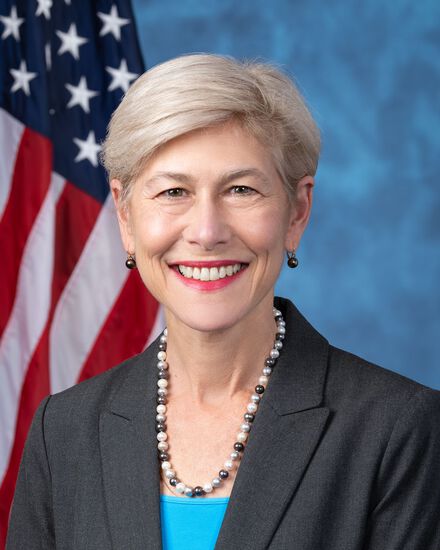
Rep. Deborah K. Ross
Sponsored bills
Maddy summaryThe Early STEAM Achievement Act (HR 3374) creates a federal grant program to support early childhood education programs serving children from birth through age eight. It authorizes the Secretary of Health and Human Services to award competitive grants for STEAM (science, technology, engineering, art, and mathematics) activities, prioritizing rural communities (at least one-third of funds) and nonprofit organizations (at least one-quarter of funds). Grants must fund specific activities like teacher training, educational materials, or partnerships with colleges and arts organizations. The program is authorized for fiscal years 2024 through 2028.
Maddy summaryThis bill requires the National Weather Service (NWS) to replace its outdated internal messaging system (NWSChat) with a commercial cloud-based solution to improve communication among staff. It mandates the NWS Director to implement this upgrade by 2027, using up to $3 million annually from existing NWS funding for fiscal years 2024-2027. The new system must support future growth and handle increased user demand. This directly affects NWS personnel who rely on internal communications for weather forecasting and public safety operations. The bill focuses solely on updating the technology infrastructure, not on new weather policies or public services.
Maddy summaryHRES 289 is a resolution recognizing the week of April 11-17, 2023, as the sixth annual "Black Maternal Health Week" to raise awareness about maternal health disparities. It highlights that Black women in the U.S. face disproportionately high rates of pregnancy-related deaths (2.6 times more likely than White women) and complications, driven by systemic inequities. The resolution urges national attention on these issues and supports policy solutions like the Black Maternal Health Momnibus Act to address racial gaps in maternal care. As a non-binding recognition, it does not enact new laws but aims to amplify community-driven efforts to improve outcomes.
Maddy summaryHRES 365 is a non-binding House resolution supporting efforts to reduce childhood sunburns and skin cancer risk. It encourages schools and childcare facilities to allow students to carry and use sunscreen without physician authorization (addressing current restrictions where sunscreen is treated as a prescription drug), and promotes policies for easy access to sunscreen and sun-protective clothing. The resolution also urges healthcare providers to educate parents and children about sun-safe practices during routine check-ups. It directly affects schools, camps, and childcare programs by advocating for practical changes to improve sun protection for minors.
Health Center Service Expansion and Provider Shortage Reduction Act This bill provides funding through FY2028 for certain services under the Community Health Center Program, which supports outpatient health care facilities that provide comprehensive primary care to medically underserved populations. It also provides funding through FY2028 to expand the National Health Services Corps, which provides scholarships and student loan repayment awards to health care providers who agree to work in areas with health care provider shortages. In particular, the bill requires that health centers provide behavioral health, mental health, and substance use disorder services and provides funding for those services. (Currently, centers may provide those as additional services.) Furthermore, the bill provides funding for (1) expanding the operating hours of community health centers; and (2) New Access Point Grants, which assist centers to establish new delivery sites for care.
Maddy summaryThe PAST Act of 2023 amends the Horse Protection Act to ban specific devices used to cause pain (soring) in horses at shows, particularly affecting Tennessee Walking Horses, Racking Horses, and Spotted Saddle Horses. It defines prohibited "action devices" (like boots or chains causing friction) and requires licensed, conflict-free inspectors at events to enforce rules. The bill increases penalties for violations to up to $5,000 fines or 3 years in jail, and mandates longer disqualifications for repeat offenses (180 days → 1 year → 3 years). Horse show organizers, exhibitors, and participants must comply with these new inspection and penalty requirements.
Maddy summaryHR 3240 grants a federal charter to the Veterans Association of Real Estate Professionals (VAREP), a California-based nonprofit already recognized as a veterans service organization under IRS tax law. The bill establishes specific rules for VAREP, requiring it to maintain its tax-exempt status, submit annual reports to Congress, and follow restrictions like not issuing stock, making political contributions, or claiming government authority. VAREP must continue its existing mission of supporting veterans through financial literacy programs, housing assistance (including foreclosure prevention), workforce development, and suicide awareness initiatives. This charter does not create new government benefits but formally recognizes and regulates this specific organization's federal status.
Maddy summaryHR 3239 establishes the Advancing Equity Through the Arts and Humanities Program under the National Endowment for the Arts (NEA) and National Endowment for the Humanities (NEH). It creates a competitive grant program prioritizing BIPOC-led arts and humanities organizations working to dismantle systemic racism, with requirements including majority BIPOC grant panelists and mandatory reporting on racial demographics and program impact. The bill mandates that grantees must directly combat systemic racism through arts/humanities initiatives like community programming, artist development, and arts education in underserved communities. It also requires an advisory task force to develop equitable grant guidelines and annual reports to Congress detailing funding distribution, barriers faced by BIPOC communities, and program outcomes. This program directly affects BIPOC-led arts organizations and communities experiencing racial inequity in arts access.
Maddy summaryHR 3238, the Affordable Housing Credit Improvement Act of 2023, updates the Low-Income Housing Tax Credit (LIHTC) program to increase the availability of affordable housing across the United States. The bill makes several key changes including increasing state funding formulas, modifying tenant eligibility rules to better serve vulnerable populations (such as domestic violence victims and students), and expanding credit eligibility for projects in rural and Native American communities. Specific provisions raise the credit for properties serving extremely low-income households, clarify rules around tenant income increases, and require housing providers to protect victims of domestic violence. The bill also updates terminology from "low-income" to "affordable" throughout the tax code and enhances program transparency through data sharing requirements. These changes aim to make the LIHTC program more effective at creating and preserving affordable housing units for low-income households nationwide.