

Maddy summaryThis bill reauthorizes the National Alzheimer's Project Act through 2035 (extending the previous deadline of 2025) and adds new requirements to promote healthy aging and reduce Alzheimer’s risk factors. It mandates the program to provide information on healthy behaviors that may lower cognitive decline risk and expands the advisory group to include representatives from agencies like the Department of Justice, FEMA, and Social Security Administration, plus experts with diverse clinical trial experience. The bill directly affects Alzheimer’s research, care programs, and the federal advisory group overseeing national efforts. Key changes include requiring annual evaluations instead of initial ones and adding a focus on reducing health disparities in Alzheimer’s initiatives.
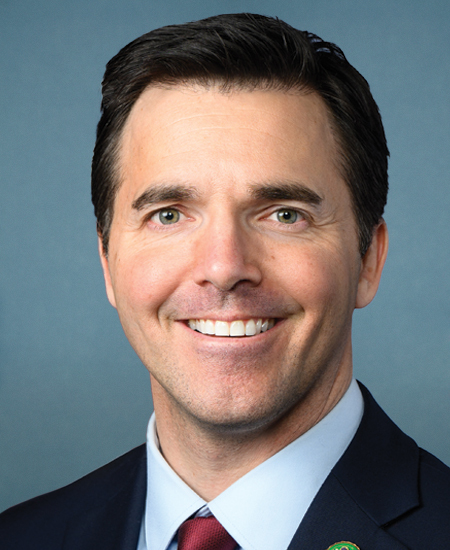
Rep. Jeff Jackson
Sponsored bills
Maddy summaryThis bill amends the 2022 Camp Lejeune Justice Act to clarify and correct technical details. It updates eligibility requirements for claimants (requiring 30 days at Camp Lejeune and defining "latent harm" instead of "latent disease"), clarifies court jurisdiction for cases, and specifies attorney fee structures (20% pre-litigation, 25% post-litigation). The changes directly affect individuals who developed health issues due to contaminated water at Camp Lejeune, streamlining their legal process under the existing 2022 law.
Maddy summaryHR 895, the Combating Organized Retail Crime Act of 2023, expands federal law to better prosecute organized retail theft by amending sections 2314 and 2315 of Title 18. It clarifies that crimes involving stolen goods valued at $5,000 or more over 12 months - including retail theft - can be prosecuted under existing federal statutes, and broadens definitions to include goods taken via "any facility of interstate or foreign commerce." The bill also creates a new Organized Retail Crime Coordination Center within Homeland Security, requiring it to coordinate federal, state, and local law enforcement efforts, share threat information with retailers, and produce annual public reports on trends. This directly affects law enforcement agencies, retailers, and criminal justice systems by standardizing prosecution thresholds and enhancing interagency collaboration.
Maddy summaryThis resolution (HRES 616) condemns the Taliban's ongoing human rights abuses in Afghanistan, specifically targeting women, girls, religious minorities (including Hazaras and Sikhs), and ethnic groups. It expresses support for Afghans who assisted U.S. missions and calls for the U.S. government to halt Taliban violence and address systemic repression. Key mechanisms include urging the State Department to assess potential crimes against humanity, developing strategies to support human rights defenders, and expediting refugee processing for Afghans with Special Immigrant Visas. The resolution does not impose new legal requirements but formalizes congressional stance and policy guidance. It directly affects U.S. foreign policy implementation toward Afghanistan.
Maddy summaryHRES 1230 is a non-binding House resolution recognizing the 15th anniversary of the end of Sri Lanka's civil war (May 18, 2009), which the resolution states resulted in "hundreds of thousands of lives lost." It urges the U.S. to support Eelam Tamil communities' right to self-determination and an independence referendum as a peaceful resolution, while stating the resolution "recognizes the genocide against the Eelam Tamil people." The resolution calls for U.S. diplomatic engagement with Tamil groups and international advocacy for political solutions, but does not create new laws or alter policy. As a symbolic measure, it has no legal effect on U.S. or Sri Lankan government actions.
Maddy summaryHRES 1063 is a non-binding resolution passed by the U.S. House of Representatives to reaffirm America's commitment to NATO ahead of its 75th anniversary. It formally recognizes NATO's role in collective security, emphasizes Article 5's importance for mutual defense, and supports Finland and Sweden's membership. The resolution also calls on NATO allies to meet the 2% defense spending target, but does not create new laws or affect specific individuals or groups.
Maddy summaryThe Public Service Freedom to Negotiate Act of 2024 establishes federal minimum standards for collective bargaining rights for public employees and supervisory employees. The Federal Labor Relations Authority will determine if each state's laws "substantially provide" for these rights, and if not, federal standards will apply to that state. These standards include the right to self-organization, collective bargaining, recognition of labor organizations, and procedures for resolving disputes. The bill preserves existing collective bargaining agreements and excludes certain employee categories like emergency services workers from some provisions.
Maddy summaryThis bill updates the National Construction Safety Team Act by replacing "building" with "structure" throughout the law and adjusting related terminology. It ensures investigations cover a broader range of infrastructure, including bridges, dams, and other structures, not just traditional buildings. Key provisions clarify that investigations may defer to other federal agencies when appropriate and update references to "engineering standards, practices, and building codes." The bill does not change funding levels, maintaining the $5 million annual appropriation for the National Institute of Standards and Technology through 2027. It focuses on modernizing the law's language to reflect current infrastructure safety needs without introducing new requirements.
Maddy summaryHR 8231, the James Earl Jones Congressional Gold Medal Act, authorizes a Congressional Gold Medal to be awarded to actor James Earl Jones in recognition of his distinguished career in theater and film, and his role in advancing inclusion and equal opportunities for people of all backgrounds in the entertainment industry. The Treasury will strike the medal with an image and inscription of Jones, and may produce and sell bronze duplicates to cover costs, with proceeds deposited into the U.S. Mint's public enterprise fund. This bill serves as a ceremonial honor with no new legal requirements or policy changes.
Maddy summaryThe Weather Act Reauthorization Act of 2023 reauthorizes and updates the Weather Research and Forecasting Innovation Act of 2017, focusing on improving weather forecasting capabilities across multiple domains. It authorizes annual funding for research and development in tornado, hurricane, and atmospheric river forecasting, with specific provisions for enhancing data collection from commercial sources and improving public communication of weather warnings. The bill establishes programs to improve data assimilation practices, support agricultural and water management applications, and enhance the National Oceanic and Atmospheric Administration's computing resources for weather modeling. This legislation directly affects the National Oceanic and Atmospheric Administration, its partners in the weather enterprise, and the public who rely on weather forecasts and warnings for safety and planning.