

Maddy summaryThe Flight Education Access Act increases federal student loan limits for students enrolled in eligible flight education programs, which prepare students for commercial pilot certification. It sets specific annual and aggregate loan limits based on a student's year of study (e.g., dependent students can borrow up to $111,000 total), and requires programs to meet a 70% completion rate after three years to maintain eligibility. The bill also creates a new $40 million annual grant program to support partnerships between educational institutions and aviation industry partners to diversify the pilot workforce and increase interest in aviation careers. It requires data collection on program completion rates and demographic information, with reports to Congress on the program's effectiveness.
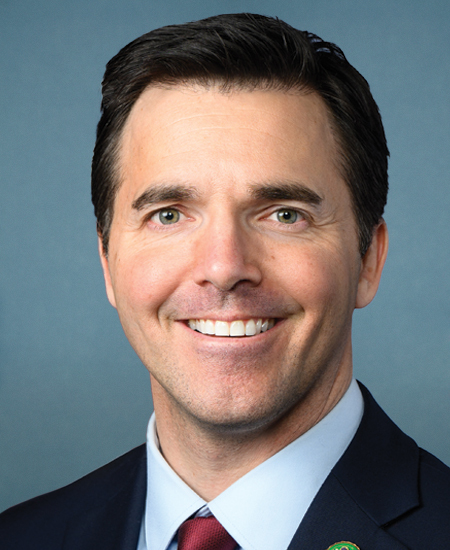
Rep. Jeff Jackson
Sponsored bills
Maddy summaryThis bill authorizes the U.S. Mint to produce and sell commemorative $1 silver coins celebrating NASCAR's 75th anniversary, directly affecting the public through coin sales. The coins must contain 90% silver, bear standard inscriptions (including "Liberty" and "In God We Trust"), and be sold at face value plus a $20 surcharge. All surcharge revenue ($20 per coin) will fund The NASCAR Foundation's existing mission to support children's causes, with no net cost to the U.S. government due to financial safeguards. The coins may only be issued during 2023, with sales managed through the Treasury.
Maddy summaryHR 1788, the "Goldie’s Act," strengthens USDA enforcement of the Animal Welfare Act. It requires annual inspections of all regulated animal businesses (like dealers, research facilities, and exhibitors) and mandates immediate, humane confiscation of animals suffering due to violations, while prohibiting owners from destroying animals during this process. The bill increases civil penalties to $10,000 per violation, requires hearing panels including veterinarians, and mandates that penalties consider business size and violation severity. It also requires USDA to share violation records with local animal control within 24 hours.
Maddy summaryThe ACTION for National Service Act reorganizes the Corporation for National and Community Service into the AmeriCorps Administration, an Executive department, and establishes new programs to expand national service opportunities. It increases national service educational awards to twice the average in-state tuition for public 4-year colleges and raises living allowances for participants. The bill creates a Civilian Climate Corps focused on climate-related projects in disproportionately impacted communities and establishes a National Service Foundation to accept private donations. It also creates a new outreach program to notify individuals aged 17-30 about service opportunities, with a goal of reaching 1 million participants annually by 2033.
Maddy summaryHR 2800, the Master Sergeant Roddie Edmonds Congressional Gold Medal Act, authorizes a posthumous Congressional Gold Medal to honor Master Sergeant Roddie Edmonds for his actions during World War II. The bill directs the Treasury Secretary to strike a gold medal commemorating Edmonds' bravery, specifically his defiance of Nazi orders to separate Jewish-American prisoners at Stalag IX-A, which saved approximately 200 lives. The medal will be presented to Edmonds' son, Pastor Christopher Waring Edmonds, or his next of kin, with bronze duplicates available for sale to cover costs. This is a commemorative measure recognizing Edmonds' service, not a policy change affecting current legislation or programs.
Maddy summaryHR 2559, the Strengthening Community Care Act of 2023, extends funding deadlines for two key healthcare programs. It amends the Affordable Care Act to extend the authorization period for Community Health Centers and the National Health Service Corps from 2023 to 2028. This change directly affects these programs, ensuring their continued operation and funding stability through 2028. The bill makes no changes to program eligibility or services, only prolonging the existing funding authorization period.
American Innovation and R&D Competitiveness Act of 2023 This bill eliminates the five-year amortization requirement for research and experimental expenditures, thus allowing continued expensing of such expenditures in the taxable years in which they are incurred.
Maddy summaryHR 2725, the "Do No Harm Act," amends the Religious Freedom Restoration Act (RFRA) to clarify that RFRA does not apply when federal laws protect against discrimination or promote equal opportunity. It specifically exempts protections under the Civil Rights Act, Americans with Disabilities Act, workplace benefits like leave, child labor safeguards, and healthcare access from RFRA challenges. The bill also clarifies that RFRA does not block private lawsuits between individuals, applying only to cases involving government entities. This amendment ensures that existing federal civil rights and workplace protections remain enforceable under RFRA.
Maddy summaryThe Latonya Reeves Freedom Act of 2023 strengthens the Americans with Disabilities Act's requirement that individuals with disabilities receive long-term services and supports in community settings rather than institutions. It defines "community-based" services to include specific housing options where individuals with disabilities can live independently with maximum control over their lives, including access to integrated housing, employment, and community participation. The bill requires states to develop transition plans to move people from institutional settings to community-based services within 12 years, with measurable annual targets for reducing institutionalization. It establishes enforcement mechanisms through the Department of Justice and Department of Health and Human Services to ensure compliance with these requirements.
Maddy summaryThe Puppy Protection Act of 2023 sets new standards for businesses that sell dogs (dealers), directly affecting pet stores and breeders operating under the Animal Welfare Act. It requires specific housing with space allowances based on dog size (e.g., 12-30 square feet per dog), temperature control (45-85°F), clean food twice daily, and daily exercise or socialization with humans/dogs for at least 30 minutes. The bill also mandates annual veterinary exams including dental care, strict breeding limits (e.g., age restrictions, maximum 2 litters in 18 months), and efforts to place retired breeding dogs in homes instead of selling them to other breeders. Regulations must be finalized within 18 months of enactment.