

Teacher and Educator Access to Crucial Health and Wellness Act of 2022 or the TEACH Act of 2022 This bill directs the Department of Education to award grants to state educational agencies and, through them, subgrants to local educational agencies to implement or improve health and wellness programs for education professionals. It also requires the National Institutes of Health to study the impact of COVID-19 on the mental health of education professionals.
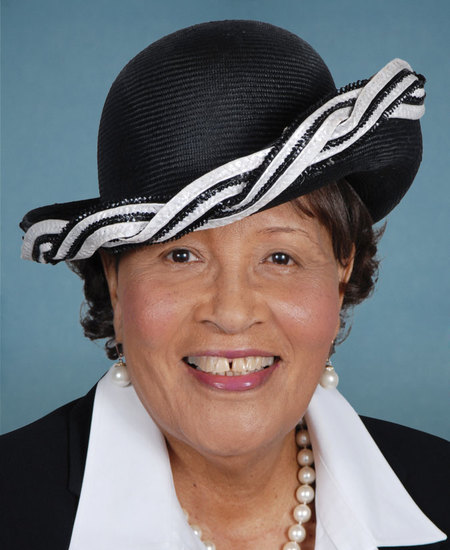
Rep. Alma S. Adams
Sponsored bills
This resolution recognizes the anniversaries of the International Day of Peace, Human Solidarity Day, the International Day of Living Together in Peace, and other specified international days. The resolution also expresses that Congress commits to (1) encouraging the people of the United States to continue commemorating international days of peace, coexistence, and cooperation; and (2) supporting activities on such days that promote thoughtful, deliberative, and cooperative actions to achieve peace.
Save Oak Flat Act This bill repeals the requirement for the Department of Agriculture to convey the 2,422 acres of Forest System land located in Tonto National Forest in Pinal County, Arizona, known as Oak Flat, to Resolution Copper Mining, LLC, in exchange for various parcels of land owned by Resolution Copper. Oak Flat is withdrawn from (1) entry, appropriation, or disposal under the public land laws; (2) location, entry, and patent under the mining laws; and (3) disposition under all laws pertaining to mineral and geothermal leasing or mineral materials.
The Jackie Walorski Maternal and Child Home Visiting Reauthorization Act of 2022 This bill reauthorizes through FY2027, increases funding for, and modifies the Maternal, Infant, and Early Childhood Home Visiting Program. This program supports home visits for expectant and new parents who live in communities that are at-risk for poor maternal and child health outcomes. Changes to the program include setting out requirements for allocating program funds; increasing the percentage of funds reserved for tribal entities; establishing a publicly available dashboard that reports program outcomes; requiring activities to reduce unnecessary data collection, reporting, and other administrative requirements of the program; and allowing for virtual home visits (provided certain conditions are met). The bill also reduces funding for the Medicare Improvement Fund.
Pregnant Women in Custody Act This bill establishes requirements to address the health needs of incarcerated women related to pregnancy and childbirth. The bill requires the Bureau of Justice Statistics to collect data on the health needs of incarcerated pregnant women at the federal, state, tribal, and local levels. With respect to incarcerated women at the federal level, the bill requires the Bureau of Prisons (BOP) to provide appropriate services and programs to address the health and safety needs related to pregnancy and childbirth, as well as appropriate health care to a woman with a high-risk pregnancy; limits the use of restrictive housing for prisoners who are pregnant or in postpartum recovery; and requires the BOP to report annually on the number of administrative claims and appeals filed by pregnant inmates. With respect to incarcerated women at the state and local levels, the bill requires the Government Accountability Office to study the services and protections for pregnant incarcerated women in state and local correctional settings.
Minority Entrepreneurship Grant Program Act of 2022 This bill requires the Small Business Administration (SBA) to award grants to create or expand programs at minority-serving institutions that foster, promote, and increase opportunities for minority entrepreneurship and business ownership. The SBA must also establish a Minority Entrepreneurship Advisory Board to develop recommendations regarding how these institutions can better serve minority businesses and entrepreneurs.
This resolution encourages people around the world to work to achieve the goal of zero new HIV transmissions, zero discrimination, and zero AIDS-related deaths, in order to end the HIV epidemic in the United States and around the world by 2030. The resolution supports continued funding for prevention, care and treatment services, and research programs for communities impacted by HIV and people living with HIV in the United States and globally. The resolution supports continued leadership by the United States in domestic, bilateral, multilateral, and private sector efforts to fight HIV. Finally, the resolution urges other members of the international community to sustain and scale up their support for and financial contributions to efforts around the world to combat HIV.
Lymphedema Treatment Act This bill provides for Medicare coverage of lymphedema compression treatment items. Specifically, the bill provides for coverage of standard and custom fitted gradient compression garments and other approved items that are prescribed by a physician or other specified health care professional to treat lymphedema.
Maddy summaryHRES 1462 is a symbolic resolution expressing support for designating November 2022 as "National Career Development Month." It does not create new laws or policies but urges the public to recognize career development services as valuable resources. The resolution highlights that career professionals help individuals align skills with job opportunities and emphasizes the importance of career counseling for workforce readiness. It specifically encourages workers, students, and employers to utilize career development services, though it does not mandate any actions or affect specific groups through binding legislation.
Maddy summaryThis concurrent resolution designates the week of November 13-19, 2022, as "National Caregiving Youth Week" to raise awareness about children and adolescents under 18 who provide regular care for family members with chronic illnesses, disabilities, or aging needs. It directly recognizes this underserved population - estimated at 3-5 million nationwide - who often balance caregiving with school, mental health, and limited access to support services. The resolution encourages educators, health professionals, and policymakers to learn about these youth’s contributions and challenges, but it does not create new programs or funding. As a symbolic gesture, it aims to foster national recognition without implementing concrete policy changes.