

Maddy summaryHR 3073 creates a federal grant program to fund community-based mental wellness and resilience initiatives. It provides planning grants (up to $250,000) for organizations to form community networks and assess needs, followed by program grants (up to $500,000 annually for 4 years) to implement evidence-based programs. The bill requires grantees to use a public health approach, collect community input, and develop strategic plans addressing protective factors and risk factors for mental wellness. At least 20% of funds must support rural communities, and programs must involve diverse community groups like schools, faith organizations, health professionals, and local government. The bill authorizes $36 million over 2024-2028 to support these community-led efforts.
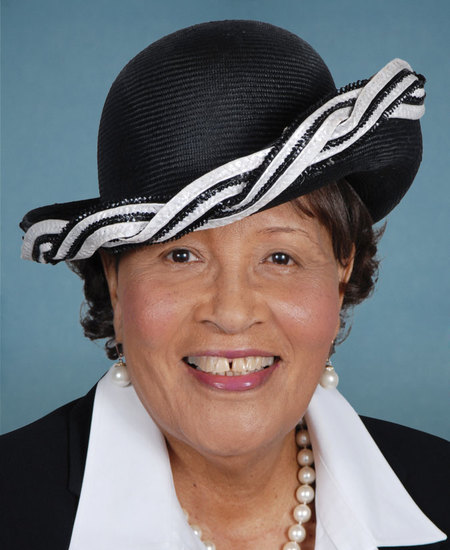
Rep. Alma S. Adams
Sponsored bills
Maddy summaryThis bill prohibits forced arbitration for race discrimination claims under federal, tribal, state, or local law. It makes pre-existing arbitration agreements unenforceable for disputes involving discrimination based on race, color, or national origin, allowing affected individuals to pursue cases in court instead. The law directly impacts employees, job applicants, and others facing alleged race discrimination who would otherwise be barred from court by mandatory arbitration clauses. It requires courts - not arbitrators - to decide if the law applies to a dispute, ensuring legal clarity for affected parties.
Tax-Free Pell Grant Act This bill excludes from gross income, for income tax purposes, any amount received as a federal Pell Grant. It also expands the definition of qualified tuition and related expenses under the American Opportunity and Lifetime Learning tax credit to include computer or peripheral equipment (up to a maximum of $1,000), child and dependent care expenses, and course materials.
Maddy summary# Summary of EDUCATORS for America Act Provisions This comprehensive legislation makes significant changes to educator preparation, certification, and support systems, with a strong focus on loan forgiveness and retention of educators in high-need settings. ## Key Provisions: 1. **Enhanced Loan Forgiveness Programs**: - Creates new "Educator Loan Forgiveness Programs" under sections 428J and 460 of the Higher Education Act - Provides 100% loan forgiveness for educators who complete 5 years of qualifying service in high-need schools or early childhood education programs - Offers monthly loan forgiveness/cancellation during the service period (in addition to annual forgiveness) 2. **Expanded Eligibility**: - Defines "high need school" as schools where: * Over 30% of students meet poverty measures * School is identified for comprehensive support * School is Bureau of Indian Education funded * School is operated by Tribal educational agencies - Includes Tribal early childhood programs, Native Hawaiian education systems, and Bureau of Indian Education programs as eligible settings - Special rule for educators providing instruction in Native American languages 3. **"Qualifying Educator" Definition**: - Includes elementary/secondary teachers (with full certification) - Includes school leaders (with full certification) - Includes early childhood educators and program directors - Includes educators working in Native American language instruction regardless of certification status 4. **New Support Programs**: - Centers of Excellence for teacher preparation at institutions serving underrepresented populations - Recruitment and completion grants for underrepresented students in education - Resiliency grants for technology integration and educator workforce partnerships - Doctoral fellowships to diversify faculty in high-need education areas 5. **Implementation Details**: - Monthly loan credit program for eligible educators in income-driven repayment plans - Allows counting of partial service years under specific conditions - Prevents double benefits with other service programs - Allows for promotions within qualifying schools without losing eligibility This legislation aims to create a more diverse, stable, and well-prepared educator workforce by reducing financial barriers to entering and remaining in the education profession, particularly in high-need schools and early childhood education settings.
Maddy summaryThe Protecting America's Workers Act expands workplace safety protections to public employees, including those working for state and local governments who were previously excluded from some OSHA protections. It strengthens whistleblower protections by prohibiting retaliation against employees who report safety concerns, refuse to perform dangerous tasks, or report work-related injuries. The bill requires employers to promptly report work-related deaths and hospitalizations, prohibits policies that discourage injury reporting, and mandates posting of employee safety rights information. It also increases penalties for safety violations and improves access to information for victims and families during workplace investigations. These changes apply to all employers covered by OSHA, with specific implementation timelines for state and local government workplaces.
Maddy summaryHR 3022 is a procedural bill that adds "Workers’ Memorial Day" to the list of official federal holidays observed by the U.S. government. It amends Title 5 of the U.S. Code to insert "Workers’ Memorial Day" after "Washington’s Birthday" in the federal holiday schedule. This bill does not create new policies, programs, or funding; it solely recognizes April 28th as a day for honoring workers who have died in workplace incidents. The change affects only the federal government's calendar, not private citizens or businesses.
Maddy summaryHR 2904, the Anti-Racism in Public Health Act of 2023, establishes a National Center on Antiracism and Health within the CDC. The center will declare racism a public health crisis, conduct research on how structural racism affects health outcomes, and develop data systems to track health disparities across race, ethnicity, gender, and other factors. It will fund regional centers in minority communities, create public health interventions, and require CDC to report annually on antiracist efforts. This bill directly affects public health agencies, researchers, and communities of color by mandating systemic analysis of racial inequities in healthcare and public health policy.
Maddy summaryHRES 334 is a symbolic resolution recognizing "Community College Month" to celebrate over 1,000 community colleges across the United States. It highlights how these institutions support accessible higher education, workforce training, and economic prosperity - serving 10.2 million students annually while charging affordable tuition (averaging $3,860 for in-district students). The resolution does not create new laws or requirements but formally acknowledges community colleges' role in strengthening local communities and the national economy. This acknowledgment applies broadly to all community colleges and their students, without imposing any obligations.
Maddy summaryThe RAP Act of 2023 (HR 2952) would prevent prosecutors and plaintiffs from using a defendant’s creative or artistic works - such as poems, songs, art, or films - as evidence in court, unless specific exceptions apply. It requires the government to prove by clear evidence that the work was meant literally (not figuratively), directly relates to the specific facts of the case, is relevant to disputed facts, and has unique value beyond other evidence. If admitted, courts must redact the work to limit its presentation and provide jury instructions about its restricted use. This bill directly affects defendants in both criminal and civil cases who create artistic expression, aiming to protect their creative works from being misused in legal proceedings.
Maddy summaryThe Combating Child Labor Act strengthens penalties for employers violating child labor laws under the Fair Labor Standards Act. It increases criminal fines to $500,000 or up to 10 years in prison for willful violations causing death or serious injury to children under 18, and raises civil penalties for such violations up to $700,000 per incident. The bill also requires the Department of Labor to publish an annual report detailing child labor violations, including employer names, types of violations, and trends by industry or region. This report will help track enforcement efforts and identify high-risk areas, directly affecting employers who violate child labor rules and the Department of Labor’s oversight role.