

Maddy summaryThis bill requires that AM radio receivers be included as standard equipment in all new motor vehicles (such as cars and trucks) sold in the United States, with a rule to be issued by the Department of Transportation within one year. The rule must ensure AM radio is easily accessible on the dashboard and allows manufacturers to use digital AM radio technology instead of traditional AM. During the one-year period between the bill's enactment and the rule's effective date, manufacturers must clearly label vehicles without AM radio. The bill also directs a study to evaluate whether an alternative system could deliver emergency alerts as reliably as AM radio across the country, especially during crises.
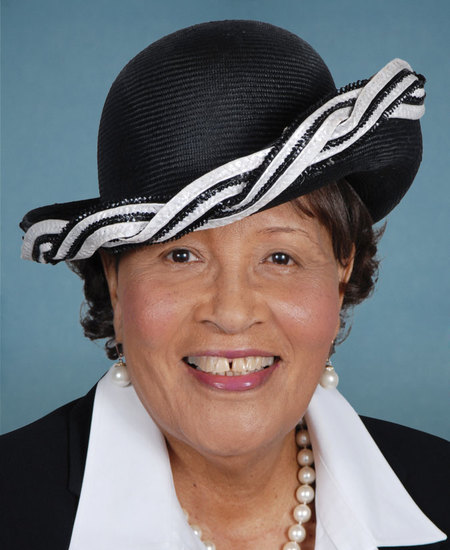
Rep. Alma S. Adams
Sponsored bills
Maddy summaryThe Kira Johnson Act (HR 3310) provides $100 million annually from 2024-2028 to fund community-based organizations working to improve maternal health outcomes for racial and ethnic minority groups with elevated rates of maternal mortality, severe maternal morbidity, and health disparities. It requires hospitals to establish respectful maternity care compliance programs allowing patients to report racism or bias, and mandates training for all maternity care employees to address bias, racism, and discrimination. The bill also requires annual reports on program effectiveness and studies to evaluate strategies for reducing bias in maternity care settings. These provisions directly affect hospitals, maternity care providers, community-based organizations, and pregnant and postpartum individuals from racial and ethnic minority groups.
Maddy summaryThe Protecting Moms and Babies Against Climate Change Act establishes a federal grant program to help communities address climate change risks that affect pregnant people, new mothers, and infants under 3 years old. It allocates $100 million over four years for community-based organizations to provide climate-related health services, including air conditioning, housing assistance, mental health support, and training for health care providers on climate risks. The bill also creates a grant program for health profession schools to integrate climate change education into medical training and establishes a National Institutes of Health research consortium to study climate impacts on maternal health. All grant recipients must address racial and ethnic disparities, collect data by demographic factors, and prevent negative environmental or housing impacts in their initiatives.
Maddy summary# Comprehensive Summary: Maternal Health and Vaccination Legislation This proposed legislation establishes a comprehensive framework to improve maternal health outcomes across multiple dimensions, with a strong focus on equity and addressing systemic disparities. The bill is organized into 13 titles covering various aspects of maternal health care. ## Key Focus Areas 1. **Maternal Health Equity**: The legislation emphasizes reducing racial and ethnic disparities in maternal health outcomes, with specific provisions targeting communities of color and underserved populations. 2. **Incarcerated Mothers**: Includes provisions to end shackling of pregnant individuals in correctional facilities and establishes programs for maternal health care in prisons and jails. 3. **Technology and Telehealth**: Creates grant programs for telehealth models, technology-enabled collaborative learning, and digital tools to improve access to maternal care. 4. **Climate Change Impact**: Addresses how climate change affects maternal and infant health, with a focus on vulnerable populations. 5. **Public Health Emergencies**: Establishes protocols for maternal care during public health crises like pandemics. 6. **Vaccinations**: Expands maternal vaccination awareness and equity campaigns. ## Major Provisions **Maternal Vaccination Campaign (Title XIII)**: - Expands awareness campaigns to specifically target pregnant and postpartum individuals - Allocates $17 million annually (2024-2028) for vaccination outreach - Includes specific efforts to increase vaccination rates among racial/ethnic minority groups **Technology and Telehealth (Titles IX)**: - $6 million annually for technology-enabled collaborative learning models - $6 million annually for digital tools to promote equity in maternal health - Creates a demonstration project for alternative payment models in maternal care **Climate Change and Maternal Health (Title XII)**: - $100 million for a grant program to protect vulnerable mothers and babies from climate change risks - $5 million for education and training at health profession schools - Establishes a National Institutes of Health Consortium on Birth and Climate Change Research **Incarcerated Mothers (Title VIII)**: - Requires 25% grant reduction for states that don't restrict restraints on pregnant incarcerated individuals - Establishes model programs in Bureau of Prisons facilities for pregnant and postpartum incarcerated individuals - $10 million annually for State and local prison and jail programs **Public Health Emergency Response (Title XI)**: - $100 million for data collection on maternal health during public health emergencies - $30 million for expanding maternal mortality reviews - $45 million for Pregnancy Risk Assessment Monitoring System (PRAMS) - $15 million for research on public health emergencies' impact on maternal health ## Cross-Cutting Themes - **Equity Focus**: Nearly every provision includes specific measures to address racial and ethnic disparities - **Data Collection**: Strong emphasis on collecting and analyzing demographic data - **Community Involvement**: Requires input from community-based organizations and affected populations - **Interagency Coordination**: Mandates collaboration between multiple federal agencies - **Long-Term Investment**: All funding is allocated for 5-year periods (2024-2028) The legislation represents a comprehensive, multi-faceted approach to improving maternal health outcomes in the United States, with particular attention to vulnerable populations and systemic barriers that contribute to poor maternal health outcomes.
Maddy summaryHR 3491, the POJA Act of 2023, amends the Age Discrimination in Employment Act to explicitly prohibit age discrimination against *job applicants* (not just current employees) in hiring. It requires the Equal Employment Opportunity Commission to study age discrimination claims from 2015 onward, including closed cases, and report findings and recommendations to Congress within one year of enactment. The bill directly affects job seekers aged 40 and older who face potential age bias during the hiring process. Key provisions include updating the legal definition of protected individuals and mandating a comprehensive study to identify patterns and improve prevention strategies.
Maddy summaryThe Keeping All Students Safe Act prohibits the use of "unlawful" seclusion and restraint in schools, including physical restraint that's life-threatening, contraindicated for a student's disability, or not properly trained for. It requires schools to use less restrictive interventions first, mandates training for school personnel in crisis intervention, and establishes reporting requirements for restraint incidents, including immediate parent notification and annual public reporting. The bill prohibits using physical restraint as a planned intervention in student education plans and requires states to submit compliance plans with data on restraint incidents disaggregated by race, disability status, and other factors. It applies to public schools and programs receiving federal funding, but does not affect private schools not receiving federal funds or home schools.
Maddy summaryHR 3541, the Accounting STEM Pursuit Act of 2023, amends the Elementary and Secondary Education Act to include accounting education in school curricula. It requires schools to offer accounting career awareness and programs, particularly to students from groups underrepresented in accounting careers. The bill positions accounting as a STEM field and aims to expand student exposure to accounting through grade 12 courses. This change directly affects K-12 students and schools by integrating accounting into educational opportunities to diversify the future accounting workforce.
Maddy summaryHR 3537 authorizes the minting of commemorative coins to mark the 100th anniversary of the U.S. Foreign Service, established by the 1924 Rogers Act. The bill specifies three coin types ($5 gold, $1 silver, and half-dollar clad) with limited mintage (50,000 gold, 400,000 silver, 750,000 half-dollars) to be issued in 2025, featuring designs honoring diplomatic history. A surcharge on each coin sale ($35 for gold, $10 for silver, $5 for half-dollars) will fund the Association for Diplomatic Studies and Training (ADST) to support its oral history program and diplomatic preservation efforts. The coins will be legal tender, sold at cost-plus-surcharge, with all revenue directed to ADST per the bill's provisions.
Maddy summaryHRES 417 is a non-binding resolution commending North Carolina Central University's (NCCU) football team for winning the 2022 Celebration Bowl, the HBCU national championship. It specifically recognizes their 41-34 overtime victory over Jackson State University on December 17, 2022, marking NCCU's fourth Black College Football National Title. The resolution formally congratulates the team, university community, and requests that an official copy be sent to NCCU's chancellor, provost, and head coach. This is purely ceremonial with no policy changes or funding implications.
This resolution condemns the great replacement theory, which it describes as a white supremacist conspiracy theory that has been used to falsely justify racially motivated, violent acts of terrorism domestically and internationally.