

Maddy summaryHR 4121, the Right to Contraception Act, establishes a federal statutory right for individuals to access contraceptives and contraception services without government restriction or coercion, directly affecting all people seeking reproductive care and health care providers. The bill prohibits state or federal laws that limit access to contraceptives (defined broadly to include devices, drugs, and fertility methods), prevent individuals from obtaining or using them, or allow providers to refuse services based on personal beliefs. It preempts conflicting state laws, requires any restrictions to be justified by "clear and convincing evidence" of advancing access with no less restrictive alternative, and allows private lawsuits to challenge violations. The Act applies nationwide to all health care providers and individuals, protecting access regardless of factors like race, income, or location.
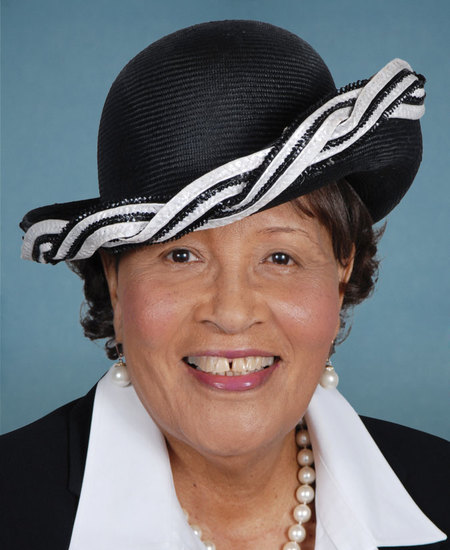
Rep. Alma S. Adams
Sponsored bills
Maddy summaryThis bill expands funding eligibility for graduate programs at Historically Black Colleges and Universities (HBCUs) and Predominantly Black Institutions (PBIs) under the Higher Education Act. It adds new criteria allowing HBCUs and PBIs offering qualified master's degree programs (that weren't previously covered) to access existing funding streams. Specifically, it modifies funding formulas to direct unused funds toward these institutions after other allocations, adjusting the wording for how leftover funds are distributed. The change directly affects qualifying HBCUs and PBIs seeking to strengthen their graduate education programs.
Maddy summaryThe Computer Science for All Act of 2023 would provide $250 million in federal grants to states, school districts, and eligible tribal schools to expand computer science education. The bill requires grant recipients to ensure all high school students have access to computer science within five years and to create a progression of computer science education from pre-kindergarten through middle school. It specifically targets reducing disparities by requiring schools to address gaps for underrepresented groups including minorities, girls, and students from low-income families. Grants would fund teacher training, learning materials, and programs supporting students traditionally underrepresented in tech fields, with schools required to track and report student demographics to monitor progress.
Maddy summaryThe American Dream and Promise Act of 2023 would create two pathways to permanent residency for certain immigrants. The "Dream Act" portion would provide conditional permanent resident status to individuals who entered the U.S. as children, have lived continuously in the U.S. since January 1, 2021, and meet educational requirements (such as completing high school, earning a degree, or enrolling in education programs). The "American Promise Act" portion would provide permanent residency to individuals eligible for Temporary Protected Status (TPS) or Deferred Enforced Departure (DED) as of specific dates (January 1, 2017, or January 20, 2021). The bill includes provisions for background checks, fee exemptions for low-income applicants, and processes for removing conditional status after meeting specific criteria like completing higher education or earning income.
Maddy summaryHJRES 72 proposes a constitutional amendment to remove the exception in the Thirteenth Amendment that allows slavery and involuntary servitude as punishment for a crime. If ratified, this amendment would ban the use of forced labor in prisons as a criminal penalty, directly affecting how the U.S. criminal justice system handles sentencing. The resolution clarifies it does not interfere with voluntary work programs in correctional facilities, existing employment protections for incarcerated people, or community service alternatives. This change aims to eliminate a historical loophole that has disproportionately impacted Black Americans since the 1860s.
Maddy summaryHR 4122, the Henrietta Lacks Congressional Gold Medal Act, authorizes a posthumous Congressional Gold Medal to honor Henrietta Lacks for her contribution to medical science through the HeLa cell line. The bill directs the Treasury to strike the medal recognizing how her cells enabled major medical advances, including the polio vaccine and cancer treatments, without altering any laws or policies. The medal will be displayed at the Smithsonian Institution to commemorate her legacy in scientific research and bioethics. This is a purely commemorative measure with no direct effect on current legislation or affected individuals.
Woman on the Twenty Act of 2023 This bill bars the printing of any $20 note after December 31, 2026, which does not prominently feature a portrait of Harriet Tubman on the front face of the note. The Department of the Treasury shall release to the public the preliminary design of the $20 note prominently featuring a portrait of Harriet Tubman no later than December 31, 2024.
Maddy summaryThis bill requires federal agencies collecting demographic survey data to begin including questions on sexual orientation, gender identity, and variations in sex characteristics (intersex traits) within 360 days of enactment. Agencies must review existing surveys to identify gaps, develop privacy-protective methods for collecting this data (including anonymization and data destruction protocols), and incorporate it into relevant reports within three years. The law applies to all federal surveys that collect standard demographic data (like race, ethnicity, and age), such as the census or health surveys, but does not compel individuals to disclose their status. It emphasizes maintaining confidentiality, allows limited agency waivers if standards can't be met, and mandates a congressional report on implementation within two years.
Maddy summaryHR 3953, the Debt Ceiling Reform Act, changes how Congress can block the Treasury from borrowing more money. It requires the Treasury to notify Congress when debt approaches a $1 trillion increment, giving Congress 30 days to pass a resolution disapproving further borrowing. The bill mandates strict timelines: the House must act within 6 days of introduction (with committees required to report bills within 5 days), and the Senate must consider the resolution within 6 days with limited debate. This process directly affects the Treasury’s ability to issue debt and Congress’s procedural control over debt ceiling decisions. The bill does not eliminate the debt ceiling but streamlines the disapproval process.
Maddy summaryHR 3850, the Pride In Mental Health Act of 2023, establishes a federal grant program to improve mental health and substance abuse services for LGBTQ+ youth (including nonbinary, intersex, and Two Spirit individuals). The bill directs the Health and Human Services Secretary to fund eligible organizations to provide trauma-informed care, cultural competency training for caregivers, school bullying prevention guidelines, and family support resources. It explicitly prohibits grant funds from being used for conversion therapy or advertising related to such therapy. The bill also requires data collection on LGBTQ+ youth mental health and a federal survey to measure psychological distress.