

Maddy summaryThis bill creates a new USDA program to directly connect fresh produce producers with community food programs serving low-income individuals. It requires the Secretary of Agriculture to contract with eligible entities (like farms, distributors, and nonprofits) to buy U.S.-grown fresh produce - ensuring at least seven varieties per delivery, locally sourced when possible, and aligned with dietary guidelines - and distribute it to qualifying organizations (such as food banks, schools, and tribal programs) facing food insecurity. The program prioritizes contracts with beginning farmers, socially disadvantaged farmers, veteran farmers, and small/mid-sized family farms, while mandating 30% upfront payment and requiring annual reports on distribution metrics and program effectiveness to Congress. It aims to strengthen local food supply chains, reduce farm waste, and improve access to fresh produce for vulnerable communities.
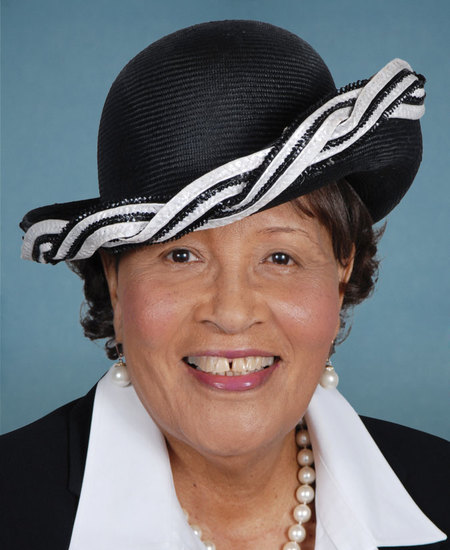
Rep. Alma S. Adams
Sponsored bills
Maddy summaryHRES 955 is a resolution commending Taiwan for its democratic election history and supporting Taiwan's democratic institutions. It recognizes Taiwan's transition to democracy since the late 1980s, including 7 presidential and 9 legislative elections held since then, all deemed free and fair. The resolution specifically expresses support for Taiwan's upcoming January 13, 2024, elections and condemns interference by the Chinese Communist Party. It affirms U.S. commitment to a strong partnership with Taiwan across multiple domains and supports Taiwan's self-defense and liberty. As a procedural resolution, it does not create new law but formally expresses congressional support for Taiwan's democratic development.
Maddy summaryHR 6935, the Creative Workforce Investment Act, authorizes $300 million in federal grants (2024-2026) to fund community-based arts programs that employ creative workers. It directly affects nonprofit organizations, local governments, and community groups that create public arts projects while hiring individuals facing employment barriers, including marginalized communities. Key provisions require grantees to avoid outsourcing jobs, maintain collective bargaining agreements, and document diverse histories through public art, performances, and storytelling. The bill mandates annual reports tracking employment outcomes and median earnings for participants after program completion, ensuring transparency in how funds create accessible cultural opportunities.
Maddy summaryThe Affordable Connectivity Program Extension Act of 2024 allocates $7 billion in funding for the Affordable Connectivity Program (ACP) during fiscal year 2024. The ACP provides subsidies to low-income households to help cover the cost of internet service and connected devices like laptops or tablets. This funding ensures the program can continue supporting eligible households throughout the year, with the money remaining available until fully spent. The bill extends existing program funding without changing eligibility criteria or service requirements.
Maddy summaryHR 6888, the Clean Energy Workforce Act, provides $100 million in federal grants to develop clean energy job training programs. It directly affects local schools, career technical education centers, colleges, and industry partners by funding: (1) new or expanded training programs in clean energy fields (like renewable energy and climate adaptation), designed to be shared with other schools and accessible to diverse students; and (2) upgrades to school facilities to use renewable energy and improve energy efficiency. Grants require partnerships between educational institutions, industry representatives, and community groups to create replicable training that prepares students for jobs in growing clean energy sectors. The bill focuses on concrete workforce development, not environmental outcomes.
Maddy summaryHCONRES 81 is a symbolic concurrent resolution recognizing the anniversaries of multiple United Nations-designated international days focused on peace, such as the International Day of Peace (September 21), International Day of Non-Violence (October 2), and others. It commemorates specific milestones, including the 42nd anniversary of the International Day of Peace and the 5th anniversary of the International Day of Living Together in Peace. The resolution encourages U.S. citizens to observe these days and supports activities promoting peace, nonviolence, and cooperation throughout the year. As a non-binding resolution, it does not create new laws or requirements but expresses congressional support for global peace efforts.
Maddy summaryThe Menopause Research and Equity Act of 2023 requires the National Institutes of Health (NIH) to evaluate existing and ongoing research on menopause, perimenopause, and mid-life women’s health, identifying gaps in knowledge and funding over the past five years. The NIH must then develop a strategic plan with health professionals (including specialists like gynecologists and endocrinologists) to address these gaps and guide future research on treatments for menopause symptoms. The bill also mandates new NIH research on causes, symptoms, and treatments for menopause-related health issues, including a study on hormonal treatments. All activities must be funded using existing NIH resources, with no new appropriations authorized. This aims to improve scientific understanding of women’s mid-life health needs.
Maddy summaryThe Reengage the Workforce Act provides $5.52 million annually (2024-2034) to fund grants for programs helping secondary school dropouts aged 16+ reenter education or earn high school equivalency credentials. It requires grantees to offer flexible credit recovery, career workshops (including job training and resume help), and supportive services like childcare or transportation. The bill prioritizes projects in low-income communities or using evidence-based methods and mandates detailed annual reports tracking participation, completion rates, and employment outcomes, disaggregated by race, gender, age, and disability. This directly affects dropouts who are not enrolled in school or equivalency programs, aiming to improve their educational pathways and workforce readiness.
Maddy summaryHR 6830, the "Books Save Lives Act," requires covered schools (elementary/secondary schools receiving federal funds) and public libraries receiving federal assistance to maintain staffed libraries with diverse book collections. These collections must include books written by, illustrated by, or about individuals from underrepresented communities - defined as racial/ethnic minorities, LGBTQ+ individuals, religious minorities, or people with disabilities. The bill states that excluding such "covered books" could be used as evidence of discrimination under civil rights laws like the Civil Rights Act of 1964. It also mandates a report on the impact of book-banning campaigns on these communities within 180 days of enactment.
Maddy summaryThe Brittany Clardy Missing and Murdered Black Women and Girls Act establishes a new Office within the Department of Justice to address the disproportionate rates of missing and murdered Black women and girls in the U.S. The Office will collect and analyze data on these cases - including case resolution times, Amber Alert usage, and trafficking links - and create a public dashboard for tracking. It also creates a grant program for community organizations to provide culturally appropriate prevention services, law enforcement training, and victim support. The Office must submit biennial reports to Congress with findings and recommendations to improve the criminal justice response to these cases. This bill directly affects Black women and girls facing violence, law enforcement agencies, and community organizations providing related services.