

Maddy summaryThis bill creates a new Medicare payment model (the "Comprehensive Alternative Response for Emergencies Model") that allows Medicare Part B to cover ground ambulance services provided in response to emergency medical calls *without* a full transport. It directly affects Medicare beneficiaries receiving emergency ambulance care and ambulance providers, ensuring they are paid for services like dispatch and initial response that don't include transport. The model requires payment rates to align with standard transport payments, mandates compliance with state protocols, and operates for a 5-year test period. A report by the Comptroller General will evaluate the model's impact on beneficiary access, outcomes, and regional differences after 4 years.
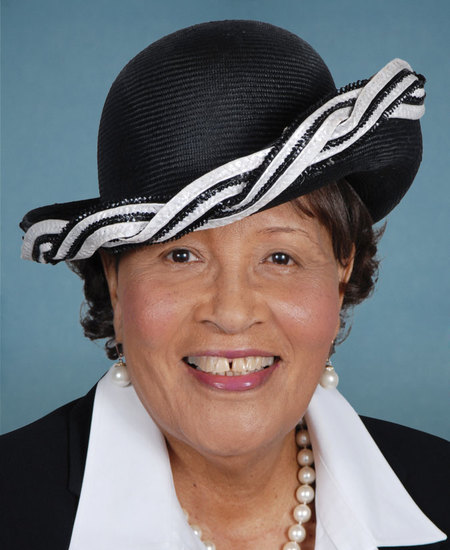
Rep. Alma S. Adams
Sponsored bills
Workplace Violence Prevention for Health Care and Social Service Workers Act This bill requires the Department of Labor to address workplace violence in health care, social service, and similar sectors. Specifically, Labor must issue an occupational safety and health standard that requires certain employers to take actions to protect workers and other personnel from workplace violence. The standard applies to employers in the health care sector, in the social service sector, and in sectors that conduct activities similar to those in the health care and social service sectors. Among other elements, the standard must require each employer to (1) develop a workplace violence prevention plan, (2) promptly investigate incidents of workplace violence, and (3) provide relevant training and education to employees. The bill requires certain hospitals and skilled nursing facilities to comply with this standard as a condition of Medicare participation.
Maddy summaryThis resolution (HRES 269) is a symbolic statement honoring historically Black colleges and universities (HBCUs) and reaffirming the federal government's existing commitment to them. It does not create new laws or funding but formally recognizes HBCUs' role in educating nearly 300,000 students annually, producing 50% of Black teachers and 80% of Black judges, and contributing $16.5 billion to the economy. The resolution requests that federal agencies receive copies to align with ongoing support for HBCUs, though it does not alter any existing policies or resources. It directly affects HBCUs by affirming their national significance and the government’s longstanding partnership with them.
Maddy summaryThe Heating and Cooling Relief Act (HR 2486) expands the Low-Income Home Energy Assistance Program (LIHEAP) to help low-income households struggling with energy costs. It increases funding to cover all eligible households (those with incomes up to 250% of poverty level or 80% of State median income), sets a goal that no household should spend more than 3% of income on energy, and requires states to operate assistance programs year-round. The bill includes new protections against utility shutoffs for 2 years after assistance is received, prohibits late fees during the 6 months following assistance, and mandates weatherization and energy efficiency improvements in low-income housing. It also requires states to develop extreme heat response plans and addresses the $21 billion in residential utility arrears as of September 2024.
Save America's Forgotten Equines Act of 2025 or the SAFE Act of 2025 This bill permanently prohibits the slaughter of equines (e.g., horses and mules) for human consumption. (Current law prohibits the slaughter of dogs and cats for human consumption. This bill extends the prohibition to equines.) Specifically, this bill prohibits a person from knowingly (1) slaughtering an equine for human consumption; or (2) shipping, transporting, possessing, purchasing, selling, or donating an equine to be slaughtered for human consumption or equine parts for human consumption. The bill subjects a violator to a fine. The bill applies to conduct in or affecting interstate or foreign commerce or within the special maritime and territorial jurisdiction of the United States. However, it does not apply to an activity carried out by an Indian for a religious ceremony. As background, in recent years, the appropriations acts have prohibited the Department of Agriculture (USDA) from using federal funds to inspect horses before they are slaughtered for human consumption. Therefore, there are currently no USDA-inspected horse slaughter facilities in the United States.
Maddy summaryHR 1271 increases funding for scholarships at 1890 institutions - historically Black colleges and universities established under the Second Morrill Act - by adding mandatory annual support. It amends existing law to explicitly include bachelor's and graduate programs in scholarship eligibility and requires $15 million annually from the Commodity Credit Corporation starting in fiscal year 2025, to remain available until spent. This funding directly supports students at these institutions by expanding access to financial aid for higher education. The bill updates previous funding language to ensure ongoing support beyond 2023.
Maddy summaryHR 2402, the No Hungry Kids in Schools Act, creates a new option for states to implement a statewide program under the National School Lunch Act starting in 2025. States would cover costs from non-federal funds to allow all schools in the state to receive full federal reimbursement for meals served, eliminating income-based eligibility thresholds. Key provisions include setting the eligibility threshold to zero and calculating student eligibility statewide instead of by individual school district. This directly affects state education agencies (which must fund the program) and schools (which gain simplified access to full meal reimbursement), benefiting students in qualifying schools.
Maddy summaryHR 2381, the SCREENS for Cancer Act of 2025, reauthorizes and updates the National Breast and Cervical Cancer Early Detection Program (NBCCEDP). It directly affects low-income, uninsured, or underinsured women across all 50 states, territories, and tribal communities by expanding access to breast and cervical cancer screenings, diagnostic services, and patient navigation support. Key provisions include updating program language to emphasize prevention alongside detection and control, adding specific strategies to reduce disparities, and appropriating $235 million annually for fiscal years 2026-2030. The bill also requires a GAO study by 2027 to assess program eligibility, service trends, and barriers to screening access.
Maddy summaryThis bill would require federal firearms licensees to prohibit sales of specific high-capacity rifles and shotguns to people under 21. It targets semiautomatic centerfire rifles and shotguns capable of holding more than 5 rounds in their magazines, raising the age limit from 18 to 21 for these weapons. Exceptions apply for active military members and certain government employees authorized to carry firearms. The law directly affects gun retailers and individuals under 21 seeking to purchase these specific firearms. It modifies existing federal gun sale rules without changing age requirements for other firearms.
Maddy summaryHCONRES 21 is a symbolic House resolution recognizing the persistent gender wage gap in the U.S., where women earn significantly less than men for comparable work. It cites specific data showing women overall earn 75 cents and women of color earn even less (e.g., 58 cents for Latinas) per dollar earned by White, non-Hispanic men. The resolution does not create new laws or policies but formally acknowledges the economic impact of this disparity, including annual lost wages exceeding $994 million for full-time women workers. It also highlights designated Equal Pay Days for different demographic groups to underscore the varying timelines to close the gap.