

Maddy summaryThe EXPERTS Act of 2025 requires agencies to disclose funding sources and potential conflicts of interest for studies submitted during rulemaking, including who funded research and any financial relationships that might influence findings. It establishes an Office of the Public Advocate within the Office of Management and Budget to assist public participation in rulemaking, conduct social equity assessments, and improve outreach to underrepresented groups. The bill also mandates that agencies consider social equity impacts when creating rules and requires detailed explanations for withdrawing proposed regulations. These provisions aim to increase transparency, inclusivity, and accountability in the federal regulatory process.
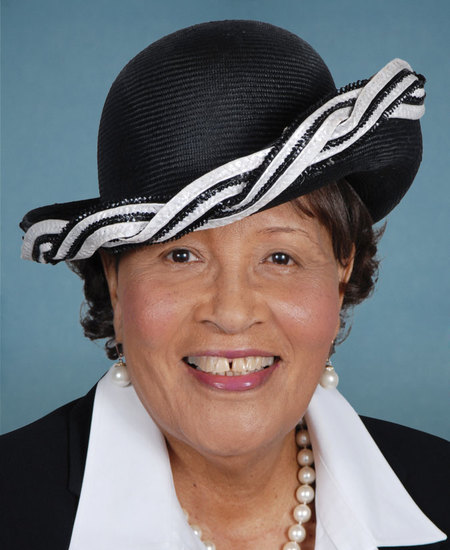
Rep. Alma S. Adams
Sponsored bills
Maddy summaryThe NEST Act (HR 6096) requires the federal government to provide newborn supply kits to new mothers, focusing on low-income families and communities with high maternal health risks. These kits include essential items like diapers, postpartum pads, breastfeeding supplies, blood pressure monitors, and health information resources. Funds for the kits come from a $5 million annual set-aside in Social Security Act funding, distributed through grants to community health centers, tribal organizations, and hospitals. Priority is given to rural areas, maternity care deserts, and mothers earning below 185% of the poverty line. The program mandates annual reporting on distribution demographics and health outcomes to Congress.
Maddy summaryThis bill ensures continuous funding for SNAP (food assistance) and WIC (nutrition program for mothers/children) during government funding gaps. It authorizes emergency Treasury funds to cover SNAP/WIC benefits and reimburse states for costs if Congress fails to pass regular appropriations for the Department of Agriculture by September 30, 2025. The funding covers missed payments retroactively from September 30, 2025, through the bill’s enactment date, and continues until either regular appropriations pass or September 30, 2026. It directly affects low-income households relying on these programs and state agencies administering them during funding lapses.
Maddy summaryHR 5921 requires states to create public internet sites for congressional redistricting, providing real-time access to maps, demographic data (including race and voting age population), and voting history for all proposed plans. It mandates regional public hearings with virtual options, 60 days of public input before final plans, and 72-hour posting of all public comments. States must disclose detailed analyses of plan compliance with voting rights laws, partisan fairness metrics, and the drafting process. This applies to congressional redistricting after the 2030 census, directly affecting states and their redistricting entities during the reapportionment process.
Maddy summaryHRES 846 is a symbolic resolution designating October 2025 as National Domestic Violence Awareness Month. It expresses the House's support for raising awareness about domestic violence and its impacts, and calls for continued congressional attention to ending domestic violence through existing programs. The resolution does not create new laws, allocate funding, or directly affect any specific groups - it is purely a statement of support. It references statistics on domestic violence prevalence but focuses on awareness rather than policy changes.
Maddy summaryHR 5849, the USCP Act, ensures Capitol Police officers continue receiving pay during government shutdowns. It directs funds from the Treasury to cover Capitol Police salaries and expenses if discretionary funding lapses after the bill's enactment. This directly affects U.S. Capitol Police employees, guaranteeing they are paid even when the federal government is partially closed. The bill provides a specific funding mechanism to prevent pay interruptions during shutdowns. It does not alter Capitol Police duties or create new requirements.
Maddy summaryHR 5867, the Plant-Powered School Meals Pilot Act, creates a federal grant program to help schools serve 100% plant-based meal options. It authorizes $10 million for grants to school food authorities (specifically those serving 50%+ students eligible for free/reduced-price meals) over three years to cover staff training, meal preparation, community partnerships, and procurement from underserved farmers. The bill also establishes a separate $2 million pilot to reimburse schools for nondairy beverage substitutions for students with dietary needs, prioritizing schools with high lactose intolerance rates. Both pilots require annual reporting on participation, meal counts, and fund usage, with final reports submitted to Congress.
Maddy summaryHRES 829 is a non-binding resolution recognizing the significant pay gap between disabled women and both disabled and nondisabled men, citing 2023 data showing disabled women earn 56 cents for every dollar earned by nondisabled men across all workers. It specifically highlights steeper disparities for disabled women of color (e.g., 54 cents for disabled American Indian and Alaska Native women) and those with disabilities affecting independent living (36 cents for every dollar). The resolution identifies systemic barriers like discrimination, inadequate vocational services, and occupational segregation as key contributors to these inequities but does not create new laws or funding. It reaffirms the House’s commitment to advancing equal pay without proposing concrete policy changes.
Maddy summaryThis bill increases federal funding for school meal programs by adding 45 cents per lunch and 28 cents per breakfast served by school food authorities, effective November 1, 2025. The additional reimbursement applies to all meals served, including free, reduced-price, and paid meals, and will be adjusted annually for inflation starting July 1, 2026. It directly affects public schools and school districts participating in the National School Lunch and Breakfast Programs by boosting their per-meal funding. The policy change aims to support meal quality and accessibility without altering eligibility requirements or program administration.
Maddy summaryThe HEATS Act ensures continued funding for the Low-Income Home Energy Assistance Program (LIHEAP) during federal government shutdowns. It directs the use of unappropriated Treasury funds to pay for LIHEAP benefits when discretionary federal funding lapses, preventing interruption in aid for eligible households. This directly affects low-income families who rely on LIHEAP to cover heating and cooling costs. The bill creates a specific mechanism to maintain these critical energy assistance payments without requiring new congressional appropriations during shutdown periods.