

Metastatic Breast Cancer Access to Care Act This bill expedites payment of Social Security Disability Insurance (SSDI) benefits and eligibility for Medicare coverage for those with metastatic breast cancer (i.e., breast cancer that has spread to other sites in the body). Specifically, the bill eliminates the 5-month waiting period for SSDI benefits and the subsequent 24-month waiting period for Medicare coverage for individuals with metastatic breast cancer. Under current law, individuals generally must wait five months after the onset of disability to begin receiving SSDI benefits and an additional 24 months to become eligible for Medicare.
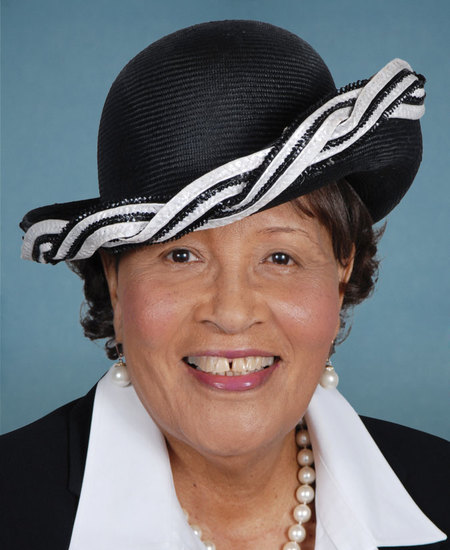
Rep. Alma S. Adams
Sponsored bills
Health Equity and Access under the Law for Immigrant Women and Families Act of 2021 or the HEAL Immigrant Women and Families Act of 20 21 This bill extends Medicaid and Children's Health Insurance Program coverage to individuals lawfully present in the United States who otherwise meet eligibility requirements. Individuals granted federally authorized presence also are required to maintain minimum essential health insurance coverage and are eligible for health insurance exchanges, reduced cost sharing, premium subsidies, and premium tax credits.
Improving Access to Nutrition Act of 20 21 This bill repeals certain work requirements for the Supplemental Nutrition Assistance Program (SNAP, formerly known as the food stamp program). The requirements apply to able-bodied adults who are ages 18-49 and have no dependent children. Individuals who do not meet certain work requirements are generally prohibited from receiving more than 3 months of SNAP benefits over a 36-month period. Under current law, some of the work requirements under SNAP are temporarily suspended due to COVID-19 (i.e., coronavirus disease 2019).
Protecting Moms Who Served Act This bill requires the Department of Veterans Affairs (VA) to implement the maternity care coordination program. The VA must provide community maternity care providers (i.e., non-VA maternity care providers) with training and support with respect to the unique needs of pregnant and postpartum veterans, particularly regarding mental and behavioral health conditions in relation to the service of the veterans in the Armed Forces. Additionally, the Government Accountability Office must report on maternal mortality and severe maternal morbidity among pregnant and postpartum veterans, with a focus on racial and ethnic disparities in maternal health outcomes for veterans.
Healthy Maternity and Obstetric Medicine Act or the Healthy MOM Act This bill expands health insurance coverage availability for pregnant individuals. It requires health insurers, health insurance exchanges, and group health plans to offer a special enrollment period to pregnant individuals. The special enrollment period offered by an insurer or exchange must begin when the pregnancy is reported to the insurer or exchange. The special enrollment period offered by a group health plan must begin when the pregnancy is reported to the plan or is confirmed by a health care provider. The bill also makes pregnancy a qualifying life event for the purpose of enrolling in a federal employee health benefit plan. Additionally, a group health plan or health insurer that covers dependents must provide coverage for maternity care to all covered individuals. Any individual who is eligible for Medicaid and is, or becomes, pregnant maintains such eligibility for one year after the end of the pregnancy. The bill revises the range in which a state must establish a maximum level of family income for pregnant women and infants to be eligible for Medicaid. The upper limit of the range is eliminated and the lower limit is set to the level in place on January 1, 2014.
Medical Nutrition Therapy Act of 2021 This bill expands Medicare coverage of medical nutrition therapy services. Currently, Medicare covers such services for individuals with diabetes or kidney disease under certain circumstances; such services must also be provided by a registered dietitian or nutrition professional pursuant to a physician referral. The bill extends coverage to individuals with other diseases and conditions, including obesity, eating disorders, cancer, and HIV/AIDS; such services may also be referred by a physician assistant, nurse practitioner, clinical nurse specialist, or (for eating disorders) a clinical psychologist.
This resolution expresses support for the goals and ideals of Sex Ed For All Month.
Maximizing Outcomes for Moms through Medicaid Improvement and Enhancement of Services Act or the MOMMIES Act This bill establishes a series of programs and requirements under Medicaid and the Children's Health Insurance Program (CHIP) relating to maternal health. For example, the bill expands eligibility for coverage under Medicaid and CHIP from 60 days to one year after the last day of pregnancy and requires such coverage to include oral health services. The bill also establishes a demonstration program in which states receive grants to implement or expand models for maternity care homes that provide services to Medicaid or CHIP beneficiaries. The Government Accountability Office must report on (1) gaps in coverage under Medicaid and CHIP for pregnant and postpartum women, and (2) the use of telehealth by state Medicaid programs to increase access to maternity care.
Promoting Resident Opportunities and Self-Sufficiency Act This bill provides for the continuation of assistance for public housing residents through certain service programs. Specifically, the bill allows residents of properties that have been converted through the Rental Assistance Demonstration Program to project-based subsidy contracts to continue to receive assistance through (1) the Resident Opportunities and Self-Sufficiency grant program, (2) the Jobs Plus Initiative program, and (3) certain congregate housing services.
This resolution thanks the teachers of the United States and promotes the teaching profession by encouraging students, parents, school administrators, and public officials to recognize National Teacher Appreciation Week.