

Keeping All Students Safe Act This bill prohibits the use of seclusion and limits the use of physical restraint in schools and Head Start programs that receive federal funding. Specifically, the bill prohibits the use of seclusion, which is the involuntary confinement of a student alone in a room or area from which the student is physically prevented from leaving. The term does not include a time out, which may involve separating the student from others in a non-locked setting. The bill prohibits the use of mechanical or chemical restraints or physical restraints that restrict breathing or are life threatening. The bill outlines the requirements for the use of physical restraint, including that the student's behavior must pose an imminent danger of serious physical injury to the student or other individual. Each state must ensure that a sufficient number of program personnel are trained and certified by a state-approved crisis intervention training program. Additionally, each program must establish procedures to follow after an incident involving physical restraint. Further, the bill establishes enforcement provisions, including a private right of action for a student who has been subjected to unlawful seclusion or restraint. The Department of Education and the Department of Health and Human Services must withhold payments from a program for unlawful seclusion or restraint. Finally, the bill requires each state educational agency (SEA) to establish, implement, and enforce policies and procedures required by the bill. It also creates a grant program to assist SEAs with these activities.
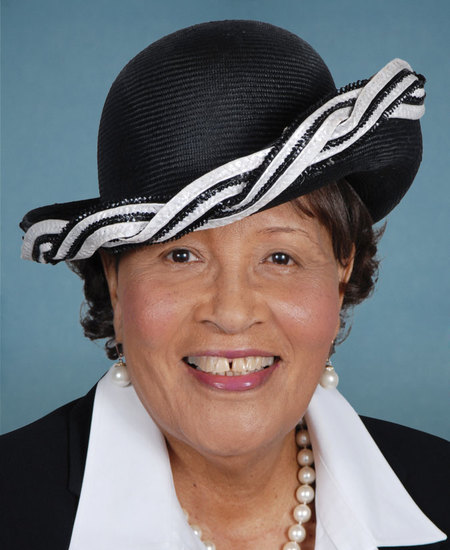
Rep. Alma S. Adams
Sponsored bills
Mothers and Offspring Mortality and Morbidity Awareness Act or the MOMMA's Act This bill establishes various programs and requirements to reduce maternal mortality. It also increases federal tobacco taxes and equalizes the tax treatment of different tobacco products. Specifically, the Centers for Disease Control and Prevention (CDC) must provide technical assistance and best practices for collecting data, standardizing reporting, and preventing maternal mortality. The CDC must consult with the Health Resources and Services Administration (HRSA) on this assistance. The bill also provides statutory authority for CDC grants for state-based collaboratives to improve care immediately before and after birth and to improve maternal and infant health outcomes, and a HRSA program to improve the quality and safety of maternity care. Furthermore, the Department of Health and Human Services (HHS) must establish regional centers through health professional schools and training programs to educate health care providers about implicit bias and culturally competent care. In addition, the bill expands eligibility for Medicaid, the Children's Health Insurance Program (CHIP), and other benefits for pregnant and postpartum individuals. Specifically, it extends postpartum eligibility for Medicaid and CHIP for one year; provides coverage for oral health services for pregnant and postpartum individuals under Medicaid and CHIP; and extends postpartum eligibility for the Special Supplemental Nutrition Program for Women, Infants, and Children for two years. HHS must also take steps to publicize the benefits available to pregnant and postpartum individuals under Medicaid and CHIP, and the Centers for Medicare & Medicaid Services must provide guidance on Medicaid coverage for doula services.
Jobs, On-the-Job 'Earn-While-You-Learn' Training, and Apprenticeships for Young African Americans Act This bill makes changes to the national apprenticeship system aimed at promoting diversity. Specifically, the bill establishes the Diversity and Inclusion Administrator in the Office Apprenticeship within the Office of Employment and Training Administration at the Department of Labor, requires every apprenticeship program that registers or renews an apprenticeship with the Office of Apprenticeship to submit a plan to increase participation by individuals who are African American, and requires the Diversity and Inclusion Administrator to award grants to create or expand diversity in registered apprenticeship programs.
Midwives for Maximizing Optimal Maternity Services Act of 2021 or the Midwives for MOMS Act of 2021 This bill establishes grants within the Health Resources and Services Administration (HRSA) for establishing or expanding midwifery programs at institutions of higher education and nursing schools. HRSA may prioritize funding for institutions that focus on increasing the number of midwife professionals from underrepresented groups and that promote practicing in areas with limited access to professional health care.
This resolution condemns the acts of gun violence that led to the tragic loss of eight lives in Georgia on March 16, 2021.
Birth Access Benefiting Improved Essential Facility Services Act or the BABIES Act This bill requires the Centers for Medicare & Medicaid Services (CMS) to establish a Medicaid demonstration program to improve freestanding birth center services for women with low-risk pregnancies. Among other things, the CMS must (1) publish criteria for freestanding birth centers to participate in the program, including specified accreditation, licensure, and service requirements; (2) publish guidance for states to establish prospective payment systems under Medicaid for program participants; and (3) award planning grants for states to develop program proposals. The CMS may choose up to six states to participate in the program.
Real Education and Access for Healthy Youth Act of 2021 This bill requires the Department of Health and Human Services (HHS) to establish grants to support sex education and sexual health services for young people (ages 10 through 29) and repeals requirements that apply to certain federally funded sex education programs. HHS must award grants, in coordination with the Department of Education, to (1) provide sex education to young people through elementary and secondary schools, institutions of higher education, and youth-serving organizations; and (2) train education professionals to effectively teach, and otherwise support, sex education. Sex education refers to high quality teaching and learning that follows, to the maximum extent practicable, specified educational standards; covers a variety of topics concerning sex and sexuality; explores values and beliefs about those topics; and helps young people gain skills to navigate relationships and manage sexual health. Additionally, HHS must award grants for the provision of sexual health services to marginalized youth to youth-serving organizations and health care entities that are eligible to receive covered outpatient drugs at reduced prices through the 340B drug discount program. Recipients of any of these grants must comply with certain nondiscrimination requirements. In addition, they may not use funds for sex education programs or sexual health services that provide incomplete or inaccurate medical information or fail to address specified issues. The bill also eliminates prohibitions regarding the content of specified federally funded sexual health education and information programs and repeals the Abstinence Only Until Marriage program.
Represent America Abroad Act of 2021 This bill requires the Department of State to establish the Represent America Mid-Career Foreign Service Entry Program to increase diversity in the Foreign Service by recruiting mid-career professionals who are from minority groups. As part of the program, the State Department shall (1) establish and publish eligibility criteria for participation; (2) carry out recruitment efforts to attract highly qualified, mid-career professionals from minority groups; and (3) include appropriate mentorship and other career development opportunities for program participants. The State Department must submit an annual report on the status of the program.
This resolution expresses support for the designation of DIPG Awareness Day. DIPG is diffuse intrinsic pontine glioma, a terminal childhood brain cancer.
This resolution expresses the sense of the House of Representatives that the United States can achieve a more perfect union by condemning the violence and destruction perpetrated against the African American community of Greenwood in Tulsa, Oklahoma. The resolution states that a more perfect union may be achieved through other means as well, including by promoting tolerance and unity, and it recognizes Congress's commitment to acknowledge and learn from the history of racism and racial violence in the United States in order to reverse the legacy of white supremacy and fight for racial justice.